
The first phase of the Government's consultation on new flexible working rights has closed. We set out why the proposed reforms fall short of what workers, businesses and the economy truly need.
The first phase of the Government’s consultation on new flexible working rights closed on 30th April 2026, offering the clearest picture yet of how Labour plans to deliver on its manifesto commitment to give people a ‘default’ right to work flexibly.
The proposed framework has merit, but falls short of what Britain’s workforce genuinely needs.
The legislation proposes that, from 2027, employers will be required to meet with staff before rejecting a flexible working request, to consider alternatives, and to provide written reasons for refusal. Their decision will be subject to a new ‘reasonableness test’ – to be explored in a second consultation later this year.
Close to nine in ten people in the UK currently work flexibly or want to. For millions, it is a prerequisite for finding work, staying in it and progressing within it. The business case is equally compelling: the post-pandemic surge in hybrid working has delivered measurable gains in productivity and retention, and evidence from sectors where remote working is not an option consistently shows that greater control over working patterns improves satisfaction, recruitment and attendance.
Like its predecessor, the new legislation rests on the individual employee making a formal request and trusting their manager will respond constructively. For many workers, particularly those in frontline and lower-paid roles, this model is poorly suited to the reality they face.
Awareness of rights remains low. Cultural assumptions suppress requests before they are made. And outcomes depend heavily on individual managers, many of whom feel ill-equipped to navigate employment law. Employers will retain the right to refuse on broad business grounds, and without clear thresholds for reasonableness, rejection will remain straightforward even where workable alternatives exist. With no right to appeal and tribunal claims beyond the reach of most workers, enforcement is a significant weak link.
Meaningful reform demands more than procedural updates. The Government should provide substantive, sector-specific guidance, including a clear ‘Path to Yes’ framework with worked examples of what good flexible working looks like in practice.
More fundamentally, the reactive, case-by-case model needs to give way to something more collective. Evidence from other countries shows that team and organisation-wide approaches, where staff have a genuine say in job design and working patterns, achieve far more lasting cultural change than individual requests ever can. Sector-wide coordination is required to overcome collective action hurdles and problems of insecure and excessive hours that will limit effectiveness of the legislation.
Flexible working is not simply a quality-of-life issue. It is a labour market, public health and productivity challenge, and the Government’s reforms, however well-intentioned, risk making little difference where it matters most.
Britain can do better. Read our full consultation response to find out what we believe real flexibility by default should look like.
Published May 2026

The Employment Rights Act 2025, which received Royal Assent in December 2025, will make significant changes to flexible working requests and is expected to take effect in 2027, including a new statutory test of ‘reasonableness’ for refusing a request.
That’s a meaningful shift in expectation and accountability. But legislation sets a floor, not a ceiling. And process, however well designed, doesn’t build culture.
The fears are real and understandable. Leaders worry about setting precedents that could spiral out of control, feeling pressured to approve every flexibility request that crosses their desk. There’s anxiety that new ways of working won’t align with organisational needs, or that they’ll demand more time, cost, and effort than the business can sustain. In the face of these uncertainties, the default response is often to say no, or to proceed so cautiously that meaningful change never materialises.
This reactive approach creates an individualised request-response model of flexibility. Each request becomes a negotiation, every arrangement an exception, and nothing translates into systematic organisational change. Yet change is exactly what’s needed.
The evidence is compelling. UK organisations are navigating a perfect storm of workforce challenges that demand more than incremental adjustments.
The picture is clear: workers need more flexibility in how, when and where they work. And employers need to balance those needs with organisational requirements for productivity, effectiveness and profitability.
The only way to achieve this is to take a more proactive approach – designing flexibility into how we work, weaving it through a culture of openness and transparency, and building manager capability to balance different needs.
Recognising the challenge managers face, many organisations have responded by developing comprehensive guidance documents, resources, training programmes and manager tools. This approach has genuine merit. It provides consistency across the organisation, establishes a baseline of understanding, and ensures that all managers are working from the same playbook when navigating flexibility requests.
These policies and tools serve an important purpose. They democratise knowledge, reduce ambiguity, and give managers a starting point when they’re uncertain about how to proceed.
But here’s where the limitations emerge.
Managers are already stretched thin. The reality is that most don’t have the time or capacity to thoroughly read, digest and apply lengthy guidance documents in the midst of their day-to-day responsibilities. Policies or tools sitting unused in a shared drive doesn’t transform working practices. More fundamentally, a guidance document alone cannot overcome the deeper issues at play. It won’t address the underlying fears that make managers hesitant to embrace flexibility. It won’t dismantle the cultural barriers that have been built up over years or decades. And it certainly won’t shift the ingrained assumptions about what “good work” looks like or when and where it needs to happen.
Truly embedding flexibility and creating modern working lives requires more than documentation. It demands cultural transformation that includes:
Tools and guidance are a necessary starting point, but they’re not the destination. If you want to genuinely transform how your organisation approaches flexible working, you need to commit to the harder, longer work of culture change.
That means moving beyond documents to dialogue, beyond policies to practice, and beyond compliance to genuine belief that new ways of working can benefit both people and performance.
The organisations that succeed in creating truly flexible, modern working environments won’t be those with the most comprehensive policies They’ll be the ones that recognise changing culture requires ongoing commitment, courage and conversation at every level.
Ready to build flexibility into your organisation’s culture? Start by asking yourself: what cultural barriers are preventing flexibility from flourishing, and who needs to be part of the conversation to address them?
Published April 2026
By Tess Lanning, Director of Programmes
Nearly one million young people in the UK are currently not in education, employment or training – and the numbers leaving work due to mental ill-health are rising sharply. Our new analysis reveals a troubling pattern. The sectors where young people are most concentrated are the same ones seeing the highest rates of workers becoming economically inactive due to long-term sickness.
The evidence is clear
In wholesale and retail, food and accommodation, and health and social care – the sectors employing the most young workers – we’re seeing concerning flows into economic inactivity. In food and accommodation alone, an estimated 17 out of every thousand workers will become economically inactive due to ill health.
This isn’t coincidence. These sectors share common characteristics: low pay and job insecurity. And the evidence increasingly links these working conditions to rising mental distress and economic inactivity among young people.
While most workers experiencing long-term sickness are older, over a quarter are under 40. The concentration of young workers in sectors associated with health problems adds to mounting evidence about the long-term ‘scarring’ effect of poor quality work – particularly job insecurity – on young people’s employment, earnings and health outcomes.
Creating good jobs, not just jobs
The Government’s Youth Guarantee aims to create 350,000 new opportunities for unemployed young people. But our research shows that job creation alone isn’t the solution – we need to focus on job quality.
When workers cycle back into inactivity from frontline sectors, their hours drop dramatically from an average of 21 per week to just 8.5 hours. The economic case for change is compelling: supporting even half of young workers at risk of inactivity to sustain their working hours would generate over half a billion pounds in economic output annually, and provide at least £6,500 in additional wages for each young person.
What needs to happen
Working with the TUC, we’re calling on the Milburn Review (the Independent Report into Young People and Work) to urgently examine how to improve the quality of frontline work through better job design.
The Employment Rights Act offers a vital opportunity to strengthen job security and flexible working rights. But passing legislation is only the first step – we need targeted support for effective implementation in the sectors where young people need it most.
This means working in partnership with employers in wholesale and retail, food and accommodation, and health and social care to redesign jobs that offer young workers stability, security and genuine flexibility. Because when young people have access to good quality work, everyone benefits: workers, employers and the economy.
With thanks to the Trades Union Congress (The TUC) for supporting this research, and to Paul Bivand for the analysis.
Published April 2026
Our analysis of five years of labour market data reveals a troubling pattern. The sectors that employ the highest concentrations of young workers, retail, hospitality, and health and social care, are the same sectors driving the highest rates of workers moving into long-term sickness and economic inactivity.
Nearly half of all young workers are concentrated in just three sectors: wholesale and retail (23%), accommodation and food services (11%), and health and social work (12%). These aren’t just entry-level jobs. They’re jobs characterised by insecure hours, unpredictable schedules, and working conditions that can create or worsen health problems, both physical and mental. Research has shown that young adults on zero-hours contracts are at higher risk of poor mental health than those in stable employment.
The numbers are telling. Accommodation and food services has the highest rate of workers becoming economically inactive due to ill-health of any sector. 17 per thousand workers compared to an average of seven across all industries. Meanwhile, elementary occupations, caring roles, and sales positions – where young people are heavily over-represented – account for the largest volumes of people falling out of work due to sickness.
Research challenges that concept head-on, pointing instead to economic precarity, insecure hours and insufficient income as key drivers of the mental health crisis among young people today. When over a quarter of 20 to 24-year-olds have insecure working arrangements, and nearly three in ten young employees report multiple negative aspects of job quality, we’re not looking at a generational problem – we’re looking at a jobs problem.
The government’s Youth Guarantee presents an opportunity to break this cycle. But only if it prioritises job quality alongside job quantity. Without improvements to working conditions in frontline sectors, we risk supporting young people into roles that don’t last and don’t provide meaningful opportunity. The evidence on ‘scarring’ is clear – insecure work when you’re young doesn’t just affect you now, it follows you through your working life.
The evidence from our own programmes shows what’s possible. When employers give shift workers more choice, input and control over their working patterns, sickness absence and staff turnover fall significantly while wellbeing and work-life balance improve. But many employers need support to make these changes, facing barriers from procurement models to operational constraints to cultural resistance.
The path forward requires collaboration between government, employers and unions. Young people deserve more than just any job. They deserve good jobs that support their health, provide stable income and offer a genuine route to economic security. With the right policy framework and sector-level agreements, we can make this happen.
Published April 2026
By Tess Lanning, Director of Programmes
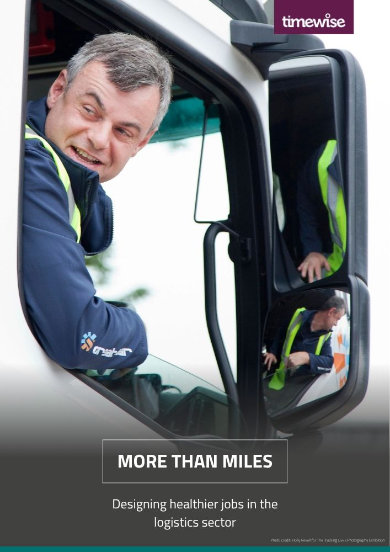
The logistics sector is the backbone of the UK economy. It keeps food on our shelves, medicines in our hospitals and parcels on our doorsteps. It contributes £170 billion to the UK economy and employs up to 2.7 million people nationwide, including more than 250,000 in London alone.
But behind this economic powerhouse sits a workforce under pressure – and a sector grappling with deep, structural challenges. An ageing workforce, persistent skills gaps, rising sickness levels and difficulties attracting younger and more diverse workers are creating a perfect storm.
For years, the focus has been on training and recruitment campaigns to attract new workers to the most acute skill gap areas such as lorry drivers. This is valuable and necessary – but it is not enough. Unless we tackle the way work is actually designed, scheduled and experienced on the ground, the workforce crisis in logistics will persist. Our latest report reveals why the logistics sector cannot afford to ignore job design any longer.
The evidence from across the sector is clear. Long and antisocial hours, high levels of job insecurity, unpredictable shift patterns and limited control over working time are forcing people out of the sector. Logistics has the highest proportion of workers reporting job insecurity (39%), poor work life balance (32%) and low autonomy (40%) of any sector.
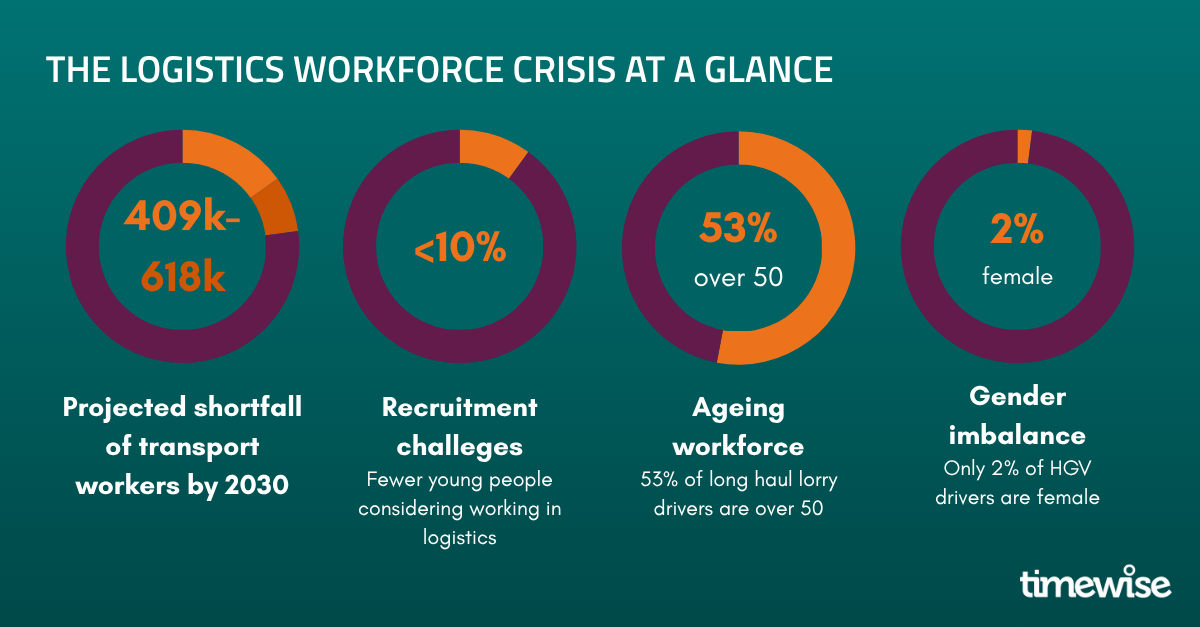
These conditions are not just inconvenient – they are harmful. They contribute directly to:
And crucially, these patterns make logistics unattractive to the very groups the sector urgently needs to reach: women, young people, and those with caring responsibilities. Notably, only 2% of HGV drivers are female, and just 1.6% are under 24.
This is not a “nice to fix” problem. It’s a system wide risk.
The sector is undergoing rapid technological change. Automation, real-time route planning and predictive analytics should offer opportunities to consider people’s preferences in the scheduling process while still meeting operational needs.
But too often, technology is used to optimise for speed, not for workers. In practice, digital scheduling tools have increased pressure, surveillance and time chasing across long haul, warehousing and ‘last mile’ roles.
Unless tech is used intentionally to give workers more voice and more stability, it risks entrenching the very challenges it could help solve.
New employment legislation on flexible working and fair scheduling gives workers stronger rights to request control over their working patterns. Employers must now consult before rejecting a request and will soon need to provide fair advance notice and compensation for cancelled shifts.
The direction of travel is clear: employers are being expected to end cultures of excessive hours and unpredictable scheduling.
And younger workers – the pipeline the sector desperately needs – increasingly expect diversity, wellbeing and flexibility from any employer they consider.
Logistics companies that fail to modernise work design risk being left behind.
Some logistics employers are beginning to show what healthy job design could look like.
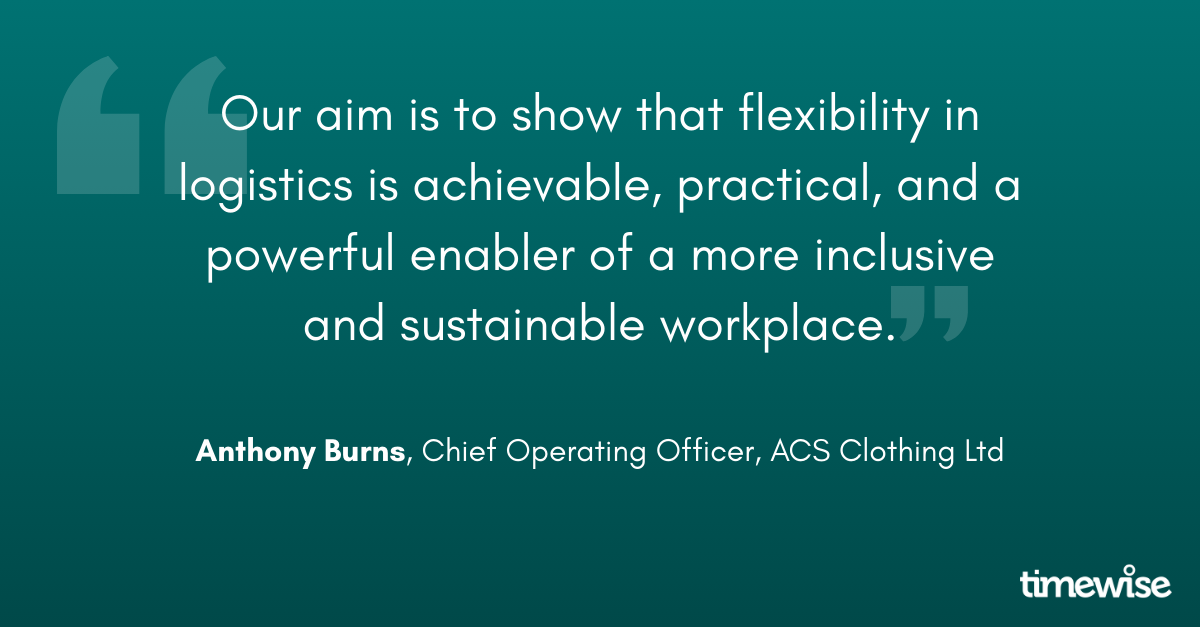
ACS Clothing Ltd has adopted secure contracts, predictable scheduling and worker-centred planning for warehouse staff – and seen improvements in retention, stability and trust as a result.
Wincanton has introduced part time and flexible options in its warehouses, including a “People Campus” model that has widened access to diverse talent and improved ‘pick accuracy’ by 20%.
DHL has enabled more part time and job share options for older drivers nearing retirement, by promoting healthy work patterns and incorporating their preferences into the route-planning process.
But innovation is still sporadic. For driving roles in particular, there is an urgent need for experimentation that grapples with the realities of mobile workers’ lives beyond work.
As well as these examples, public bus companies, social care providers and infrastructure teams all schedule people across geographies and shifts. And many have already begun modernising rostering. Key lessons for the sector include:
These approaches have led to reductions in sickness, improved retention, stronger wellbeing and better service delivery.
The report argues for a coordinated cross-sector approach to support uptake of this good practice. It calls on the government to expand the Modern Industrial Strategy to cover the sector – bringing together industry leadership, unions and technology providers to tackle workforce issues and sickness through a dual focus on improvements in performance and job quality.
Published March 2026

By Tess Lanning, Director of Programmes
New legislation due to come into force in 2027 promises to strengthen workers’ rights to request flexible working. Employers will need to accept requests unless they are demonstrably unreasonable, and must consult with employees before rejecting them. It’s progress, but will policy translate into practice?
In September 2025, Timewise convened its Worker Advisory Group to meet with senior policy leads from the Department for Business and Trade. What workers shared reveals a troubling gap between what flexible working looks like on paper and how it plays out in reality.
Some of our worker advisers described positive experiences: supportive managers who enabled job shares, redesigned roles to be part-time, and embraced flexibility as a tool for retention and wellbeing. But for many others, the gap between flexible working policy and practice was stark.
Requests were accepted on paper but not reflected in workload, leaving people doing full-time jobs on part-time hours. Managers acted as gatekeepers, with bias and discrimination shaping decisions – particularly for minoritised communities. Making a request was often a lonely process, with little support or transparency around decisions.
In some sectors, flexible working remained taboo. People shared stories of discrimination against mothers returning to work, carers, disabled people, and those with neurodivergent conditions. Men were rarely encouraged to work flexibly, reinforcing outdated gender norms. In several cases, roles were made redundant or career progression stalled after a request was granted, sending a clear message that part-time workers were less valued.
The consequences were life-changing. People left professions, took lower-paid jobs, or became self-employed to manage their responsibilities. One member described working long hours after a rejected request to support childcare, eventually burning out and taking an unplanned career break.
Flexible working isn’t just a personal issue. It’s a national one. Employers must be part of the solution.
The Group welcomed the direction of travel but flagged key areas for improvement:
Crucially, legislation must be part of a wider package. The group was clear that culture change requires education, awareness, and practical support – especially for smaller employers and those operating in ‘hard-to-flex’ frontline sectors.
Flexible working must become the norm, not the exception. The upcoming legislation is a vital step, but it must be backed by cultural change. As a trusted intermediary between workers, employers and policymakers, Timewise is uniquely placed to help turn ambition into action. Our work builds the case for change, tests and showcases what is possible across different sectors, and provides the practical support employers need to drive change.
We invite employers, policymakers and changemakers to join us in building a healthier, more inclusive world of work where everyone can find the work they need to thrive.
Published November 2025

By Clare McNeil, Timewise CEO, and Tess Lanning, Director of Programmes
The Government has set out a welcome ambition to support full employment in the UK – with a big focus on tackling the large rise in the number of people who are ‘economically inactive’ due to ill-health.
Increasing the number of jobs that offer people the flexibility to manage their health conditions is critical to this agenda: surveys show that the majority of health and disability benefit claimants want to work in part-time, flexible roles, with the option of working from home.
In practice, however, this Timewise report demonstrates the huge mismatch between the work people say they want to do and the work they are most likely to do – with job quality issues in frontline sectors creating a revolving door of economic inactivity.
Our analysis shows the realities of where people with health conditions end up working, and why many struggle to stay in employment. The sectors with the highest long-term sickness rates are retail, transport, hospitality, health and care, followed by construction, manufacturing and education.
Original Timewise analysis shows that:
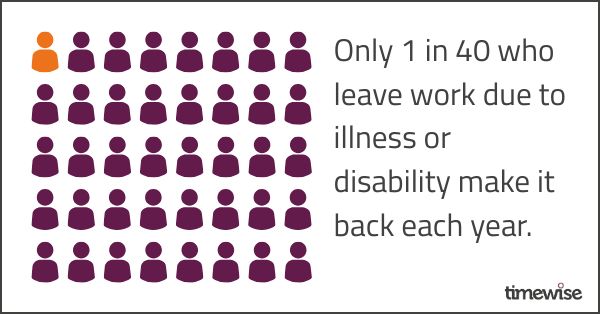
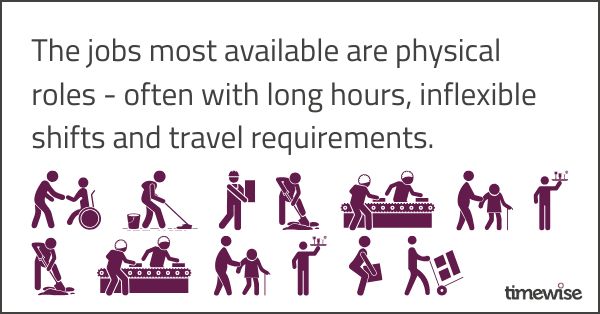
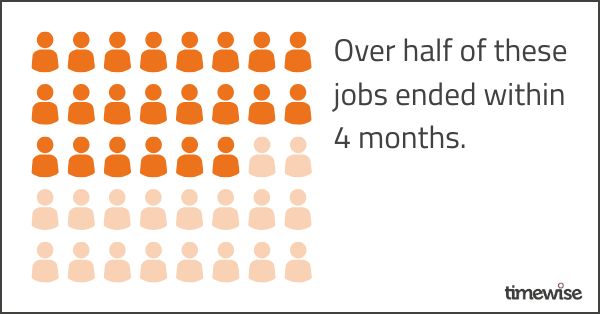
Without action to increase schedule flexibility and control for workers in these sectors, the government’s return on investment in back-to-work support for the formerly inactive long-term sick will be disappointing.
We call for a new industrial strategy for good jobs, focused on improving job quality and performance in the ‘everyday’ economy where most people work, starting with three central reforms:
Successive government administrations have neglected issues of job quality in frontline sectors. New rights due to come into force will tackle some of the worst practices associated with zero- and low-hours contracts, including short term notice and cancellations to shifts. A broader industrial strategy for good jobs would signal a more ambitious approach that ensures jobs support employee health and wellbeing. In doing so, it wouldn’t just help people back into work, it would ensure they can stay in work and thrive.
Published September 2025

By Tess Lanning, Director of Programmes
The next 12-18 months present a critical opportunity to improve employment outcomes for young people, as the government introduces a range of initiatives to tackle a rise in worklessness and insecurity.
As well as an increase in the age young people will be able to claim health-related benefits, this includes initiatives to improve the quality of jobs available. A new Youth Guarantee commits to providing decent training, apprenticeship and job opportunities for 18 to 21 year olds, while the Employment Rights Bill seeks to tackle high levels of low pay and insecurity in the economy.
Job insecurity disproportionately affects young people. Government statistics show that one in eight young workers are on a zero-hour contract, compared to less than one in 40 older workers, and young people are more likely to work volatile and variable work schedule patterns. Research has shown this is not only bad for early career job prospects – but can have a lifelong negative impact on employment, earnings and health outcomes (see Paul Gregg’s 2024 thought paper on future policy and Wen-Gui Han’s research article in to the effects of employment patterns on health in the US).
Government action to tackle these issues is therefore to be welcomed. But will employers engage with these initiatives? And if so, will young people see the benefits?
In June 2025, Timewise and Youth Futures Foundation gathered with employers from diverse sectors to find out.
Employers highlighted the focus on securing employees that can ‘hit the ground running’ in the context of rising financial pressures, combined with a reliance on tried-and-tested recruitment, selection and induction methods that favour older and more experienced workers.
Critically, they felt that there was a mismatch between dominant workplace cultures and the values, needs and expectations of younger workers – particularly in frontline sectors, where employers were finding it difficult to provide greater stability, security and flexibility at work. Many were struggling with skills gaps and vacancies as a result.
Employers had ideas for how to tackle these issues – from changes to hiring practices, management training, and more visible information about pay, progression and flexible working policies, to the creation of employee forums to co-design and support changes that improve long-term employment and health prospects for young people.
But they also highlighted the need for more support and evidence to inform good practice – particularly on issues affecting job security, such as scheduling practices and shift patterns. Without this, the new legislation may fail to hit the mark for young people.
Get in touch to understand how you can implement or inform good practice in these areas: info@timewise.co.uk
Published July 2025

By Nicola Pease, Principal Consultant, Timewise
We can all agree that any functioning society needs an excellent system of early years and childcare provision. At present, our high quality early years educators are managing to provide a great service, but many are stressed, exhausted and have little to no work-life balance. In short, it’s an early years system on the edge.
While issues around pay and progression loom large with no immediate resolution in sight, let’s look to what we can fix. Building on recent successes in other shift-based, site-based sectors such as nursing, construction and retail, Timewise launched a report following an in-depth two-year project in the early years and childcare sector. Thanks to support from JPMorganChase we were able to partner with two leading childcare providers: the Early Years Alliance and the London Early Years Foundation, and get close to childcare staff, in settings.
We analysed the industry’s challenges and assessed its potential with regards to improving staff wellbeing through changes to working patterns. Sometimes, even the smallest changes can make an enormous difference. We conducted all our research and analysis whilst keeping the experiences of children and parents front of mind. If this is going to work: it has to work for everyone.
We held a packed event in Westminster, with support from the Early Education and Childcare Coalition, to launch our subsequent report, Building the early years and childcare workforce of the future, with early years providers, policymakers and local and national government representatives. We collaborated on ideas and sharing ‘what works’ at settings across the UK. All with the experience of children and quality of education and care, front and centre of our thinking. Read on, to find out more…
The early years sector is facing a perfect storm – the expansion of 30 hours funded childcare will require an additional 35,000 staff across the UK, yet 78% of providers in a recent survey said they are already struggling to attract people to a sector that is not competitive on pay or working conditions. 62% of the workforce earn less than the living wage, with pay rates similar to roles in retail and hospitality, that are arguably less physically and emotionally demanding – and sometimes offer more flexibility in terms of what shifts and hours people can work.
There is also an increasing number of pressures on our early years educators which is driving up their workload and making the job harder. For example a growth in the demand for longer-hours provision to meet the needs of parents and (as was raised numerous times at our event), a hugely increased number of children presenting with SEND. All this notches up the pressure gauge.
The research found that nearly two-thirds of staff in group-based settings have said they do not have good work-life balance.
Part-time work across the sector has fallen in the majority of settings since 2018-19 with flexible working options generally achieved through the use of casual, agency or bank staff.
Managers recognised the potential benefits of offering flexible working but were concerned about continuity of care, maintaining staff-child ratios, meeting training standards, ensuring fairness and managing team dynamics. As one person described life in a nursery, “It’s a constant jigsaw.”
At the roundtable we heard a clear call to value those working in Early Years more highly, recognising that, “It’s not just about numbers, it’s about ensuring those who care and educate are energised, valued and motivated to do so.” There was an acknowledgement that emotional resilience is key in a workplace that demands a high level of emotional investment in children’s development and needs. And a sense that there is a need to better balance the workloads and schedules of those in such an intense working environment, to better support physical, mental and emotional wellbeing.
Increasing access and opportunity for the sector is a challenge, but through the research and numerous examples of good practice, it was proven to be possible within the operating constraints of the sector – all with the voice of the child front and centre. Innovative work practices included split-shift patterns (read Ruth’s story on page 11 of the report) and recruiting lunchtime assistants (page 18 of the report), housekeepers or tea-time assistants who enable flexibility across the wider teams. As Neil Leitch, Chief Executive of the Early Years Alliance put it, “You have to be creative. Continuity is critical but that does not mean you need always to see the same person.”
And it can also be used to enhance an organisation’s management capabilities. As June O’Sullivan OBE, the Chief Executive of LEYF said, “We need to think creatively about flexibility, in its wider context. For example, think flexibly about how you think about succession planning. It can help planning the next steps for staff or an experienced manager phase their retirement slowly, while helping a new manager to build their skills and knowledge.”
At a national level, Timewise is calling for a workforce plan that includes flexible working as a key strategic pillar. We estimate that a recruitment drive based around part-time and flexible working could attract staff to fill the equivalent of 17,850 full-time vacancies. That’s half the 35,000 shortfall the UK currently faces, to meet the expansion of 30hrs/week funded support.
Locally, we need authorities to bring networks of childcare providers together to share learnings, consider challenges and how to overcome them by exploring innovative practices such as sharing of bank staff. There was real momentum at our event around this idea – clearly they have a real ‘binding’ role to play. And for childcare providers themselves, we need to see a shift away from an individualised request-response model of flexibility towards a more pro-active whole-setting approach that encourages creativity and innovation and enables staff input into working patterns. To support this, Timewise have created a series of toolkits and resources for managers, which can be found here.
There is no magic wand with which to fix the staff and people problems that the early years sector is facing. But creating good standards of flexible working, in an industry where 98% of employees are women, many of whom have their own caring responsibilities, is not just good business sense. It’s a way to improve wellbeing and the lives of those playing the vital role of nurturing our future generations.

Despite being a critically important sector for the UK’s economy and society, childcare providers are struggling to recruit and retain staff. Delivering good quality early childhood education and care is key to enabling parents to work and contribute to economic growth, yet staff are facing longer hours and lower pay than comparable occupations for what can be more emotionally and physically demanding work.
This is not sustainable and action must be taken to improve staff satisfaction and to make those working in early years education feel more valued and supported. The pressure on the sector will only increase further as the government rolls out the funded childcare entitlement expansion over the next year, forecasting that an additional 35,000 new places for zero to two-year olds will be needed by September 2025.
The Timewise Childcare Pioneers project explored how proactive flexible working cultures could improve staff wellbeing and engagement and attract a more diverse pool of candidates – such as older workers and those with caring and health responsibilities.
We worked with the Early Years Alliance, representing 14,00 members, and the London Early Years Foundation, representing 40 nurseries, to explore the role improved flexible working could play in tackling the current workforce crisis facing the sector, and to understand what improvements are possible without compromising the quality of education and care that meets the needs of parent and children.
Then we designed and delivered a set of activities and tools to support nurseries to be more consistent in their approach to flexible working, and to help them to consider and trial new approaches to increase the availability of quality flexible work.
Our thanks to JPMorganChase and Trust for London for supporting this project.
Our initial diagnostic work found that part-time and flexible working is relatively common in childcare provider settings, and steps had been taken by both nursery providers to improve the information and support available to nursery managers to help them respond to flexible working requests fairly and consistently. However, staff felt that these arrangements were sometimes rationed, and their requests were not always seen as significant. They also felt that many managers set shift patterns without their input, and organisational needs were considered above staff needs, leaving them feeling less valued and less able to balance work and life commitments.
Head office staff and nursery managers highlighted that flexible working could make it harder to meet statutory staff-child ratios, recommended training standards, parents’ needs for flexible care, and provide continuity of care for the children. Managers are under pressure to juggle all these factors when setting schedules and are concerned that having more part-time staff and enabling flexible working patterns for some individuals would negatively impact others’ workloads.
“It’s really difficult because everything that we do is planned around ratios. And if you’ve already got a certain number of children and you’ve hit your maximum number of children with the staff that you’ve got, being flexible isn’t always possible.”
Nursery manager
“Flexible work works better in some types of settings than others. It depends very much on types of funding and types of hours parents need… More affluent areas means less availability of the 15 hour entitlement for two-year-olds, with an increasing focus on parents working three long days a week and wanting Monday and Friday off. Staff say Tuesday to Thursday are very mixed days and then Friday is half empty and Monday mixed. This has particular implications [for nurseries] as often the parents who want this have babies, and baby care needs high ratios and consistent care. Nannies and grandparents are also in the mix in different proportions in different settings.”
Director, nursery group
We found that leaders, managers and staff in nursery settings were keen to make improvements to their flexible working offering to help retain and attract staff, provided operational challenges could be overcome. With limited capacity to pilot new approaches due to high workloads and staff shortages, our project focused on improving the confidence, skills and knowledge gaps of nursery managers with a set of resources and tools.
The project showed that it is possible to improve flexible working in the childcare sector, and that this can be one part of a solution to current workforce challenges. However, it also highlighted the need for practical support to help employers implement changes in a sector where funding constraints and acute staff shortages are limiting the capacity for innovation.
If flexible working is to be adopted more widely across the sector, it is clear that concerted action is needed at both local and national level.
How to attract and retain talent through enhanced flexibility for the workforce
Published November 2024


