
Timewise sets out how logistics can move from excessive and unpredictable hours to healthier, fairer schedules that work for people and operations.
By Tess Lanning, Director of Programmes
The logistics sector is the backbone of the UK economy. It keeps food on our shelves, medicines in our hospitals and parcels on our doorsteps. It contributes £170 billion to the UK economy and employs up to 2.7 million people nationwide, including more than 250,000 in London alone.
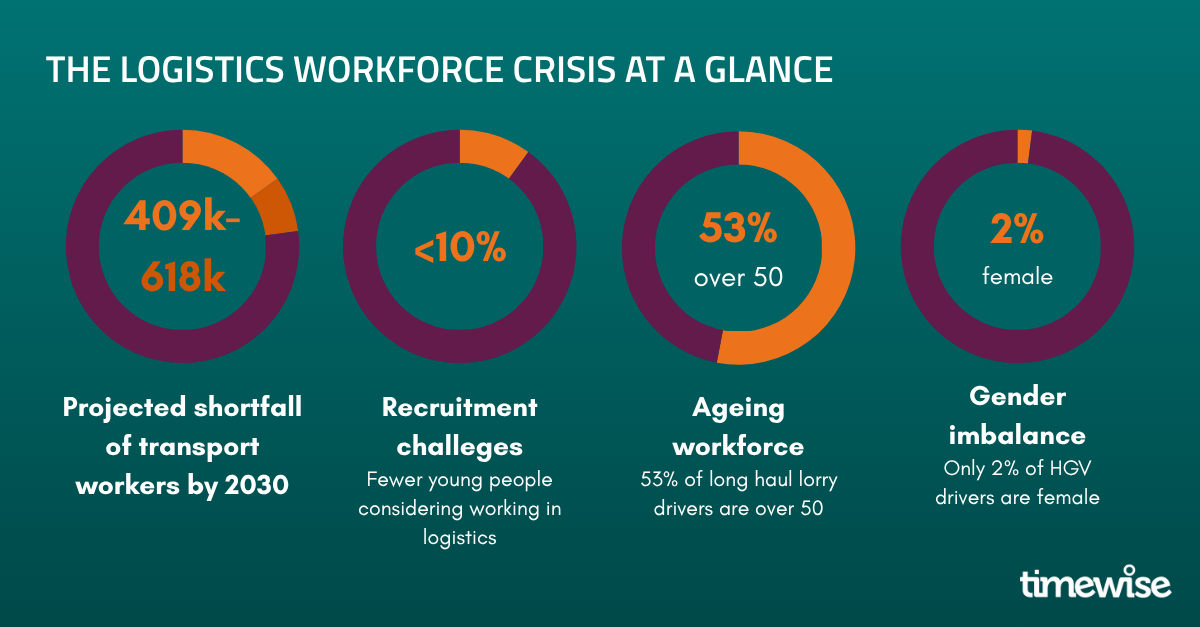
But behind this economic powerhouse sits a workforce under pressure – and a sector grappling with deep, structural challenges. An ageing workforce, persistent skills gaps, rising sickness levels and difficulties attracting younger and more diverse workers are creating a perfect storm.
For years, the focus has been on training and recruitment campaigns to attract new workers to the most acute skill gap areas such as lorry drivers. This is valuable and necessary – but it is not enough. Unless we tackle the way work is actually designed, scheduled and experienced on the ground, the workforce crisis in logistics will persist. Our latest report reveals why the logistics sector cannot afford to ignore job design any longer.
The evidence from across the sector is clear. Long and antisocial hours, high levels of job insecurity, unpredictable shift patterns and limited control over working time are forcing people out of the sector. Logistics has the highest proportion of workers reporting job insecurity (39%), poor work life balance (32%) and low autonomy (40%) of any sector.
These conditions are not just inconvenient – they are harmful. They contribute directly to:
And crucially, these patterns make logistics unattractive to the very groups the sector urgently needs to reach: women, young people, and those with caring responsibilities. Notably, only 2% of HGV drivers are female, and just 1.6% are under 24.
This is not a “nice to fix” problem. It’s a system wide risk.
The sector is undergoing rapid technological change. Automation, real-time route planning and predictive analytics should offer opportunities to consider people’s preferences in the scheduling process while still meeting operational needs.
But too often, technology is used to optimise for speed, not for workers. In practice, digital scheduling tools have increased pressure, surveillance and time chasing across long haul, warehousing and ‘last mile’ roles.
Unless tech is used intentionally to give workers more voice and more stability, it risks entrenching the very challenges it could help solve.
New employment legislation on flexible working and fair scheduling gives workers stronger rights to request control over their working patterns. Employers must now consult before rejecting a request and will soon need to provide fair advance notice and compensation for cancelled shifts.
The direction of travel is clear: employers are being expected to end cultures of excessive hours and unpredictable scheduling.
And younger workers – the pipeline the sector desperately needs – increasingly expect diversity, wellbeing and flexibility from any employer they consider.
Logistics companies that fail to modernise work design risk being left behind.
Some logistics employers are beginning to show what healthy job design could look like.
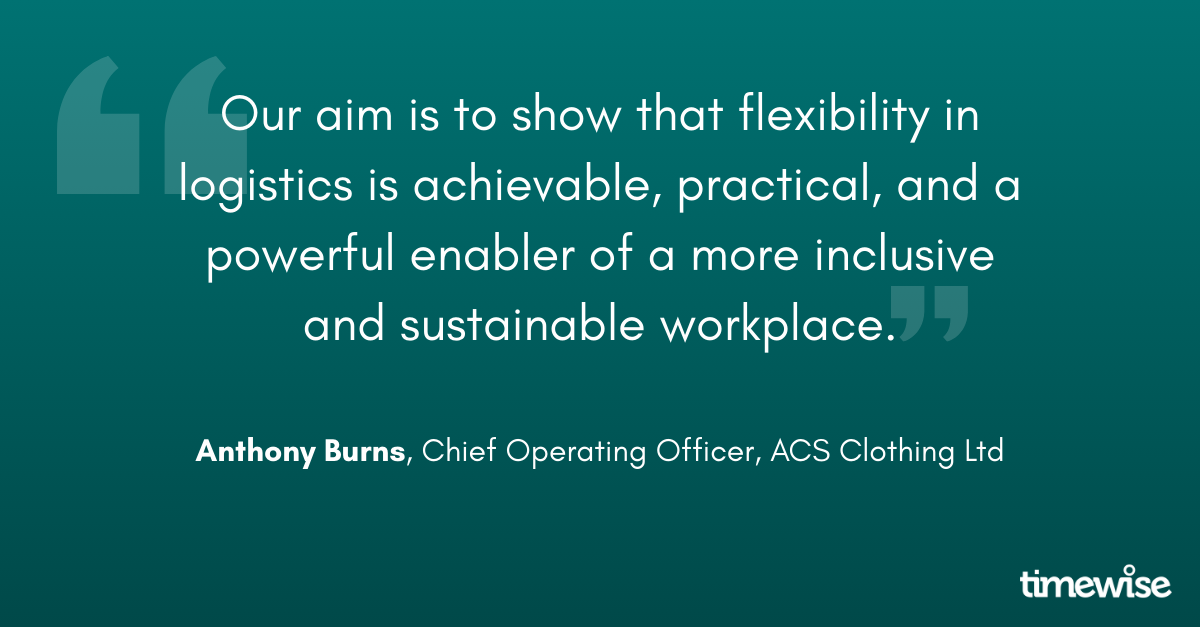
ACS Clothing Ltd has adopted secure contracts, predictable scheduling and worker-centred planning for warehouse staff – and seen improvements in retention, stability and trust as a result.
Wincanton has introduced part time and flexible options in its warehouses, including a “People Campus” model that has widened access to diverse talent and improved ‘pick accuracy’ by 20%.
DHL has enabled more part time and job share options for older drivers nearing retirement, by promoting healthy work patterns and incorporating their preferences into the route-planning process.
But innovation is still sporadic. For driving roles in particular, there is an urgent need for experimentation that grapples with the realities of mobile workers’ lives beyond work.
As well as these examples, public bus companies, social care providers and infrastructure teams all schedule people across geographies and shifts. And many have already begun modernising rostering. Key lessons for the sector include:
These approaches have led to reductions in sickness, improved retention, stronger wellbeing and better service delivery.
The report argues for a coordinated cross-sector approach to support uptake of this good practice. It calls on the government to expand the Modern Industrial Strategy to cover the sector – bringing together industry leadership, unions and technology providers to tackle workforce issues and sickness through a dual focus on improvements in performance and job quality.
Published March 2026


