
The first phase of the Government's consultation on new flexible working rights has closed. We set out why the proposed reforms fall short of what workers, businesses and the economy truly need.
The first phase of the Government’s consultation on new flexible working rights closed on 30th April 2026, offering the clearest picture yet of how Labour plans to deliver on its manifesto commitment to give people a ‘default’ right to work flexibly.
The proposed framework has merit, but falls short of what Britain’s workforce genuinely needs.
The legislation proposes that, from 2027, employers will be required to meet with staff before rejecting a flexible working request, to consider alternatives, and to provide written reasons for refusal. Their decision will be subject to a new ‘reasonableness test’ – to be explored in a second consultation later this year.
Close to nine in ten people in the UK currently work flexibly or want to. For millions, it is a prerequisite for finding work, staying in it and progressing within it. The business case is equally compelling: the post-pandemic surge in hybrid working has delivered measurable gains in productivity and retention, and evidence from sectors where remote working is not an option consistently shows that greater control over working patterns improves satisfaction, recruitment and attendance.
Like its predecessor, the new legislation rests on the individual employee making a formal request and trusting their manager will respond constructively. For many workers, particularly those in frontline and lower-paid roles, this model is poorly suited to the reality they face.
Awareness of rights remains low. Cultural assumptions suppress requests before they are made. And outcomes depend heavily on individual managers, many of whom feel ill-equipped to navigate employment law. Employers will retain the right to refuse on broad business grounds, and without clear thresholds for reasonableness, rejection will remain straightforward even where workable alternatives exist. With no right to appeal and tribunal claims beyond the reach of most workers, enforcement is a significant weak link.
Meaningful reform demands more than procedural updates. The Government should provide substantive, sector-specific guidance, including a clear ‘Path to Yes’ framework with worked examples of what good flexible working looks like in practice.
More fundamentally, the reactive, case-by-case model needs to give way to something more collective. Evidence from other countries shows that team and organisation-wide approaches, where staff have a genuine say in job design and working patterns, achieve far more lasting cultural change than individual requests ever can. Sector-wide coordination is required to overcome collective action hurdles and problems of insecure and excessive hours that will limit effectiveness of the legislation.
Flexible working is not simply a quality-of-life issue. It is a labour market, public health and productivity challenge, and the Government’s reforms, however well-intentioned, risk making little difference where it matters most.
Britain can do better. Read our full consultation response to find out what we believe real flexibility by default should look like.
Published May 2026
Our analysis of five years of labour market data reveals a troubling pattern. The sectors that employ the highest concentrations of young workers, retail, hospitality, and health and social care, are the same sectors driving the highest rates of workers moving into long-term sickness and economic inactivity.
Nearly half of all young workers are concentrated in just three sectors: wholesale and retail (23%), accommodation and food services (11%), and health and social work (12%). These aren’t just entry-level jobs. They’re jobs characterised by insecure hours, unpredictable schedules, and working conditions that can create or worsen health problems, both physical and mental. Research has shown that young adults on zero-hours contracts are at higher risk of poor mental health than those in stable employment.
The numbers are telling. Accommodation and food services has the highest rate of workers becoming economically inactive due to ill-health of any sector. 17 per thousand workers compared to an average of seven across all industries. Meanwhile, elementary occupations, caring roles, and sales positions – where young people are heavily over-represented – account for the largest volumes of people falling out of work due to sickness.
Research challenges that concept head-on, pointing instead to economic precarity, insecure hours and insufficient income as key drivers of the mental health crisis among young people today. When over a quarter of 20 to 24-year-olds have insecure working arrangements, and nearly three in ten young employees report multiple negative aspects of job quality, we’re not looking at a generational problem – we’re looking at a jobs problem.
The government’s Youth Guarantee presents an opportunity to break this cycle. But only if it prioritises job quality alongside job quantity. Without improvements to working conditions in frontline sectors, we risk supporting young people into roles that don’t last and don’t provide meaningful opportunity. The evidence on ‘scarring’ is clear – insecure work when you’re young doesn’t just affect you now, it follows you through your working life.
The evidence from our own programmes shows what’s possible. When employers give shift workers more choice, input and control over their working patterns, sickness absence and staff turnover fall significantly while wellbeing and work-life balance improve. But many employers need support to make these changes, facing barriers from procurement models to operational constraints to cultural resistance.
The path forward requires collaboration between government, employers and unions. Young people deserve more than just any job. They deserve good jobs that support their health, provide stable income and offer a genuine route to economic security. With the right policy framework and sector-level agreements, we can make this happen.
Published April 2026
By Tess Lanning, Director of Programmes
Nearly one million young people in the UK are currently not in education, employment or training – and the numbers leaving work due to mental ill-health are rising sharply. Our new analysis reveals a troubling pattern. The sectors where young people are most concentrated are the same ones seeing the highest rates of workers becoming economically inactive due to long-term sickness.
The evidence is clear
In wholesale and retail, food and accommodation, and health and social care – the sectors employing the most young workers – we’re seeing concerning flows into economic inactivity. In food and accommodation alone, an estimated 17 out of every thousand workers will become economically inactive due to ill health.
This isn’t coincidence. These sectors share common characteristics: low pay and job insecurity. And the evidence increasingly links these working conditions to rising mental distress and economic inactivity among young people.
While most workers experiencing long-term sickness are older, over a quarter are under 40. The concentration of young workers in sectors associated with health problems adds to mounting evidence about the long-term ‘scarring’ effect of poor quality work – particularly job insecurity – on young people’s employment, earnings and health outcomes.
Creating good jobs, not just jobs
The Government’s Youth Guarantee aims to create 350,000 new opportunities for unemployed young people. But our research shows that job creation alone isn’t the solution – we need to focus on job quality.
When workers cycle back into inactivity from frontline sectors, their hours drop dramatically from an average of 21 per week to just 8.5 hours. The economic case for change is compelling: supporting even half of young workers at risk of inactivity to sustain their working hours would generate over half a billion pounds in economic output annually, and provide at least £6,500 in additional wages for each young person.
What needs to happen
Working with the TUC, we’re calling on the Milburn Review (the Independent Report into Young People and Work) to urgently examine how to improve the quality of frontline work through better job design.
The Employment Rights Act offers a vital opportunity to strengthen job security and flexible working rights. But passing legislation is only the first step – we need targeted support for effective implementation in the sectors where young people need it most.
This means working in partnership with employers in wholesale and retail, food and accommodation, and health and social care to redesign jobs that offer young workers stability, security and genuine flexibility. Because when young people have access to good quality work, everyone benefits: workers, employers and the economy.
With thanks to the Trades Union Congress (The TUC) for supporting this research, and to Paul Bivand for the analysis.
Published April 2026
By Tess Lanning, Director of Programmes
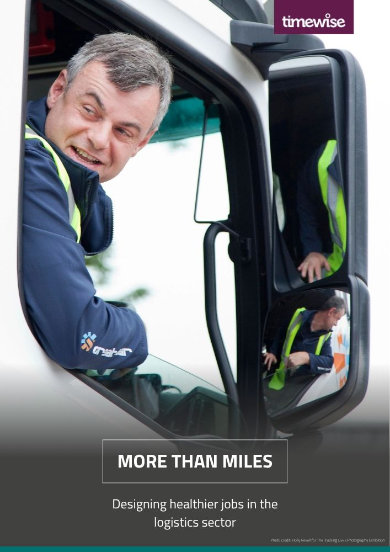
The logistics sector is the backbone of the UK economy. It keeps food on our shelves, medicines in our hospitals and parcels on our doorsteps. It contributes £170 billion to the UK economy and employs up to 2.7 million people nationwide, including more than 250,000 in London alone.
But behind this economic powerhouse sits a workforce under pressure – and a sector grappling with deep, structural challenges. An ageing workforce, persistent skills gaps, rising sickness levels and difficulties attracting younger and more diverse workers are creating a perfect storm.
For years, the focus has been on training and recruitment campaigns to attract new workers to the most acute skill gap areas such as lorry drivers. This is valuable and necessary – but it is not enough. Unless we tackle the way work is actually designed, scheduled and experienced on the ground, the workforce crisis in logistics will persist. Our latest report reveals why the logistics sector cannot afford to ignore job design any longer.
The evidence from across the sector is clear. Long and antisocial hours, high levels of job insecurity, unpredictable shift patterns and limited control over working time are forcing people out of the sector. Logistics has the highest proportion of workers reporting job insecurity (39%), poor work life balance (32%) and low autonomy (40%) of any sector.
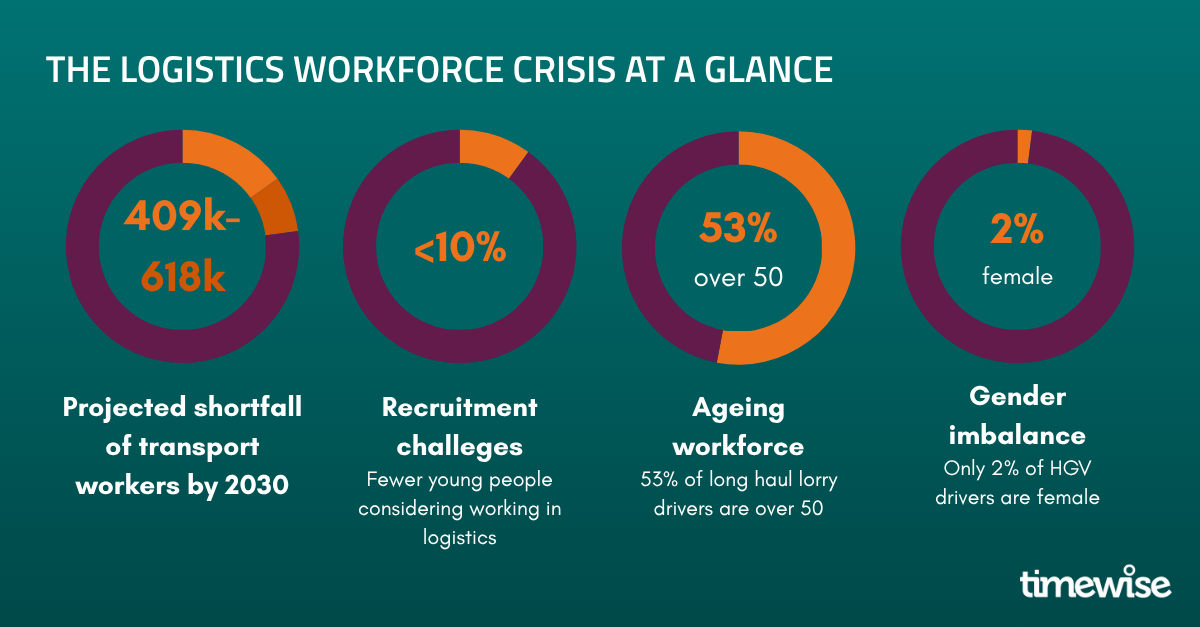
These conditions are not just inconvenient – they are harmful. They contribute directly to:
And crucially, these patterns make logistics unattractive to the very groups the sector urgently needs to reach: women, young people, and those with caring responsibilities. Notably, only 2% of HGV drivers are female, and just 1.6% are under 24.
This is not a “nice to fix” problem. It’s a system wide risk.
The sector is undergoing rapid technological change. Automation, real-time route planning and predictive analytics should offer opportunities to consider people’s preferences in the scheduling process while still meeting operational needs.
But too often, technology is used to optimise for speed, not for workers. In practice, digital scheduling tools have increased pressure, surveillance and time chasing across long haul, warehousing and ‘last mile’ roles.
Unless tech is used intentionally to give workers more voice and more stability, it risks entrenching the very challenges it could help solve.
New employment legislation on flexible working and fair scheduling gives workers stronger rights to request control over their working patterns. Employers must now consult before rejecting a request and will soon need to provide fair advance notice and compensation for cancelled shifts.
The direction of travel is clear: employers are being expected to end cultures of excessive hours and unpredictable scheduling.
And younger workers – the pipeline the sector desperately needs – increasingly expect diversity, wellbeing and flexibility from any employer they consider.
Logistics companies that fail to modernise work design risk being left behind.
Some logistics employers are beginning to show what healthy job design could look like.
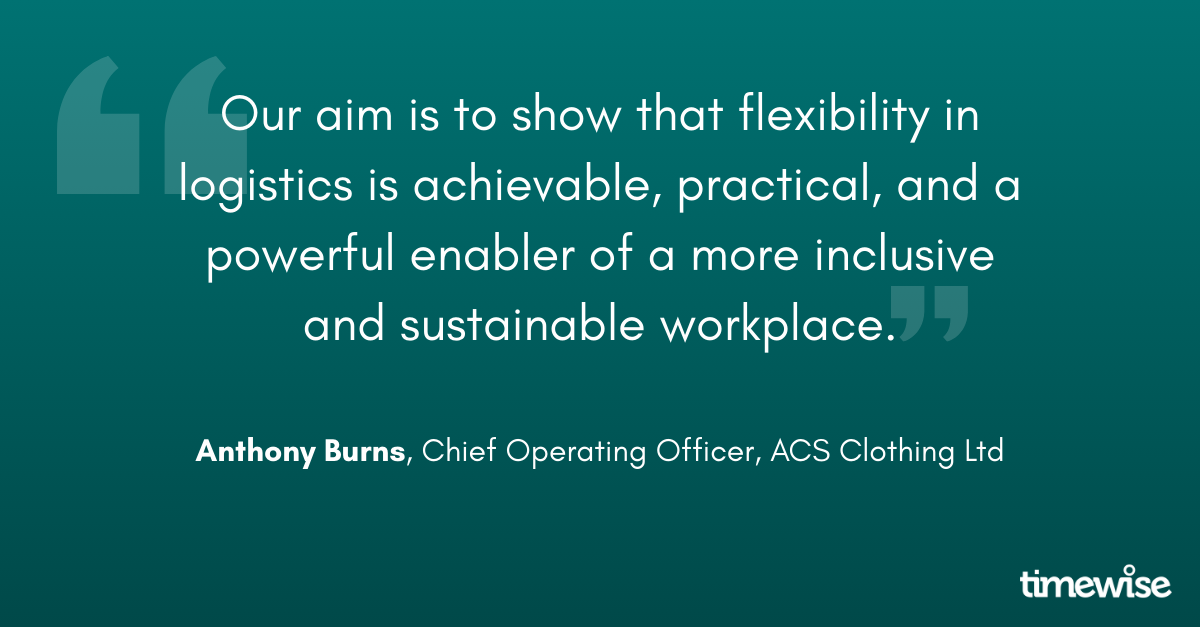
ACS Clothing Ltd has adopted secure contracts, predictable scheduling and worker-centred planning for warehouse staff – and seen improvements in retention, stability and trust as a result.
Wincanton has introduced part time and flexible options in its warehouses, including a “People Campus” model that has widened access to diverse talent and improved ‘pick accuracy’ by 20%.
DHL has enabled more part time and job share options for older drivers nearing retirement, by promoting healthy work patterns and incorporating their preferences into the route-planning process.
But innovation is still sporadic. For driving roles in particular, there is an urgent need for experimentation that grapples with the realities of mobile workers’ lives beyond work.
As well as these examples, public bus companies, social care providers and infrastructure teams all schedule people across geographies and shifts. And many have already begun modernising rostering. Key lessons for the sector include:
These approaches have led to reductions in sickness, improved retention, stronger wellbeing and better service delivery.
The report argues for a coordinated cross-sector approach to support uptake of this good practice. It calls on the government to expand the Modern Industrial Strategy to cover the sector – bringing together industry leadership, unions and technology providers to tackle workforce issues and sickness through a dual focus on improvements in performance and job quality.
Published March 2026

By Clare McNeil, Timewise CEO
The departure of Angela Rayner and machinery of government changes we have seen in the last few days have exposed some of the tensions that surround the government’s approach to one of its most high-profile pieces of legislation, the Employment Rights Bill. It has also raised questions about whether we are likely to see ‘continuity or change’ in regard to this.
Even before the government reshuffle, the government was facing questions about its intent on the Employment Rights Bill, given the long timescales for implementation of key measures and a lack of resources focused on implementation and enforcement.
But with a new ‘super-ministry’ at the Department for Work and Pensions (DWP) which is expected to incorporate adult skills under the new Secretary of State Pat McFadden, the drawbacks of this approach may become more apparent. The very groups DWP (and HM Treasury) urgently need to get back into the workplace – those who are economically inactive due to disabilities and long-term sickness and their parents and carers – are mostly likely to do so with exactly the flexible, secure and predictable work the Employment Rights Bill encourages employers to offer. For example, as many as two-thirds of disabled people who are currently not working and receiving incapacity or disability benefits need to work flexibly or part-time to get back into work, as the Resolution Foundation recently found.
One of the arguments against the proposed legislation on flexible working and zero-hours contracts is that it is unworkable. But look at what businesses are doing rather than what lobby groups are arguing on their behalf: increasingly employers are offering minimum guaranteed hours, giving workers more say and control over their shift patterns and fair notice of both schedules and changes to stay competitive in a challenging recruitment market. We published many examples from leading employers in Timewise’s Ending the Two-Tier Workforce report earlier this year.
The expected transfer of adult skills into the DWP portfolio raises hopes of closer working with the Department for Business and Trade (DBT) on a whole set of issues – from the role of employers in young people’s employment, to improving poor employer utilisation of skills which leaves so many talented (often part-time) workers behind and businesses missing out on talent. Even before these changes in government, a busy autumn was shaping up on the work and health front. Three key events Timewise will be focused on:
The Employment Rights Bill will be the subject of ‘ping pong’ between House of Lords and parliament over the next few weeks. House of Lords amendments have paved the way for key proposals on offering guaranteed hours to an employee and paying for cancelled shift work to be removed or watered down.
One of the arguments against these proposals is that they are unworkable. But Timewise has worked with many employers who are voluntarily adopting these ways of working to recruit and retain the best staff. See positive examples from employers such as WH Smith (TG Jones) and Timewise advice for employers here:
We can’t simply legislate our way to better work. In spite of the many pressures facing business, Sir Charlie Mayfield is likely to argue in his Keep Britain Working review that it is in business interests to work with government to tackle rising working age ill health. In our response to the consultation Timewise argues a key test for the Review will be whether it can make a difference for the ‘deskless’ workers in frontline sectors where rates of inactivity are highest – like retail, transport, health & care and construction. That means a voluntary framework alone is unlikely to be enough.
We’d like to see agreements for employers, workers and experts to come together to drive up standards, reduce sickness absence and improve retention rates. The White Paper expected from DWP this Autumn is another vital chance to influence employer behaviour to create the part-time and flexible work those with health conditions and disabilities vitally need.
With more public sector strikes potentially on the horizon for this Autumn, we must recognise that pay is just one factor. Surveys of frontline workers show that self-respect, dignity, autonomy and flexibility at work matter as much as levels of pay. Denied requests for flexible working, heavy workloads and the introduction of new technologies are taking their toll on public sector workers.
Expected workforce plans in health, education, childcare and the fair pay agreement for social care are a chance to turn this around. Critical to this is what the TUC are calling a pro-worker strategy on AI: the use of gig work apps and workforce scheduling tools, for example, can make work more insecure, increasing worker surveillance and undermining regulation. Improving insights into the best and the worst of these technologies is vital and a key focus for Timewise in the months ahead.
Published September 2025
The vast majority of people who become economically inactive leave (and are most likely to return to) sectors dominated by shift-based and site-based work. The top five are retail, transport, hospitality, health and care, followed by construction. Workers frequently face rigid schedules and tough working conditions which can make it difficult to find the flexibility or predictability they need to accommodate a disability, health condition or caring responsibilities.
What limited support is available through Department of Work and Pensions (DWP) programmes to tackle this is too focused on making people more suitable for unsuitable jobs. Instead, more state support needs to be directed at supporting employers to influence the way work is designed and managed in these sectors if we are to see meaningful change in disability employment gaps or economic inactivity rates.
The government’s welfare reform White Paper this Autumn, the independent review led by Sir Charlie Mayfield and the phased implementation of the Employment Rights Bill offer a vital chance to achieve this shift. But this requires closer working with industry, unions and experts to negotiate agreements to achieve common objectives in sectors that face real operational constraints and obstacles to designing work differently and which often involve practices that cause or exacerbate health issues at work.
In this critical window to change the way we work for the better, Timewise is arguing for changes including:
Published August 2025

By Nicola Pease, Principal Consultant, Timewise
We can all agree that any functioning society needs an excellent system of early years and childcare provision. At present, our high quality early years educators are managing to provide a great service, but many are stressed, exhausted and have little to no work-life balance. In short, it’s an early years system on the edge.
While issues around pay and progression loom large with no immediate resolution in sight, let’s look to what we can fix. Building on recent successes in other shift-based, site-based sectors such as nursing, construction and retail, Timewise launched a report following an in-depth two-year project in the early years and childcare sector. Thanks to support from JPMorganChase we were able to partner with two leading childcare providers: the Early Years Alliance and the London Early Years Foundation, and get close to childcare staff, in settings.
We analysed the industry’s challenges and assessed its potential with regards to improving staff wellbeing through changes to working patterns. Sometimes, even the smallest changes can make an enormous difference. We conducted all our research and analysis whilst keeping the experiences of children and parents front of mind. If this is going to work: it has to work for everyone.
We held a packed event in Westminster, with support from the Early Education and Childcare Coalition, to launch our subsequent report, Building the early years and childcare workforce of the future, with early years providers, policymakers and local and national government representatives. We collaborated on ideas and sharing ‘what works’ at settings across the UK. All with the experience of children and quality of education and care, front and centre of our thinking. Read on, to find out more…
The early years sector is facing a perfect storm – the expansion of 30 hours funded childcare will require an additional 35,000 staff across the UK, yet 78% of providers in a recent survey said they are already struggling to attract people to a sector that is not competitive on pay or working conditions. 62% of the workforce earn less than the living wage, with pay rates similar to roles in retail and hospitality, that are arguably less physically and emotionally demanding – and sometimes offer more flexibility in terms of what shifts and hours people can work.
There is also an increasing number of pressures on our early years educators which is driving up their workload and making the job harder. For example a growth in the demand for longer-hours provision to meet the needs of parents and (as was raised numerous times at our event), a hugely increased number of children presenting with SEND. All this notches up the pressure gauge.
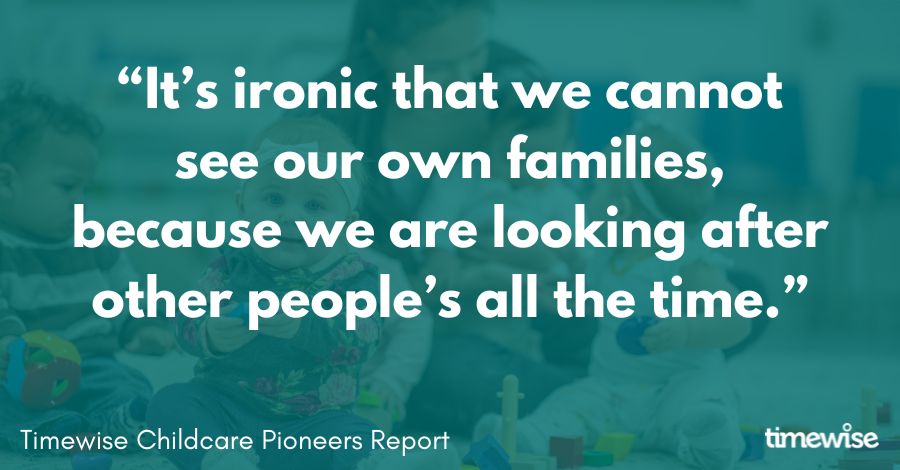
The research found that nearly two-thirds of staff in group-based settings have said they do not have good work-life balance.
Part-time work across the sector has fallen in the majority of settings since 2018-19 with flexible working options generally achieved through the use of casual, agency or bank staff.
Managers recognised the potential benefits of offering flexible working but were concerned about continuity of care, maintaining staff-child ratios, meeting training standards, ensuring fairness and managing team dynamics. As one person described life in a nursery, “It’s a constant jigsaw.”
At the roundtable we heard a clear call to value those working in Early Years more highly, recognising that, “It’s not just about numbers, it’s about ensuring those who care and educate are energised, valued and motivated to do so.” There was an acknowledgement that emotional resilience is key in a workplace that demands a high level of emotional investment in children’s development and needs. And a sense that there is a need to better balance the workloads and schedules of those in such an intense working environment, to better support physical, mental and emotional wellbeing.
Increasing access and opportunity for the sector is a challenge, but through the research and numerous examples of good practice, it was proven to be possible within the operating constraints of the sector – all with the voice of the child front and centre. Innovative work practices included split-shift patterns (read Ruth’s story on page 11 of the report) and recruiting lunchtime assistants (page 18 of the report), housekeepers or tea-time assistants who enable flexibility across the wider teams. As Neil Leitch, Chief Executive of the Early Years Alliance put it, “You have to be creative. Continuity is critical but that does not mean you need always to see the same person.”
And it can also be used to enhance an organisation’s management capabilities. As June O’Sullivan OBE, the Chief Executive of LEYF said, “We need to think creatively about flexibility, in its wider context. For example, think flexibly about how you think about succession planning. It can help planning the next steps for staff or an experienced manager phase their retirement slowly, while helping a new manager to build their skills and knowledge.”
At a national level, Timewise is calling for a workforce plan that includes flexible working as a key strategic pillar. We estimate that a recruitment drive based around part-time and flexible working could attract staff to fill the equivalent of 17,850 full-time vacancies. That’s half the 35,000 shortfall the UK currently faces, to meet the expansion of 30hrs/week funded support.
Locally, we need authorities to bring networks of childcare providers together to share learnings, consider challenges and how to overcome them by exploring innovative practices such as sharing of bank staff. There was real momentum at our event around this idea – clearly they have a real ‘binding’ role to play. And for childcare providers themselves, we need to see a shift away from an individualised request-response model of flexibility towards a more pro-active whole-setting approach that encourages creativity and innovation and enables staff input into working patterns. To support this, Timewise have created a series of toolkits and resources for managers, which can be found here.
There is no magic wand with which to fix the staff and people problems that the early years sector is facing. But creating good standards of flexible working, in an industry where 98% of employees are women, many of whom have their own caring responsibilities, is not just good business sense. It’s a way to improve wellbeing and the lives of those playing the vital role of nurturing our future generations.

Despite being a critically important sector for the UK’s economy and society, childcare providers are struggling to recruit and retain staff. Delivering good quality early childhood education and care is key to enabling parents to work and contribute to economic growth, yet staff are facing longer hours and lower pay than comparable occupations for what can be more emotionally and physically demanding work.
This is not sustainable and action must be taken to improve staff satisfaction and to make those working in early years education feel more valued and supported. The pressure on the sector will only increase further as the government rolls out the funded childcare entitlement expansion over the next year, forecasting that an additional 35,000 new places for zero to two-year olds will be needed by September 2025.
The Timewise Childcare Pioneers project explored how proactive flexible working cultures could improve staff wellbeing and engagement and attract a more diverse pool of candidates – such as older workers and those with caring and health responsibilities.
We worked with the Early Years Alliance, representing 14,00 members, and the London Early Years Foundation, representing 40 nurseries, to explore the role improved flexible working could play in tackling the current workforce crisis facing the sector, and to understand what improvements are possible without compromising the quality of education and care that meets the needs of parent and children.
Then we designed and delivered a set of activities and tools to support nurseries to be more consistent in their approach to flexible working, and to help them to consider and trial new approaches to increase the availability of quality flexible work.
Our thanks to JPMorganChase and Trust for London for supporting this project.
Our initial diagnostic work found that part-time and flexible working is relatively common in childcare provider settings, and steps had been taken by both nursery providers to improve the information and support available to nursery managers to help them respond to flexible working requests fairly and consistently. However, staff felt that these arrangements were sometimes rationed, and their requests were not always seen as significant. They also felt that many managers set shift patterns without their input, and organisational needs were considered above staff needs, leaving them feeling less valued and less able to balance work and life commitments.
Head office staff and nursery managers highlighted that flexible working could make it harder to meet statutory staff-child ratios, recommended training standards, parents’ needs for flexible care, and provide continuity of care for the children. Managers are under pressure to juggle all these factors when setting schedules and are concerned that having more part-time staff and enabling flexible working patterns for some individuals would negatively impact others’ workloads.
“It’s really difficult because everything that we do is planned around ratios. And if you’ve already got a certain number of children and you’ve hit your maximum number of children with the staff that you’ve got, being flexible isn’t always possible.”
Nursery manager
“Flexible work works better in some types of settings than others. It depends very much on types of funding and types of hours parents need… More affluent areas means less availability of the 15 hour entitlement for two-year-olds, with an increasing focus on parents working three long days a week and wanting Monday and Friday off. Staff say Tuesday to Thursday are very mixed days and then Friday is half empty and Monday mixed. This has particular implications [for nurseries] as often the parents who want this have babies, and baby care needs high ratios and consistent care. Nannies and grandparents are also in the mix in different proportions in different settings.”
Director, nursery group
We found that leaders, managers and staff in nursery settings were keen to make improvements to their flexible working offering to help retain and attract staff, provided operational challenges could be overcome. With limited capacity to pilot new approaches due to high workloads and staff shortages, our project focused on improving the confidence, skills and knowledge gaps of nursery managers with a set of resources and tools.
The project showed that it is possible to improve flexible working in the childcare sector, and that this can be one part of a solution to current workforce challenges. However, it also highlighted the need for practical support to help employers implement changes in a sector where funding constraints and acute staff shortages are limiting the capacity for innovation.
If flexible working is to be adopted more widely across the sector, it is clear that concerted action is needed at both local and national level.
How to attract and retain talent through enhanced flexibility for the workforce
Published November 2024

By Dr Sarah Dauncey, Head of Partnerships and Insight, Timewise
Occupational segregation is a distinctive feature of the UK’s labour market and a driver of persistent inequality, in income and more widely in health. Workers from black and minoritised ethnic groups are overly represented in sectors where site-based, insecure and lower-paid work is prevalent. People from minoritised groups are also more likely to have a higher risk of developing long-term health conditions, which can affect people’s ability to work – especially in site-based and more physical roles. The pandemic exposed the health inequity arising from this, with minoritised ethnic groups disproportionately impacted because of the increased likelihood of being a frontline worker without the option to work from home.
These patterns are too often replicated within organisations, with people from minoritised ethnic groups overrepresented in lower-paid, site-based roles and functions like security, cleaning, catering and caretaking which typically have more limited access to flexible options. Where an organisational focus is on hybrid as a flexible option, disparities are intensified. Further, within their workplaces, workers from minoritised ethnicities can experience a sense of precarity or inferiority that restricts their confidence to challenge decision-makers and request reforms to conditions or working patterns for fear of losing their job.
This means that workers from black and minoritised communities are overall less likely to make the most of the workplace benefits that support better health. This includes the improved work-life balance that comes from better autonomy and flexibility. Unhealthy working conditions contribute to ill-health, and ill-health restricts people’s ability to work, creating a cycle that is increasingly difficult to overcome in the context of the rising cost of living.
It’s in the context of this structural inequality that Runnymede and Timewise established a partnership, with the support of Impact on Urban Health. We wanted to better understand the relationship between flexible working and organisational approaches to equality, diversity and inclusion, and how site-based workers from black and minoritised ethnic backgrounds perceive and experience flexible working.
More specifically, we wanted to find out how new ways of working supported or thwarted a sense of inclusion and belonging. This involved us speaking with two stakeholder groups in participating organisations, leaders of site-site based teams and their employees. We took an action-oriented approach to our research, ensuring that our insights drove meaningful change in participating organisations to address processes of exclusion.
The recent racist rioting, driven by a combination of routine, normalised discrimination – heated-up over recent years by mainstream politicians and media – has raised the stakes of our research and its implications for both workers and organisations. Our interviews were undertaken early in 2024. We heard workers’ sense of fear, their reluctance to ‘rock the boat’ and ask for working patterns that might challenge ‘ideal worker’ (i.e. white and male) stereotypes. People who have experienced, or are experiencing, racial trauma invariably have a different set of expectations about their level of input and control over their working pattern.
During the riots, we read harrowing accounts in the mainstream media of people facing physical and verbal threats because of their skin colour or religion, instilling fear among people from black and ethnic minorities across the country. While we welcomed hearing about employers who led with empathy and offered increased protections to their employees, including the opportunity to work from home if they were able to, we were mindful of the risks that site-based workers had to face. Yet again, people from black and ethnic backgrounds who worked in jobs with fixed locations faced greater exposure, this time, not to disease but to an outbreak of violent racism.
This disparity once again highlights the urgent need for employers of site-based staff to think both strategically and creatively about flexible options and how they can be used to value employees and provide work-life support. Our research shows how critically important it is for employers to be pro-active here, talking openly – to all – about available flexible options. Signposting them rather than expecting employees to have the confidence to ask for them.
Our study uncovered a complex of factors that posed barriers to site-based employees accessing flexible options. These broadly fall into three categories: operational, managerial and cultural. We found that employees’ race and ethnicity shaped their workplace interactions and expectations around working patterns and level of empowerment to pursue change. Here’s a summary of some of the main barriers that we identified.
These barriers, contributing to a diminished sense of autonomy, gave rise to frustration and personal stress among some employees – impacting on their sense of wellbeing and work-life balance. Moreover, participants recognised the connections between input and control over ways of working and organisational benefits, not just personal ones. They spoke of the gains that would flow from feeling trusted and more autonomous and empowered, such as higher levels of commitment and productivity.
Leaders participating in the research recognised the potential of flexible working to support inclusion priorities but were alert to the realities on the ground and the effect of variations in managers’ attitudes and approaches. They were aware of a disconnect between policy and practice leading to disparities. Organisational values and commitments weren’t being evenly role modelled and applied by managers.
So, what are the solutions to help employers navigate these challenges, improve their working cultures and deliver on equity and inclusion?
While localised initiatives need to be tailored and based on insights and measurement, we’re pleased to share some general insights from our research to drive meaningful organisation-wide action to address workplace inequalities and call out processes of exclusion.
We’re aware that further research is needed to deepen understanding of the complexity of the challenges facing minoritised ethnic workers over accessing flexible working options. The employers who partnered with us showed bravery and commitment to tackling systemic, structural and cultural challenges. They have sustained work ahead to deliver change, but a clear sense of where they’re heading and a route to get there with accountability in place. We’re delighted to say our peer researchers have now become pivotal to holding their organisations to account on delivery equity in access to flexible options, and ultimately better health.
Published November 2024

By Nicola Pease, Lead Principal Consultant
With the publication of the Employment Rights Bill, it was anticipated that the right to disconnect would be one of the raft of new rights for employees. However, it seems that this particular element of the legislation will instead be progressed through a Code of Practice. Although it will not become a statutory right, it remains a key pillar of Labour’s plan to Make Work Pay. In this article, we’ll explore what it’s likely to mean for employers and workers, and how best to prepare.
The government’s intention behind this new Code of Practice is to improve productivity and morale and promote work-life balance. The commitment is set out as follows:
“We will bring in the ‘right to switch off’, so working from home does not result in homes turning into 24/7 offices. We will follow similar models to those that are already in place in Ireland and Belgium, giving workers and employers the opportunity to have constructive conversations and work together on bespoke workplace policies or contractual terms that benefit both parties.“
Certainly, advancements in technology and the increase in hybrid working arrangements contribute to an ‘always on’ culture – where employees feel they are expected to be available and contactable outside of their working hours. A recent study by IOSH found an ‘epidemic’ of long working hours within the UK, and additionally found that 52% of respondents regularly check work related messages and emails outside of working hours, and 39% check and respond to work related messages whilst on annual leave.
This blurring of boundaries between work and outside-work life is what the government is seeking to address, and we at Timewise welcome the Code of Practice to help tackle what is a current and pressing wellbeing issue. Whilst some are concerned about a negative impact on productivity, we ascribe to the belief that well rested, healthy employees, who have protected time away from work, are likely to be more engaged and productive when they are working.
It appears the government are taking a similar approach to Ireland, which has an established a code of practice. This requires employers to come up with practical arrangements for guaranteeing periods when employees aren’t contacted and sets out obligations for time recording to demonstrate this.
Others including Australia, have also implemented their own formal right to disconnect from work, giving workers the right to refuse to monitor, read or respond to work-related communications without fear of dismissal or reprisals.
The language in Labour’s new deal suggests that they recognize that a ‘one size fits all’ approach won’t work on this – and that each workplace will be required to work out their own response to the new right, and how it can be implemented. In our experience, this seems sensible given the range of organisations and roles that will be impacted. Those organisations who genuinely engage their employees on this and work together to find the ‘win-win’, are the most likely to see positive shifts on organisational culture and behaviours. However, it’s unclear how employers are to be held accountable for upholding their responsibilities. We’d like to see the Code of Practice setting out clear requirements for monitoring and reporting to ensure it has an impact.
At Timewise, we support organisations of all shapes and sizes to innovate their working practices and design and implement new, flexible, ways of working. Our work focuses on finding the ‘sweet spot’ where the needs of the organisation and the needs of individuals can both be achieved. It involves being willing to look afresh at working practices and being willing to try something new. Co-designing solutions with managers and teams is our proven approach to achieving flexibility that works for all.
If you’re looking at your current workplace and can see that digital presenteeism and out-of-hours contact are regular occurrences, here are five things you can do:
The introduction of a Code of Practice provides an opportunity for managers and employees to revisit working patterns and arrangements, and ensure that they are working for individuals and enabling them to deliver productively in their roles. The right to switch off won’t automatically kick in at 5pm Monday to Friday in all cases – it’s about identifying what is reasonable and practical and ensuring the organisation’s culture and systems are set up to support this, and to harness the wellbeing and productivity benefits which will result.
Published October 2024
Changes in work: zero hours contracts
Changes in work: flexible working as a default Day One right


