How could this work? What are the risks and wins, and how employers should start getting ahead.

By Amy Butterworth, Consultancy Director
In October this year, the Government published its Employment Bill including the commitment to make flexible working a default right. This builds on the changes made in April this year which made it possible for employees to make a request on day one of their employment.
In terms of how this will be delivered, the Government has essentially tightened up the previous policy, putting more onus on the employer to accept any ‘reasonable’ request. Supporting guidance is expected to make it clear what the consideration process needs to be and to help employers understand how to apply the ‘reasonableness’ assessment.
In terms of supporting organisations to make this change, the key is to make sure it supports employers in delivering their business, as well as supporting individuals. It also important to reference all types of flexible working to ensure that the flexibility can be found which suits the role. This isn’t just about hybrid working. There will be more work to do to support employers to identify the flex that will work in each role and to support teams with multiple people working flexibly.
If delivered correctly, this change could enable thousands more people to access and stay in work. It will also benefit employers in terms of improving wellbeing and morale, and reducing sickness and turnover.
At Timewise, we’ve supported hundreds of organisations to transform their approach and attitudes towards flexible working. And as we’ve proved in our innovation work, there are ways to improve the options and choice someone has, even in shift- based and site-based roles.
Our work focuses on finding the ‘win-win’ where the needs of the organisation and the needs of individuals can be achieved. It involves being willing to look afresh at working practices and being willing to try something new. Being familiar with a whole range of ways to make jobs more flexible. And co-designing solutions with managers and teams.
Now that we know that this change will be happening, we encourage employers to look at their organisational culture and processes to ensure that flexible working is really integrated into how they work. The demand is there, so to reap the benefits of improved attraction and retention, ensure flexible working can be supported in every team and be part of your ways of working.
Published October 2024
Changes in work: zero hours contracts
Changes in work: the right to switch off

By Amy Butterworth, Consultancy Director
For too long, the UK has relied on the traditional 9-5, five-day-a-week working model, which we know no longer fits with modern lifestyles. While some industries, usually those with desk-based workers, have adopted flexible working with relative ease, spurred on by the pandemic, others with site-based or frontline workers have found it more challenging and risk being left behind. There is now a growing divide in the UK workforce between those who can work flexibly and those who cannot. Additionally, there is an increasing number of people out of work on sick leave, and employee burnout is on the rise too. With retention rates and employee wellbeing topping many leadership teams’ to-do lists, could flexible working be the answer?
Here at Timewise, we’ve long called for trialling different ways of working as we know the traditional 9-5 doesn’t work for everyone. That’s why we’re thrilled to be actively involved in the 4 Day Week campaign’s second pilot, which begins this Autumn. The second pilot has been expanded to give organisations greater opportunity to experiment with different kinds of flexibility, which aligns with the work we do, especially with front-line and site-based workers. Can the newly evolved four-day week trial pave the way for more flex, especially in traditionally hard-to-flex roles?
The first four-day week pilot saw 61 organisations move to a four-day week without a pay loss for workers. Organisations reduced working hours by an average of 6.6 hours to reach a 31.6-hour week and gave their employees one full day off a week, either on a universal or staggered basis.
The results led almost every company (92%) to continue with a four-day week, with many citing its positive effects on employee wellbeing, business performance and improved retention. While the initial pilot reaped encouraging results, it’s important to note that the majority of people involved were desk-based workers. From our experience, time-based flexibility can be challenging to manage and it’s unlikely this ‘one-size fits all’ approach will work for all organisation types and workers.
Which is why we’re thrilled the 4 Day Week campaign is evolving to give organisations the opportunity to try different kinds of flexibility. This could be shorter working weeks, flexible start and finish times, a nine-day fortnight, or compressed hours. As this is our sweet spot, we had to get involved and lend our knowledge and experience to the programme. We believe this new pilot will give organisations with ‘hard-to-flex’ roles the opportunity to innovate in a low-risk way as we know from our pilots in a range of sectors, including construction, nursing, retail and teaching. And we also know that changes to make flexible working more widely available can pay for themselves in just a few years through reduced sickness absences and improved staff retention.
The 4-Day Week campaign is an opportunity for organisations to get creative, especially those that have frontline or site-based workers, who have traditionally hard-to-flex roles. It comes at a time when we’re hearing of more organisations trialling new ways of working, which can only lead to more data and better decision-making as a result.
South Cambridgeshire District Council recently experimented with a shorter week for desk-based workers before expanding its trial to include refuse collection workers. Despite criticism, the Council continued with its plans, which saw changes to routes, collection days and extra staff. This has resulted in fewer sick days, less absenteeism, and better overall retention.
Another example is retailer Wickes, who we worked with to pilot a new approach to flexible working. The pilot made flexible working a reality for store managers, which had a knock-on effect on the company’s ability to attract and keep staff. It’s now being rolled out to more managerial roles.
We firmly believe that pilots are valuable. They allow organisations to test and develop innovative workplace solutions, learning and fine-tuning along the way, before committing to rolling out new ways of working, increasing the likelihood of success and sustainability. We have extensive experience in this area and will be sharing key learnings and watch-outs with pilot organisations.
Organisations of all types are encouraged to sign up for the six-month pilot, which begins in November. Throughout the pilot, organisations will benefit from support and guidance, tailored to their needs. The University of Cambridge, Boston College, and the Autonomy Institute will conduct an impact analysis and the results will be presented to the Government in Summer 2025.
This pilot is an exciting opportunity for organisations to innovate and implement flexible working arrangements that support their employees’ needs. The experiences and results from this pilot can pave the way for others too, especially in industries that are reluctant to flex. Timewise’s CEO Claire Campbell, said: “This is a great opportunity to trial something which will benefit worker health and retention. Whether you work in a warehouse, a care home or behind a desk – we foresee a fairer flexible future for all and the first employers to step forward for this trial, will be a part of that.”
Find out more about the 4 Day Week Campaign pilot.
Published August 2024
The pandemic amplified existing labour market inequalities in access to flexible working and we’re still reeling from the effects of this, especially in the context of health. While half of working adults were able to work from home at times during the pandemic, others weren’t given this option due to the location-based nature of their work.
The reality of a two-tier workforce – the ‘flexible haves and have nots’ – became starkly apparent along with the implications for worker health and wellbeing.
Emerging from the pandemic, workers given home-based options have expressed a strong interest in maintaining them. Many employers have responded to this demand by developing hybrid policies and practice, recognising its value for attraction and retention. Yet there’s been limited coordinated action to redress workplace inequalities by investing in innovation and design to organise work differently for frontline and site-based employees.
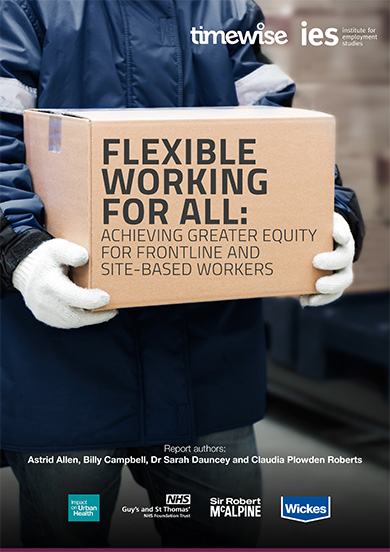
So, supported by Impact on Urban Health, Timewise joined with the Institute for Employment Studies (IES) and three trailblazing employers – Guy’s and St Thomas’ NHS Foundation Trust, Sir Robert McAlpine and Wickes – in a two-year long action research programme to introduce flexibility into frontline roles and evaluate its impact, on both the individual and the organisation. Our report outlines the findings from our journey together and shares learnings to make access to flexible working more equitable.
We tested the idea that good quality flexible work improves employee health and wellbeing, leading to benefits for employers, such as improved retention. Timewise co-designed activity with each of the three participating employers to give site-based workers greater input and control over their working patterns. Then in collaboration with IES, we considered the impact of increased flexibility on individuals from the point of view of their experience of health and wellbeing, work-life balance and job satisfaction, and on organisations from the perspective of levels of engagement, attendance and retention.
Our programme shows that flexibility is both central to how people want to work in the future and is practically possible even in ‘hard to flex’ roles. Where flexibility is introduced with the support of senior leaders, and is driven by teams at a local level, it results in positive impacts for both individuals and organisations. Workers report improvements to health and wellbeing, work-life balance, and a desire to stay longer with their employer. For employers, this means higher levels of employee engagement, lower levels of sickness absence and increased staff retention.
For the organisations involved in this programme, there’s no going back to former ways of working. They’ve embraced the changes and are moving forward with plans to scale up to ensure all are able to benefit through increased input and control over their working pattern.
Published July 2024

By Dr Sarah Dauncey, Head of Partnerships and Insight, Timewise
Since the pandemic, numerous studies have highlighted the benefits of hybrid and remote working for employees. Hybrid working models have been found to have positive impacts on workers, especially in relation to health and happiness. While it’s great to see this evidence showing the value of place-based flexibility, what about the millions of workers who can’t access it? The majority of the workforce (60%) are site-based and shouldn’t miss out on the advantages associated with having autonomy and control over working patterns, including improved health and work-life balance.
For too long, the UK workforce has been divided between those who can access flexibility and those who can’t. This divide was amplified through the pandemic, and we’re still reeling from the effects of this – with high levels of sickness absence and rising economic inactivity largely attributed to poor health.
For frontline and site-based workers, there has been limited coordinated action to redress workplace inequalities. And with the new government promising to make flexible working the default from day one, it’s critical we understand how to do this in site-based roles and build the evidence to incentivise employers to take action.
In 2022, we initiated a programme to address this inequity in access to flexible working by partnering with the Institute for Employment Studies and with the backing of Impact on Urban Health. We approached three employers who we knew were committed to taking their flexible working agenda forward, Guy’s and St Thomas’ NHS Foundation Trust, Sir Robert McAlpine and Wickes. Over the course of the programme, Timewise supported each employer to introduce greater flexibility into frontline roles and the Institute for Employment Studies tracked the effect of these interventions. We wanted to test whether good quality work would improve employee health and wellbeing, and lead to benefits for employers, such as improved retention.
The institute of Employment Studies led an independent evaluation of the work and found that flexibility gave rise to a number of positive outcomes.
But perhaps the best way to demonstrate the impact of the programme is through the voices of those involved:
A Store Manager from Wickes, said: “The trial has made me appreciate my job more, and (if possible) has made me even more loyal to Wickes, as I have the best work-life balance I have ever had in all the years I have been at Wickes.”
While a Quantity Surveyor from Sir Robert McAlpine, said: “If I hadn’t been given this opportunity, I think the conversation would have been about going part-time. I couldn’t cope with balancing childcare and a full-time job. Financially that would have had a very negative impact on me. I wouldn’t have been in a good place mentally and I probably wouldn’t be as productive.”
Through our programme and its evaluation, we’ve gained some valuable insights for other organisations looking to introduce flexibility for frontline and site-based employees.
For our participating organisations, there’s no going back to former ways of working. They’ve embraced the changes and are scaling up to ensure that everyone can benefit through increased input and control over their working pattern. For example, since participating in the programme, Wickes has widenened access to flexible options to all their store managers across the UK.
All three employers demonstrated that listening to employees and taking the initiative to increase flexible working opportunities – despite the operational challenges of doing so – delivers rewards. They are vanguards of flexible working in critical sectors, offering learnings for other organisations to benefit from.
Our programme provides much needed evidence to drive action among employers and improve workplace and health equity for frontline and site-based workers. Flexible working is not just an option for knowledge workers – it’s a way of working that should be and can be available to all.
Published July 2024
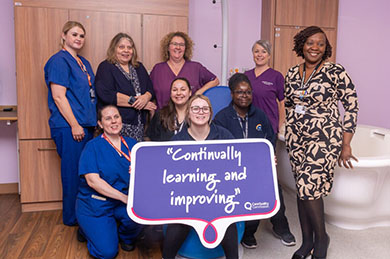
Lewisham and Greenwich NHS Trust are an accredited Timewise Trust – an accolade that is awarded to Trusts that demonstrate commitment to enabling flexible working for their teams Part of this is developing creative and innovative approaches to working patterns and arrangements.
Any Hours is an example of such innovation. The immediate post-pandemic period inspired ‘Any Hours’, the brainchild of Susanne Chatterley, Associate Director of Midwifery & Neonatal services at Lewisham and Greenwich NHS Trust. More than 300 midwives work across the Trust, delivering 5,000 – 7,000 babies a year.
A standard shift in midwifery is 12.5 hours and is set at 8.00am – 8.30pm, or 8.00pm – 8.30am.
A full time job requires working 13 shifts across a month – 3 weeks of 3 x shifts and 1 week of 4 x shifts. There are typically unfilled shifts within any NHS roster. The Nuffield Trust estimates that there around and around 8,000 to 12,000 unfilled nursing vacancies on a given day in England. In many cases, existing staff try to take on extra shifts where they can, or else agency staff are used. Traditionally in the NHS taking on an extra shift requires commitment to the full 12.5 hour day.
Susanne realised she could boost capacity by challenging the ’12.5hrs only’ mindset, when it came to filling vacant shifts.
She says: “In 2022, we had just gone through the second significant bout of Covid. I recognised that we had one group of experienced midwives who routinely picked up one or two extra 12.5 hour shifts a week – and these were the staff who were burning out. There was also a second group, with just as much experience, but who simply couldn’t pick up such lengthy additional shifts. They wanted to help their colleagues – but had young children to pick up from school, or elderly relatives to look after in their day. I thought to myself – how do I unlock this group, and how can I help the staff experiencing burnout? Then I thought – what if staff could choose their extra hours? What if they could stipulate how much extra time they could give – 3, 4, 8 hours, whatever it is – and choose when to work them?”
Susanne had a conversation with the midwifery team and followed with a survey to see if they’d like to work extra paid shifts and what hours they would pick if it was up to them. The results came back showing a strong desire to work more, especially against the background of the cost of living crisis, but that for many midwives, an extra 12.5 hour shift was too long. Susanne says: “All I had to do, was make it work.”
That was two years ago. The scheme has been an outstanding success. Wherever there are shifts that are unfilled, Any Hours allows midwives to choose the number of additional hours they want to work, and when they would like to work them. Lewisham and Greenwich NHS Trust data shows that since the Any Hours Scheme was enacted, it has it has enabled, on average, 300 hours of shifts to be filled each month, equalling two whole time equivalent midwives. This has reduced reliance on agency staff, and increased satisfaction with the team.
This has been achieved without buying in any additional software or making significant changes to the online rostering system staff already use to book shifts via their phones.
Susanne says: “The key difference is that all unfilled shifts are open to ‘Any hours’ – I let them ask for any additional hours they want, whatever the length and whenever they are. We always end up with a much fuller roster than we have had in previous years.”
“I also have a rule which is ‘hard stop’. We let staff finish their shift exactly when expected. If we start keeping people beyond the agreed shifts then the whole system starts to fall apart. It works because people feel they have autonomy, control and balance.”
“We also worked hard on making sure the extra shifts would work. Patient safety is of course our paramount concern. We spent time with senior clinical colleagues to think about how a 3, 4, or 5 hour extra shift would work. In terms of patient care, we wanted to ensure women have the same person with them as much as possible through their journey.”
“When you start thinking about shorter chunks of time, say a 3 or 4 hour shift rather than a 12.5 hour one, you need to think through – what can you usefully do in that period? It isn’t enough time to start a birthing journey with a patient. But you can support the whole ward and the midwives who are doing that. You can do baby checks so others can go home sooner, you can do the drug rounds, you could maybe host 1 clinic, or do postnatal visits. The key was finding jobs that fit the shorter hours.”
“And what I found was – people got really creative! One midwife comes at 11pm and she stays until 5 or 6am. I would never ask anyone to do that kind of shift routinely, but for her, it means she can work while her own children sleep and she is back for the school run. It fits her life.”
“We really saw the benefits over the Christmas period. Staffing is always a headache at that time of year, you usually end up redoing the rota 2 or 3 times and invariably end up short of staff.”
“But last year, I crunched the numbers after Christmas and realised we had equal to 4 whole-time equivalents more than usual– the best fill rate we have ever had. All those shifts would have otherwise been unfilled. People came in, working in 3 or 4 hour bursts to help out, and for the extra money at an expensive time of year. I felt all warm and fluffy on the inside when I saw that! I spoke to colleagues – they said they would never have come in to work a full extra shift because it would have interfered with their plans. What’s brilliant is – we are retaining staff known to us, with experience and skill who knows the service inside out, rather than having to just use agency staff.”
“The scheme has been going for two years now, and is well established. I don’t think I have ever turned anyone down – we are always able to offer what people want. The key has been flexibility and handing over a sense of control. People now have their regular patterns they have fallen into. Patterns that suit their lives.”
“What’s exciting is that Any Hours is completely replicable across the board. It works within the existing system. It can work in other departments, and for other Trusts.”
Any Hours is a part of Susanne’s doctorate, focusing on midwives who take up and use the offer, and colleagues who work with them. Susanne is completing a DBA in Business Administration at Aston University; Business School in Birmingham.
Susanne is already working on her next innovation project: ‘Any Speciality’, aiming to retain midwives who are 5 years + qualified (though those who are less qualified can also take part).
Any Speciality is a programme that encourages all midwives to spend 15 hours a month, or two days, in a different speciality of their choice. This allows colleagues to improve the competencies and skills needed to help their career progression, or even to directly apply for a specialist midwife role at the trust. To date, speciality teams have recruited nine midwives following Any Speciality contact at Lewisham and Greenwich NHS Trust.
Susanne says: “The opportunity is to ‘try before you buy’, when looking at another speciality as a possibility. I took one of the many of vacancies I had and chopped it up into 10 pieces, which leaves you with 15 hours a month (one tenth of a full time job). We offer this to anyone who has an interest in another speciality. The jump between core to speciality midwife is really big nowadays. And often, when someone makes the jump they don’t realise what they are signing up to – and they drop out or move on quickly if the role is not what they expected it to be.”
“Any Speciality is available for 1 year after that time – you may realise you hate it! That’s ok – you have tried it. You aren’t locked in. Or you just might love it. When the right job comes up, you can apply for it as you have the lived experience.”
Published July 2024
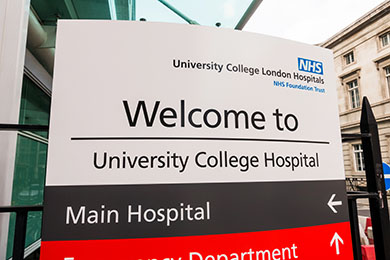
UCLH is a large teaching hospital, part of the Shelford Group, which has over 10,000 staff working across 10 London sites. The leadership team is keen to create a work environment in which staff feel valued, encouraged and supported, and as part of this, has sought to explore how to improve work-life balance.
Like many organisations, UCLH implemented remote and hybrid working for office-based staff during and after the pandemic. However, there are unique operational constraints in some patient-facing and clinical areas, mainly wards and teams delivering 24-hour services. Hybrid working was not a viable flexible working option for ward staff and the leadership team felt it was important to find other ways to offer flexibility for these teams. This was reinforced by a survey in 2021, which revealed that 51% of staff felt they had a good balance between work and home life, and just 48% felt that UCLH was committed to helping them balance these two elements.
Following this feedback, UCLH launched a new flexible working policy in 2022, which offered a more proactive approach to flexible working. This included the implementation of a new electronic rostering system, which in turn opened up opportunities to explore innovative approaches for ward-based staff.
However, the team felt they needed to bolster local resources with dedicated external expertise to drive the project forward, including the support of someone with experience in delivery. A member of UCLH worked with Timewise on a previous project at another NHS Trust and approached us to provide support for the self-rostering project.
Our team worked with UCLH to pilot a self-rostering approach, which allows staff to select their preferred shift arrangements and days off. These requests build a draft roster, which is then reviewed and adjusted (if necessary) by the ward manager / senior nurse. On completion the roster is 1st level approved by the ward manager followed by a 2nd level approval by the matron. It gives staff more input and control into the shifts they work, and makes the rostering process easier, and quicker, for the ward managers.
We agreed to pilot this approach with four wards of varying sizes, which were spread across two sites, and represented different clinical divisions and ward size. Approximately 152 staff were involved.
Working closely with the UCLH team, an integrated project team was created. We began with a research phase that looked at existing workforce data, and explored how the staff on the four wards were currently using the system. We then brought representatives from each ward together to work with us to design the pilot, setting out the principles and etiquette that would allow self-rostering to run smoothly.
We also sought to engage directly with the ward managers and matrons from each ward, knowing that they would be responsible for managing the new roster on a day-to-day basis, and for fielding questions about how to use it. And we created a range of resources for the UCLH intranet, which set out the parameters of the project, explained how to use the roster and answered common questions.
Having sought to get everyone on board, we then ran the pilot across the four wards for three months. Feedback was gathered through ward visits and surveys, and fed into a formal evaluation of the pilot, which could be used to steer a potential wider rollout.
We identified potential challenges before we began the pilot, such as the technology limitations, and the ‘first-come-first-served’ nature of the system being potentially contentious. However, the roster team provided the necessary training to ensure the rostering technology could be used effectively. The project team presented and communicated clearly the ‘etiquette’ involved in this new approach to rostering – encouraging staff to consider the impact of the shifts they were selecting on the wider team, by drawing on the Trust values. This helped mitigate these potential problems, none of which turned out to be issues during the pilot itself.
We did encounter some implementation challenges as the pilot developed. For example, although self-rostering should be used to book shifts or days off, some staff began using their allocations as a way to book time off work, instead of going through the annual leave process. Similarly, while each shift needed a senior nurse to select the nurse in charge shift some staff were not booking into these shifts. This impacted the overall shape of the roster and so the issues were addressed, and both of these were quickly overcome through conversations at a local level.
In terms of outcomes, we sought to evaluate how many staff were using the new roster approach to input their preferred shifts, and how many were approved. By the end of the pilot:
Critically, this new way of rostering was used by all staff groups, though slightly less by the unregistered staff. Positively, the ward managers reported they saved time, due to a large proportion of the roster already being populated before they got involved and had fewer swap shift requests after roster publication.
The UCLH team provided a detailed evaluation of the pilot, and approval was obtained to rollout self rostering across the nursing teams within the Trust.
Following the successful pilot, self rostering has been rolled out to the nursing teams in a further 43 wards across two hospital sites. The only exceptions are the emergency and critical care units (three wards) who had recently established their own specialist rostering arrangements including rolling rosters.
In order to enable roll out at this scale, the 43 wards were grouped into six cohorts, who went live with self rostering in a phased pattern across a period of six months. Timewise supported the UCLH project team and steering group to agree the roll out approach, standardise roster rules and get the engagement, training and comms right, building on our learning from the pilot. A valuable addition for the roll out was the appointment of a ward advocate for each ward, whose role was to support the project team and the ward managers by liaising with nursing colleagues, ensuring people understood the new approach, and flagging any issues or concerns early so that the roll out could progress smoothly. The steering group met monthly to monitor progress, measuring take-up and approval rates and ensuring they were in line with the high levels achieved in the pilot.
The nursing roll out is now complete, and some non-nursing teams across the Trust are starting to express interest in this way of working and exploring the benefits it could have for them also – watch this space!
Claire Stranack, HR Business Partner at UCLH, has this advice for anyone considering a similar project:
Inge Cordner, Lead Nurse for Nursing & Midwifery Workforce, has some additional suggestions from the frontline:
Timewise brought a huge amount of experience and resources and supported us at every stage of the process. They acted as a critical friend, supporting and facilitating design and engagement sessions, and driving the project forward at a pace we could not have achieved alone. There is no way we could have delivered this pilot within this timescale without Timewise’s involvement.
Claire Stranack, Human Resources Business Partner at UCLH
Often working in the NHS we have so many competing priorities that you can often be pulled in many directions. Someone outside of that space, supporting with external expertise, as provided by Timewise, meant we were able to hit the ground running whilst being able to build our own organisational knowledge at the same time. The project was well managed and enabled us to use our time efficiently. Thank you, Amy!
Inge Cordner, Lead Nurse for Nursing & Midwifery Workforce, UCLH
Published June 2024, updated May 2025

By Amy Butterworth, Consultancy Director
As Marcus Buckingham notably said, “People leave managers, not companies.” That’s why companies that take retention seriously tend to make sure their managers have the skills they need to lead and support their teams. But it’s fair to say that recent events have created some fundamental new challenges for managers to deal with – and in many cases, the training hasn’t caught up.
Despite the move to remote working during lockdown, and the subsequent shift towards a hybrid model, research from the University of Birmingham found that only 43% of managers had received any training in how to manage hybrid teams. It’s not a stretch to say that this could be why 47% of line managers are finding work more stressful than pre-pandemic. And with many companies now struggling to find the right balance between time spent in and outside the office, having skilled-up line managers is becoming even more critical.
It’s for this reason that we joined forces with our friends at the Chartered Management Institute (CMI) to run a three-month project, Making hybrid work for you and your team, exploring what’s happening on the ground with hybrid working, and what difference intensive management training can make. And the results surprised even us.

As of 6th April, employers will be legally required to consider requests to work flexibly from day one of employment – effectively extending current flexible working rights from existing to new staff.
The new legislation is just one of a series of measures on the horizon seeking to improve the control workers have over the hours they work. Later this year people working irregular hours will gain a new right to request predictable working patterns. And if Labour wins the next election, the party have pledged to convert these ‘rights to request’ into default rights for all workers and end the use of zero-hours contracts, among other measures.
If successful, these measures could help reduce the well-documented gap between the high number of people seeking to work flexibly, and the limited number of high quality, part-time and flexible jobs in the economy. They could help achieve wider goals such as boosting employment rates, and helping parents, older people and those with health conditions and disabilities to participate in work.
In advance of the new legislation ‘Day One Flex’ legislation coming into effect soon, Timewise is conducting interviews with employers in construction, transport and logistics, retail and health and social care. Our findings so far suggest that, without further action, this legislation will make little difference to staff in the frontline sectors and roles where most low-to-middle income earners work.
Each of these sectors faces genuine complexities when it comes to scheduling – from the need to provide the right capacity and skills to ensure safety on hospital wards and construction sites, to the operational challenges associated with responding to fluctuations in demand in retail, transport and social care. But there are also entrenched cultural patterns that have prioritised employers’ needs for flexibility over those of staff. Cost control measures in these sectors focus primarily on controlling staff costs, rather than the operational efficiencies and improvements that can come from a motivated, well-trained and engaged workforce.
Without this, few of those we are interviewing think the new right to request flexible working would have a significant impact on employers not already engaged in these issues. Interviewees cite the relatively low numbers of formal requests they currently receive, and the ability to reject requests on a broad range of business needs, whether for new or existing staff.
Employers highlight the wider structural constraints they have little control over. In construction, for example, cost and staff assumptions are usually set by developers in the tender phase. These organisations are several steps removed from the sub-contractors that have to deliver site-based works with the minimum number of staff and little room for the inevitable delays.
Similarly, acute budget constraints and staff shortages in the NHS and social care mean there is little ‘slack’ in the system, making it harder for managers to enable staff to request or change their working patterns.
In all these sectors there are employers that are bucking the trend, often driven by difficulties recruiting or retaining good staff, as well as a real commitment to staff wellbeing. Some retailers we are speaking to are choosing to offer regular, stable shifts, provided well in advance. One construction company has created two teams on each project to enable compressed hours and the option to start or finish early, while still providing the supervision and skills required to operate safely and tackle any problems.
The most transformative approaches are seeking to organise work and schedules in ways that enable ‘Shift-Life Balance’, providing greater input, advance notice and stability for all staff and teams. This is in contrast to case-by-case approaches to flexible working arrangements, which employers feel could lead to unfairness and inconsistency, and limit the overall scope for shift-life balance. This view is supported by pilots Timewise has conducted with employers in nursing, construction and social care to test team-based rostering, where staff collectively set schedules through a participatory forum. Employers saw significant improvements in staff engagement, recruitment and retention as a result.
The research is suggesting that this will require sector-wide interventions to ensure all parts of the system coordinate to enable more flexible working. And it needs training and support to build the capacity and knowledge for change among employers, particularly smaller employers. If we can achieve this, it could not only help tackle some of our biggest national social and economic challenges, but also significantly improve quality of life for millions of workers.
Published March 2024

By Claire Campbell, CEO, Timewise
Is the remote vs in-office debate still the only flex topic in town? And if that’s all anyone is focusing on, what are we missing?
There’s a new story every week about companies stopping employees from working some or any of the week from home, with Loreal and O’Rourke just two very recent examples. And yes, we agree that creating opportunities for teams to come together is hugely valuable (as long as it is planned and implemented carefully, so people aren’t just commuting in to sit on Teams calls all day).
But this unrelenting focus on getting everyone in full-time holds two potential dangers for employers. At a general level, it creates a perception that remote is the only flex worth talking about, when there are other ways to provide a better work-life balance. And, more specifically, it ignores the role that flexible working can play in tackling workplace priorities such as diversity and inclusion.
We’ve always believed that the power of flexible working to boost D & I is one of its biggest strengths, and have worked with many employers to build this into their strategies. It’s not rocket science, after all; offering a range of working patterns that take into account people’s different needs is bound to help you attract and retain different groups of people.
Numerous studies bear this out. When Zurich identified a lack of applications from women for senior roles, they launched a flexible working initiative which led to a 66% boost in applications, with one in four of the new female hires choosing to work part-time. And just this month, Wharton reported that when STEM job listings shifted to remote during the pandemic, they drew a 15% increase in female applicants, and a 33% increase in underrepresented minority applicants.
Unsurprisingly, flexible working is also important to people with additional responsibilities or needs. In a study by University of Lancaster, which focused on how remote working can support employees with a disability or long-term health condition, 70% of disabled workers said that if they were not allowed to work remotely it would negatively impact their health. ONS data has shown that, among older workers who have left the workforce since the pandemic and would consider returning, a third said that flexible working was the most important factor (higher than good pay). And a survey of mothers last year suggested that, while 98% of women want to return to work after maternity leave, only 13% think it is viable on a full-time basis.
Clearly, then, the data indicates that flexible working is a good way to attract and retain a wider range of people, including women, carers and people with health issues. So there’s a strong social argument for actively using flex to help these groups enter or re-enter the workforce.
Similarly, it’s worth noting the particular role that flexible working can play in tackling the ‘S’ in ‘ESG’. We’ve written before about the risk of two-tier workforces, in which flexible working is more readily available to people in office jobs than it is to those working in frontline roles (which are frequently lower paid). As this makes it even harder for those at the lower end of the pay scale to access work that fits with their lives, it’s likely to keep people out of the workforce, and so amplify existing inequalities. Better flexible working for all can help close this gap.
It’s equally important to remember that having a more diverse workforce has been shown to make economic sense. 2017 research by McKinsey calculated that improving diversity could add £150 billion a year to the UK economy by 2025, and companies with diverse boards have been shown to outperform their rivals. So there are sound business reasons, as well as social ones, for boosting diversity and inclusion through flexible working.
And on the subject of the business case, our Fair Flexible Futures projects showed that investing in flexible working can pay for itself within three years, due to reduced sickness absence and increased staff retention.
So, instead of going hell for leather trying to get everyone back into the office, it would be better for leaders to step back a bit. To think about whether their business and talent imperatives could be well-served by introducing flexible working – of varying kinds, to match the needs of their current and future workforce – and to invest a bit of time and resources in doing it well.
The arrival of ‘Day One Flex’ rights in April means that now is the perfect time to revisit your flexible working strategy, and embedding D & I into it makes a lot of sense. If you’re not sure where to start, or how best to take it further, we’re here to help.
Published February 2024

By Emma Stewart, Co-Founder, Timewise
Is it a given that working in a creative industry means working all hours? It doesn’t seem right, but it’s certainly the reality of life on set for film and TV crews, where 10+ hour days are not just the norm, they’re hard-wired into production schedules.
And while this has long been the case, things have got worse in recent years. The pandemic and its fallout put significant pressure on people in the industry – 86% of whom experience mental ill-health – and made it harder than ever to hang on to experienced crew. More recently, strikes have caused work to dry up again – and as things are starting to go back to normal, long hours are too. All of which is creating a growing perception that the status quo isn’t sustainable.
I can speak from experience, as one of the thousands of people who left a career in film and TV due to the impossibility of combining the job I loved with the needs of my young family. So I leapt at the chance to explore the options for introducing shorter working days for film and TV crews; to quote Jaws: The Revenge, “This time, it’s personal.” And our findings are now available in our new report.
We began our work in this field in 2022, with an action research project that explored potential opportunities to improve flexible working within the industry. The project was carried out in partnership with BECTU Vision and Screen Scotland, and it indicated that the main challenge was the length of the working day.
So in April 2023 we embarked upon a second phase, supported by BBC Drama Commissioning and The Film and TV Charity as well as our original partners, which set out to see whether productions based on shorter days could be commercially and logistically viable. The question we set ourselves was, Is it possible to go from a 10-hour working day to an eight-hour one, without a detrimental effect on budgets and schedules? (Spoiler alert – yes, it is.)


