This review of the outcomes of our flexible working trial, carried out by four major construction firms, shows the benefits are sustainable – and new ones have emerged.

In July 2021, we published the report into our Construction Pioneers Pilot, and it caused quite a stir. The 18-month programme was carried out in partnership with Build UK and four pioneer firms – BAM Construct, BAM Nuttall, Skanska UK and Wilmot Dixon – and set out to challenge the concept that frontline site-based roles were incompatible with flexible working. The outcomes were clear; and overnight, some long-held assumptions were overturned.
The pilot demonstrated that flexible working CAN be implemented on construction sites, without negatively affecting budgets or delivery. It highlighted the positive impact of flexible working on workers’ sense of well-being and work-life balance. It also set out the benefits of taking a team-based approach to working patterns, and demonstrated that a culture which accepts, and champions, flexible workers, is better for everyone involved.
But for us, and for our pilot colleagues, that wasn’t the end of the story. Flexible working is a long-term change; it takes time to embed it within an organisation, and progress needs to be tracked to get a clear picture of what works.
So we agreed to come back after a year and review the situation. Were the positive outcomes sustainable, and has anything else changed for the better? What still needs to be tackled? And what can the rest of the industry learn from all this? Our One Year On Review holds the answers.
To start with, the continuing positive impact on employees is clear. All four firms agreed that even small changes to ways of working were helping their staff better manage the challenges of day-to-day life, taking away potential problems that could increase stress.
The employees we interviewed also felt that they were more trusted and better understood, and that it was easier to discuss flexible working and make changes in a collaborative way with their managers. The managers themselves felt they were more open to trying out new ways of working, recognising that if it benefits their teams, it benefits the business too. That’s quite a culture shift.
And critically there was new evidence, from interviews and HR feedback, of a reduction in sickness absence. This is particularly notable in comparison to the rest of the construction industry, in which sickness absence is on the rise. All four participating firms believe that flexible working has contributed to this reduction, and given that one of our initial aims was to tackle the industry’s poor mental health and well-being record, it’s a welcome development.
Additionally, the firms have reported increased productivity levels, which they feel is the result of having a happier workforce who are better able to manage their commitments outside of work. And all this is still being delivered without any negative impact on either budget or delivery.
A further positive outcome is that our pioneer firms are now so confident about the value of flexible working that they have felt able to offer it from the point of hire. This is rare within construction, and likely to seriously improve the industry’s gender pay gap.
The review also noted some areas where there is more work to be done. There’s still a need for more consistency in management practice across the firms, and more time needs to be spent exploring other forms of flexible working. Part-time work, in particular, is still rare to the point of invisibility, particularly for on-site roles.
It also highlighted the as-yet-missed opportunity of influencing other parts of the supply chain; these new attitudes towards flexible working need to ripple downwards to sub-contracted workers, and upwards to clients too.
Overall, the evidence clearly suggests that our pioneers are reaping the rewards of their flexible working trial. They are also benefitting from this review, which has given them a forum to reflect on what’s working, within and across the four firms, and refine their plans accordingly.
What’s more, this model offers real benefits for the whole sector. Why? Because our initial pilot, and this one year on review, provide a clear roadmap for change. They set out what needs to be done, offer proof of concept for flexible working, and show what’s up for grabs for others who are willing to trial it for themselves.
It’s already gathering momentum; following our initial report a year ago, we’ve been engaged by a number of other firms who are keen to move forwards with flexible working, including Sir Robert McAlpine, Kier and Balfour Beatty. It’s our expectation that the further proof provided by this review will see even more firms taking action.
And why wouldn’t they? The evidence from this programme is pretty conclusive; it’s also backed up by our own cross-sector research, which has indicated that a flexible working trial which reduces sickness absence by one day per person per year generates a positive ROI.
In the words of Suzannah Nichol MBE, CEO of Build UK, “With such positive results, particularly around diversity and well-being, Build UK will continue to champion flexible working and I would encourage other industry organisations to do so too. If you aren’t already having the flexible working conversation within your business, it is definitely one worth starting – I promise you won’t regret it.”
Published July 2022

The suggestion that under a hybrid model, it will be women who predominantly opt to work from home, to the detriment of their careers, is understandable from a statistical point of view. Data from 2018 suggested that two thirds of mothers are the primary carer for their children. And during the pandemic, women carried out two thirds more of the childcare than men.
But it’s not that simple; and employers who assume it is are doing themselves and their other employees a disservice. The fact is, there are groups other than parents for whom working from home may also be a preference. And for some, lockdown-enforced remote working actually levelled the playing field in terms of access, availability and visibility.
For these groups, being supported to work from home without being affected by proximity bias is essential; badly thought-out hybrid arrangements could send their inclusion backwards. Here’s a look at some of these groups, and why it is in employers’ interests to make sure they’re properly included.
It’s been noted that autism is associated with characteristics such as loyalty, honesty and productivity, as well as logical thinking patterns and creative thinking skills, all of which are hugely valuable to employers. But for people with this condition, and others such as dyslexia, dyspraxia and ADHD, the office environment is not necessarily conducive to working.
For example, office lighting and acoustics can be tricky to navigate for people who struggle with sensory overload. And the social aspects of the workplace, and the battle to commute, can be exhausting for those who don’t find interaction easy.
So working from home, at least some of the time, could help these employees stay focused, and produce their best work. This is particularly the case if they are supported to work remotely in a way that suits their preferred communication method – for example, audio-only may work best for some team members.
From access issues for employees who use wheelchairs, to cancer patients’ need to attend appointments during the working day, working from home can minimise some of the complications that employees with physical health issues have to juggle. It also frees up time and energy (which they may need to use sparingly) for them to focus on doing a good job.
And with recent reports suggesting that fewer than one in three patients who were hospitalised during the pandemic feel fully recovered a year later, there is every indication that long Covid may become a real issue for employees. The ability to work from home will be key to helping them stay in the workforce.
It’s also worth remembering that some illnesses aren’t physical, or visible; the needs of employees with mental health challenges must also be taken into account. For employees with depression or anxiety, there’s no one-size-fits-all; but being able to work in a calm quiet space at home may be gamechanging for some, reducing stress levels and supporting the production of high-quality work.
And given the impact the pandemic is having on mental health – with ONS data from May 2021 revealing that depression rates had doubled since it began – a growing number of employees are likely to be affected in this way, and require support from their employers to thrive.
According to Carers UK, the Covid-19 pandemic has seen the number of employees with caring responsibilities rise dramatically, with the proportion of carers in any workforce now one in four.
For these employees, working from home can mean being able to visit or support their relative in their lunch hour, or at times when they would otherwise have been commuting. This has a positive effect on their own wellbeing and stress levels, which in turn, affects their ability to deliver for their employers.
Clearly, then, being able to work from home at least some of the time is a bonus for many members of these groups. And the impact that this has on their ability to deliver is good for their bosses, too. But there’s much more to it than that.
Diversity and inclusion isn’t just a box-ticking exercise; there are good reasons why organisations should aim to include a variety of experiences, viewpoints and skills. It opens them up to a broader range of perspectives and opinions, limiting the risk of groupthink and bringing more unique ideas and solutions to any given problem. It contributes to creativity and competitiveness; offers access to a wider talent pool; and makes it easier to get the right skillset for the job.
So what does all this mean for you? It means that if you want a diverse, inclusive workforce, whose employees offer an equally diverse range of skills and experiences, you need to create a culture in which they can thrive.
That means understanding your employees’ individual circumstances – remembering that not all challenges are visible. It means taking the time to understand what working arrangements will help your people to do their best work, and designing solutions that ensure that everyone is included. Training and empowering managers to have 1:1 conversations with their team members about workplace flex is a key part of this.
And in today’s Covid-affected landscape, it means deliberately working to mitigate against proximity bias, putting processes in place to make sure that people who are in the office more frequently don’t receive preferential treatment. If you’re not sure how to design inclusive hybrid working arrangements, we can help; do get in touch to find out more.
Published January 2022
The event was hosted by our Development Director, Emma Stewart, and featured a panel of business leaders who provided their own insights and analysis about what they’re seeing on the ground, as well as their suggestions for what needs to be done to shift the dial. We’ve included a recording of the event below.
Among the key themes which emerged were:
Our thanks got to our panel for sharing their insights and experience: Neil Carberry, CEO, The Recruitment and Employment Confederation; Jonny Briggs, Head of Talent Acquisition and D&I, Aviva; Farrah Ekeroth, Head of Employer Brand, EY and Jane Galloway, Head of Flexible Working, NHS England.
In this next pandemic phase, the hiring market must undergo an about-shift to keep pace with the times. This report from Timewise Jobs is for recruitment professionals, employer brand specialists and people leaders who want to best position their organisations to attract a diverse and inclusive workforce.
Amongst its many findings, the research highlights the scepticism that flex-seeking candidates have towards job adverts with generic promises of a flexible working culture. It also provides a vital reminder that remote working is just one form of flexibility, and that candidates’ strong appetite for part-time must not be forgotten in the rush to adapt to hybrid working patterns.
The report concludes by providing clear recommendations to businesses, on how best to articulate flexibility in order to increase job applications and develop employer branding for our new working world.

In a normal year, the deadline for most organisations to submit their gender pay gap reporting is the 4th April. But as this year has been anything but normal, the deadline has been extended to 5th October. And while some may argue a delay was warranted, it’s also ironic – because the pandemic has amplified the issues behind the gender pay gap, and made this information more critical than ever.
All the evidence suggests that the pandemic is turning back the clock on workplace equality, in a variety of ways. In the first lockdown, IFS research showed that mothers were 47% more likely to have lost their job or quit, and 14% more likely to be furloughed, than fathers; they also bore the brunt of home-schooling and spent two hours a day more on childcare. More recently, a report by the Fawcett Society noted that 1 in 3 working mothers have lost work or hours due to childcare during the pandemic, and that 43% of working women are worried about their job or prospects for promotion post-Covid.
Additionally, women are more likely to work in low-paid roles, and in sectors in which part-time jobs are more widely available, such as hospitality and retail. And these are the very sectors that have been decimated by the pandemic; by the end of 2020, for example, the hospitality sector had lost around 660,000 jobs.
So as we seek to build back better, we need to make sure that women, who have been so badly affected by the pandemic, are included in the recovery. And working to close the gender pay gap will be an important part of that process.
At its heart, the gender pay gap is really a gender progression gap. And, as we’ve noted previously, three of the four reasons behind the gap can be tackled by flexible working:
One positive outcome of the pandemic has been that fathers have been more hands-on; the Resolution Foundation have noted the possibility that “a permanent shift towards more flexible working will remove some of the norms whereby mothers are more likely to work part-time than their male partners.” Ensuring that part-time and flexible roles are well-paid, but critically also with progression opportunities, will help.
It’s also important to remember that when we talk about flexible working, we don’t just mean the remote arrangements that have been the focus of the last year. To really help women progress, we need more, better part-time roles, at all levels, advertised with their flexibility up front. Currently only 22% of jobs are advertised as flexible, and a miniscule 8% are specifically advertised as part time; clearly, there is much to be done in this area.
So although the delay means we won’t have access to up-to-date gender pay gap data as soon as we would like, it does also mean that organisations have six extra months to take stock of their post-pandemic position – and, most importantly, take action.
If you are keen to stop the rollback of women’s workplace equality, and make a dent in your gender pay gap, you need to take a positive, proactive approach to flexible working, in line with the points noted above. And we can help.
We have a track record of helping clients improve gender equality, and are frequently cited in gender pay gap action plans. Our Flex Positive Programme has been specifically designed to help organisations become future fit, by developing a sustainable flexible working strategy for the post-Covid workplace. It takes around six months to complete; to find out more, do get in touch.
Published March 2021
By Melissa Jamieson, CEO, Timewise

No one would argue that 2020 was a straightforward example of flexible working in action; it was more like a global experiment in how to cope when work and home collide. But nonetheless, the pandemic-led exploration of flexible and hybrid arrangements has overcome some of the perceived barriers, highlighted some of the positives, and taught a few lessons, leaving employers and employees with a better understanding of what’s possible.
As a result, any organisation which prioritises equality, diversity and inclusion, work-life balance, employer brand and talent retention and recruitment, will be seeking to ensure that their flexible working offer is up to scratch. So far, so good. The problem comes when they then assume that it’s a people issue, which can be left to HR alone.
Flexible and hybrid working touch all parts of the business
The fact is, flexible working isn’t a plaster that can be used to fix D&I issues or close recruitment gaps, and nor is it a knee-jerk response to lockdown that will soon revert to ‘normal’. Flexible and hybrid working are here to stay, and need to be considered as part of long-term, post-Covid, organisational planning.
They feed into the people strategy, of course; but they also touch wider company issues, from real estate and management structures to company brand and the bottom line. And, most importantly, they will only thrive within a flexible culture – and that needs to be led from the top, backed by an investment in time and training that will empower teams to deliver.
So, what do leaders need to do to make sure that flexible working is properly embedded in their organisation? Here are some key considerations that need board-level attention.
There are a number of questions that business leaders need to ask themselves before getting started. What do we mean by flexible and hybrid working? What are we hoping to achieve by implementing them? How can we ensure a fair approach that matches different needs and circumstances? Are there any limits to what we can or would want to offer? Would we be willing to recruit on a flexible basis? Without top-level consensus on what the objectives are, it will be difficult to persuade anyone else.
Having agreed a set of principles at board level, it’s important to find out the view from the ground. What is the appetite for flexible working among teams, managers, individuals? What are the barriers that different groups anticipate? Leaders need to understand how their principles might be received, and make their implementation a collaborative process, rather than just imposing them company-wide.
If there are negative perceptions about flexible working floating around, ignoring them isn’t the answer; they need to be addressed with actions as well as words. To give just one example, the myth that part-time means less committed can be disproved by giving prominence to part-time role models, or making recruitment opportunities and promotions available on a part-time basis.
Successful flexible working is based on a number of behaviours and skills including:
Leaders need to identify the critical factors within their organisations, and equip their employees to develop them.
Change of this scale can feel daunting for employees, even if they stand to benefit. So, leaders need to make sure that their people understand the principles and their objectives, are clear about the role they will play in embedding them, and know where to go for extra support, or to highlight unforeseen issues. Putting in place a system of feedback and review will help make the process transparent, fair and successful.
While show, don’t tell, might sound like an oversimplification, it is true that one of the best ways to drive a flexible culture is to lead by example. During the first lockdown, leaders shared their personal experiences of juggling home and work, which made their employees feel more comfortable about their own challenges, and the reverse is also true; saying one thing and doing another will make it harder for changes to land. So, for example, if working two or three days a week from home becomes company policy, leaders should do it too.
It’s worth remembering, too, that the implications of getting this right or wrong will resonate outside the organisation. It’s becoming increasingly common, for example, for potential clients to ask for D&I credentials as part of the pitch process (and there are suggestions that it may soon be a factor in boardroom bonuses too). And with flexible working high on employee wish lists, job seekers who are in a position to choose will be asking how flexible potential employers are – and bad news travels fast.
So, if you’re in a leadership role, and this hasn’t yet come onto your agenda, or it’s being treated as just an HR issue, it’s time for a rethink. Either way, if you need help with designing and implementing successful flexible or hybrid working practices, we can help.
Published February 2021
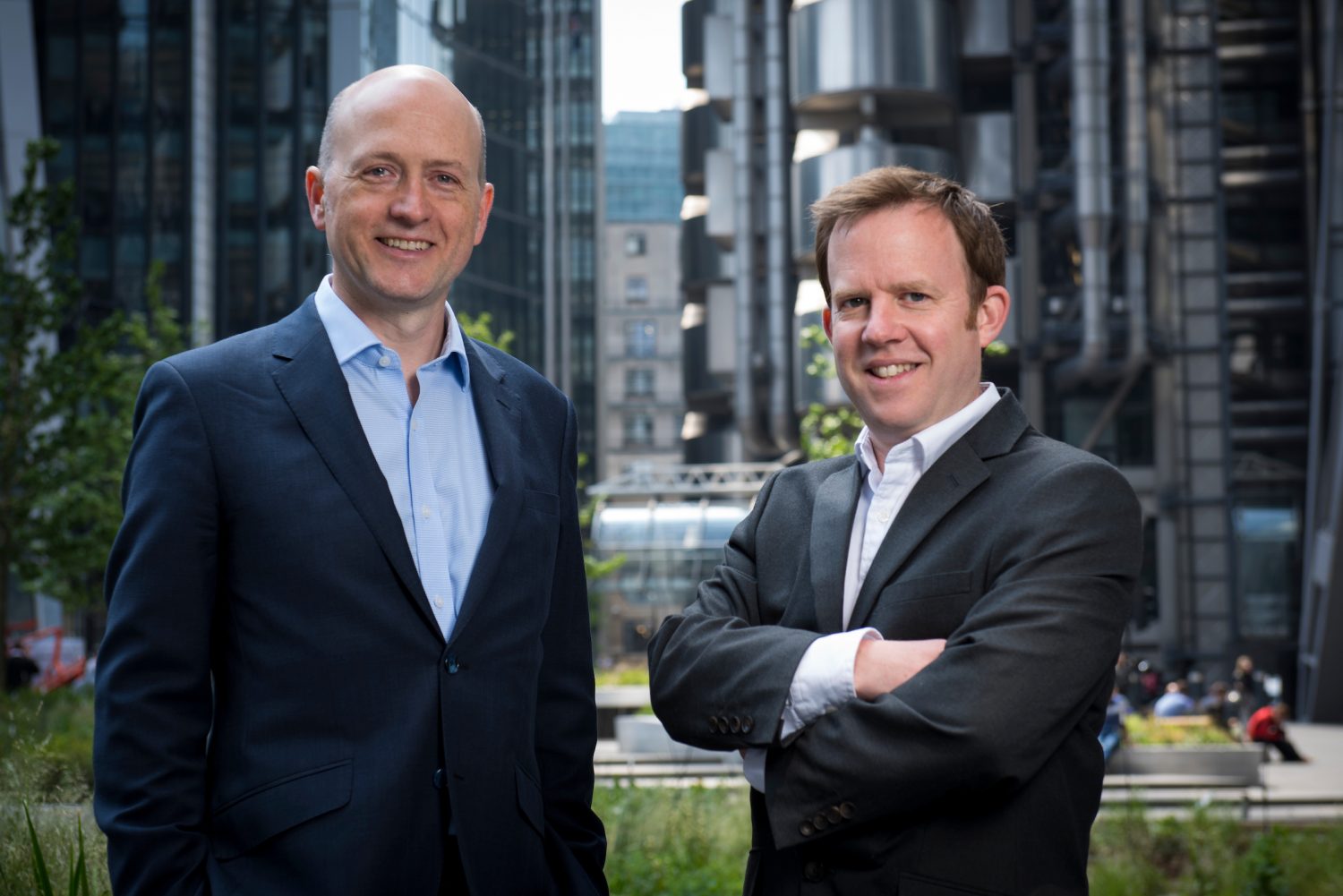
When Sam White took parental leave from Aviva in 2017, and his colleague Will McDonald acted up to cover the role, they assumed it was just temporary. Now, almost four years later, they’re a job share success story, and proof that this kind of arrangement can have a positive impact far beyond the everyday.
It was while Sam was away that Will started to consider job sharing. He was keen to support his wife’s career, and to be around for his children for more than just evenings and weekends. So he floated the idea with Sam, who was keen to explore a part-time arrangement for the same reasons, and they decided to pursue it.
SAM: “Will had proved that he was ready for the Group Director role while I was away, and I knew we could make it work from a chemistry point of view; we’d been colleagues for a number of years, before and during our time at Aviva. So we put our heads together to sort out the practicalities, and pitched it to Kirsty Cooper, our boss, who has been incredibly supportive throughout.”
At that time, there was no one else at director level working in a job share. The role involves a great deal of internal and external stakeholder management, so they knew they would have to get their Executives comfortable with the concept. They suggested a six-month trial, and took on the responsibility of making it work.
WILL: “We explained to Kirsty that we would use the six months to prove that we could deliver as a job share – and that if she and the team didn’t feel we were working to a high enough standard, we’d accept their decision. In the event, even before the end of the trial, our Exec team agreed that it was a success, with one member telling us they had switched from being a sceptic to a convert.”
The pair took advice on how to succeed as a job share, and developed a set of principles which they would adhere to. They agreed three areas in which they would come together for decision making – changes in strategy, hiring, and spending over a certain amount – and that for everything else, they would take individual decisions, but have collective responsibility. They also instigated a framework for a written handover, as well as having a verbal handover on their crossover day.
The response from their colleagues has been overwhelmingly positive, and Aviva colleagues who are exploring a similar arrangement come to them for advice. They were also successfully nominated for the 2018 Power 50. But it was in 2019 that they discovered an additional benefit of their arrangement – the ability to navigate an emergency.
WILL: “Out of the blue, I experienced what I later discovered was a mental health breakdown, and was signed off work. Sam immediately stepped up, working a four or four-and-a half-day week for six months, until I was sufficiently recovered, to start the transition back in. And I took that process pretty slowly; it was another couple of months until I was fully back in the role.”
Clearly, Will’s wellbeing was his team’s first concern; but from a purely business perspective, having the job share in place made everything much easier. Instead of having to draft someone in to take over his role, they had Sam in place to run things, with a bit of extra support. And although it meant Sam had to increase his days, it was something he was happy to do.
SAM: “One of the great things about a job share is that everything works both ways – there have been times when I’ve needed to step back a little and have been able to rely on Will to pick up the slack. I was also able to take on a secondment opportunity which I was offered this year, and once again, the business wasn’t negatively affected, because Will simply took over.”
So from a business perspective, job sharing works on a number of levels. It gives you two brains for the price of one, a double hit of fresh energy in the week, and double the amount of thinking time, or ‘toothbrush time’ as Sam describes it. It is also a powerful attraction and retention tool.
SAM: “We all know the issues about the lack of women on boards and the gender pay gap. And yet the default is still that women work part-time and men go back to their old arrangement when they become parents. Job sharing allows people who want to work less than a full week to stay at a high level, and progress further, in a way that part-time doesn’t; it’s important that more people, men as well as women, are allowed and encouraged to do it.”
And as a built in emergency and succession plan, it’s second to none.
WILL: Neither Sam or I are intending to leave Aviva, but if one of us did, the succession plan is in place; the other one could take over, or recruit another partner. That seamlessness is such a bonus for an organisation, and it really came into play when I was struggling. Being able to switch off totally, knowing Sam was in control, made my recovery much easier, and I’ll always appreciate that.”

There’s no question that Covid-19 has ripped up the rulebook on what normal work looks like. Whole organisations and sectors, including those that have previously been considered ‘un-flexable’, are now discovering what’s possible.
And while remote working is just one aspect of flexible working, what we’re seeing is a huge mindset change. 13 million people plan to ask for permanent flexible working arrangements once lockdown is lifted. Twitter have announced that their staff can work from home ‘forever’ if they wish. 40% of medium to large employers have suggested they will permanently increase remote working options.
A once in a lifetime opportunity to transform the way we work
It is becoming clear that forward looking organisations, who want to be seen as employers of choice, can’t afford not to develop their flexible working offer. But there’s a big difference between offering remote working at speed, and delivering sustainable flexible working.
Most organisations are still in the first phase, managing the remote working experiment as best they can. But it’s now time for leaders to start thinking about the second phase, to use what they have learned to develop truly flexible workplaces. And we are here to help bridge that gap.
From crisis to opportunity: our free Covid-19 support programme
At Timewise, developing sustainable flexible working solutions is what we do. We do it for organisations and sectors of all shapes and sizes, and we do it exceptionally well. So as Covid-19 took hold, we rolled up our sleeves and worked out a plan to help employers and their staff turn this crisis into an opportunity.
The result is From crisis to opportunity: redesigning the workplace, a free Covid-19 support programme for organisations and their staff. The programme includes a series of webinars for key organisations and sectors, and practical support for groups such as line managers, with more to come. You can find out more about the programme on our bespoke Covid-19 support page.
An important part of the programme, which is supported by Barclays LifeSkillls and Trust for London, will be capturing the learnings from this time and sharing them for the benefit of all. And that sits at the heart of how we work.
Why this matters – now more than ever
As a social business, all our work is underpinned by our central mission: to create fairer workplaces in which individuals can get the flexibility they need without compromising their value in the jobs market. We believe that getting this much-discussed ‘new normal’ right is will only happen if flex and fairness are built in. Here’s what we, as a society, need to do if we’re to make this happen:
If we don’t act carefully, some key groups, such as those who are juggling work and care, will miss out. Research from the IFS has shown that working mothers are bearing the brunt of the caring and homeschooling responsibilities, and the gap between mothers’ and fathers’ work patterns has grown since the crisis began. There’s a real risk that more working mothers may drop out of the workplace unless properly designed flexible roles (and not just juggling from home) are offered to all.
The Covid-19 crisis has rightly seen a growing appreciation of frontline workers, from NHS staff to retail employees. It’s important as we go forward with flex to remember that not everyone works in an office, and those who don’t are just as entitled to, and in need of, flexible working.
At Timewise, we specialise in tackling sectors which are hard to make flexible, with recent projects focusing on construction, nursing and teaching. This kind of work needs to continue more widely, to ensure that those who have protected us during Covid-19 are protected in return with fair working practices.
There have been some great examples of human leadership during the crisis, such as CEOs talking to staff about how lockdown has affected their mental health, leaders showing by example that it’s OK if your kids come on the Zoom call and managers empowering their teams to work at times that suit them. This open, positive attitude needs to continue, with bosses creating and delivering cultures in which flexible working is properly implemented, supported and celebrated.
Dishing out a laptop and a Zoom account is a short-term fix, not a long-term strategy. Designing truly flexible roles involves looking at where, when and how much work needs to be done, and it isn’t something you just know; line managers need to be taught how to do it. Our Covid-19 support programme includes a free introductory line manager’s toolkit; we also offer more bespoke training as part of our consultancy package.
Finally, creating flexible jobs isn’t enough. We also need to make sure they are advertised as such when companies start rehiring post-crisis, particularly as many of the people who have lost their jobs will need flexibility in any role they return to. It’s not just good for employees either; a recent study showed that employers who advertised their jobs as flexible saw a 30% uplift in applications.
We’ll be tracking the jobs market through our annual Flexible Jobs Index, with a particular focus on the post-Covid-19 landscape and the impact of this global remote working experiment.
If we come together and make all this happen, we really will have turned the crisis into an opportunity; for fairer workplaces, for more equal teams and households, for better mental and physical health. It’s going to take a lot of work – and will need industry and government support and funding – but it’s a once-in-a-lifetime opportunity that’s here for the taking.
Published June 2020

By Melissa Jamieson, CEO, Timewise
There’s no question that attitudes to flexible working have undergone a seismic shift as a result of the pandemic, and working practices are being transformed as a result. An IOD survey from April 2021 showed that over 60% of organisations plan to adopt hybrid working even after restrictions ease, and employee demand for flexible working is higher than ever, with more than 71% of UK workers saying they want flexible options to remain after the crisis has passed.
And yet, despite all the focus on new ways of working, attitudes towards flexible recruitment don’t seem to be adapting to match. The 2020 Timewise Flexible Jobs Index revealed that, even after the shift towards homeworking following the first lockdown, just 22% of jobs were being advertised as being flexible in some way.
So there’s a real opportunity here for forward-looking employers to offer potential candidates the flexibility they want – and reap the rewards.
If the success of a business rests on its people, attracting a talented, diverse pool of candidates is critical. And with demand as high as it is now, offering these opportunities up front clearly makes sense. Not only will it help put you at the top of candidates’ wish lists, it will also deliver a more committed, more inclusive workforce, and help close your gender pay gap.
And on a more macro level, flexible recruitment plays a vital role in enhancing your employer brand. By openly offering flexible working to candidates, you’ll send a clear message that you are an employer who prioritises employee wellbeing. You’ll show you understand what work-life balance actually means. You’ll also encourage candidates to believe that, if they join your company, they can bring their whole selves to work.
The knock-on effect of all of this is that the best candidates won’t just apply to work for you; they’ll actively seek you out. And with skills shortages on the rise, not to mention a growing sense that a ‘Great Resignation’ is coming, that kind of brand positioning will give you a real edge in the battle for talent.
So, how do you embed flexible recruitment into your organisation, and make sure everyone knows about it? Here are the four initial steps you should take:
Train managers to design and recruit for properly flexible roles
Employees are quick to see through ‘flexwashing’ – that is, implying that you’re up for flexible working without adapting your roles to make it viable. So make sure the jobs you’re advertising are designed so that they can genuinely be done on a flexible basis, and train up HR and line managers in interviewing and supporting your new recruits. If you need support with this, our consultancy team can help.
Make sure external teams are properly briefed
If you’re using a recruitment agency to help you in your talent search, it’s critical that they are on board with your thinking. They need to be clear that you are not just willing, but proactive about recruiting flexibly; otherwise all your hard work will be undermined. So:
Partner with flexible recruitment experts
An easy way to make sure your recruitment partners mirror your approach is to work with a flexible-focused jobs site, such as Timewise Jobs. As well as providing access to 90,000 high-calibre candidates, our team can help you phrase your position on flexible working in the most appealing way. And of course, posting your job on Timewise Jobs sends a clear message that you are an inclusive, flexible employer.
Speak out about your approach
Finally, once your flexible recruitment strategy is in place, and working, speak out about what you’re doing. Share stories about flexible workers on your website. Write up case studies of successful flexible recruitment campaigns and publish them on LinkedIn. Sponsor awards or campaigns, such as the Timewise Power 50.
Again, this is something the Timewise Jobs team can help with. As well as boosting your presence on our site with traditional display ads, we can help you build a microsite which links to your company profile, create a content strategy and deliver an email campaign. These elements all work together to ensure that your brand story is well put-together and clearly communicated.
As a candidate recently said to one of the Timewise Jobs team: “I’m hugely ambitious, but I also need to work flexibly, so I make sure I do my research before I start job hunting. If a potential employer isn’t openly mentioning a commitment to flexible working, I probably won’t be right for them – or them for me – so I tend to steer clear.”
The end goal of recruiting flexibly is that the best available candidates will seek you out and want to work with you. So don’t just sign up for flexible recruitment; prioritise it, and shout about it.
Published June 2021
By Emma Stewart, Co-Founder Timewise

Does flexible working improve productivity? That’s the question I was invited to consider by wellbeing specialists Carnegie Trust UK, for their collection of essays, Can Good Work Solve the Productivity Puzzle?
The short answer is yes, from what we know, but we need to know more. I’ll explain why below; if you’re interested in the longer answer, it’s chapter 15 in the collection.
So what do we know? Well, there is some (limited) data on the link between flex and productivity. A 2014 survey by BT found that the productivity of flexible workers increased by 30%. Similarly, a YouGov survey from 2015 suggested that 30% of office workers felt their productivity increased when they worked remotely. And in a study of flexible workers undertaken by Cranfield University[1], over 90% of managers said the quantity and quality of work improved or stayed the same.
Additionally, there is an argument for flexible working having an indirect impact on productivity, due to its direct effect on other workplaces issues. Flexible working has been shown to boost talent attraction, retention and progression, and drive inclusion and diversity. It also delivers better work life balance, with the knock on effect of supporting mental and physical health and wellbeing.
It’s therefore not a huge leap to assume that if you’re working fewer days a week, or in a job that fits with your life, you are likely to be more engaged. Or that working from home, with fewer interruptions, can increase your output. Or that hanging on to experienced, knowledgeable staff will help the whole team succeed.
Certainly, these assumptions have contributed to increased interest, and trials of, the four-day working week. A key early example of this, Perpetual Guardian in New Zealand, ran a pilot which they say revealed a 20% increase in productivity. And a number of companies in the UK have followed suit.
However, as I’ve explained in detail elsewhere, introducing a four-day working week isn’t just a schedule tweak. In frontline and shift-based sectors, such as teaching, retail or manufacturing, it is hugely complicated to introduce – or only possible to do so at a prohibitively high cost to the business.
So if the four-day working week isn’t the answer, what is? I believe there are two big steps we need to take if we’re to use flexible working to solve the productivity puzzle:
At Timewise, we’re already on this journey. We’ve led a number of research projects exploring innovative flexible options, in complex sectors such as nursing, teaching and retail. Right now, we’re piloting flexible working in the construction industry, and investigating the role that flexibility can play in supporting returners and older workers.
But to really embed this work, we need more social partnerships between business sector bodies and agents for change, backed by government and industry investments. That’s the way to take productivity to the next level, whilst delivering a happier, healthier workforce.
Published January 2020
[1] Cranfield University/Working Families 2008: “Flexible Working and Performance”


