By Emma Stewart, Co-Founder
At Timewise, we don’t believe that flexibility should come at any price; our focus is on delivering good quality flexible roles. But, as the Institute for Fiscal Studies stated in their 2018 report, “not working full time tends to shut down wage progression.” As a result, too many people end up trapped in entry-level roles, which are poorly paid, because they can’t get the flexibility they need higher up the scale.
One sector that illustrates this perfectly is retail. It employs around three million people, and has a higher incidence of low pay than any other sector. According to the British Retail Consortium’s 2020 research, flexibility in working hours is one of the main reasons people choose to work in the sector – but 56% of retail employees believe they are less likely to get promoted if they work part time.
As a first step towards tackling this problem, we partnered with the Joseph Rowntree Foundation and five major retailers to run our Retail Pioneers programme, a piece of action research followed by a written report. Launched last May, it set out to help each retailer understand what was getting in the way of flexibility at store management level, and then design and develop management roles with compatible flexibility built in.
As my colleague Amy Butterworth explains elsewhere, the programme has already begun to deliver real change for our pioneer partners, with each of them taking action to design flexible jobs differently. And that’s brilliant – but it’s not the end of the story. Our initial learnings can also be used by the rest of the retail sector and beyond, to tackle the structural barriers that prevent the progression of low-paid part-time workers. For example:
Initially, some of the pioneers were uncertain about working so closely with other retailers. But as the programme progressed, the benefits of the group approach became clear. The pioneers got valuable insights from sharing their experiences, and regularly challenged each other’s assumptions and assertions.
We all know by now (or we should) that the lack of women in senior roles contributes to the gender pay gap. But that doesn’t mean we should focus all our attention on moving women from middle-management upwards.
Helping women progress from entry-level roles to line management – as our retail pioneers are now doing – will also help close the gap. And building more gender-balanced workplaces makes good business sense for employers too.
During the programme, our five pioneers all came to the same conclusion: that building flexibility into management roles could aid progression for retail team members, enabling them to maximise their skills whilst retaining their flexibility.
However, each retailer had different factors to take into account, and so needed to develop their own individual solution, grounded in their own business. When it comes to flexible job design, there is no one-size-fits-all solution; each organisation needs to take a bespoke approach based on its specific data and drivers.
So far, so good. But, as useful as these learnings are, they need to be championed at a macro level if they’re to deliver real, systemic change.
I’m kick-starting this by joining a government taskforce looking at flexible working, in response to the Taylor Review on modern work. However, far more needs to done by government, employers and industry bodies to create better quality part-time and flexible roles.
Many employers are unaware that the lack of part-time and flexible options at management level traps skilled, ambitious employees in low-paid jobs. And even those who agree that flex is the answer may not know how to get started or, in tight margin sectors, have the resources to do so.
If we are going to answer the Taylor Review’s call for better flexible work which benefits both employers and employees, delivered at scale, then we need more involvement and investment from government, civic society, and other industry bodies. Here’s what needs to happen:
Our work has highlighted a real lack of evidence about what works, without which it will be difficult to persuade employers to take – and critically, invest in – action. It has also revealed the importance of having a road map which sets out HOW employers can design better flexible and part-time jobs, at all levels.
If we are serious about building a fairer jobs market, and helping people trapped in low-paid roles to progress their careers and raise their living standards, we need government to commit to investing in it. This will allow us to test a range of approaches and use our findings to incentivise further business action, something which is particularly critical in low-margin sectors where the business case for change is not well established.
At a regional level, LEPs and metro mayors also have a part to play in sharing good practice and stimulating action to create better quality part-time jobs. This will support their inclusive growth strategies and help create fairer workplaces.
Our Retail Pioneers programme has benefitted hugely from our partnership with the BRC. They played a pivotal role in helping us get the programme off the ground, and are continuing to work with us to develop practical flexible working solutions.
Most industries have an equivalent organisation or body; the more of them that invest in championing flexible working, the greater the impact will be.
Our pioneers found that taking a deep dive into their workforce data threw up some surprises; in the words of Lesley Ballantyne from The John Lewis Partnership, “the programme has brought issues to the surface that we previously only had an inkling of.” Our consultancy team offer a flexible audit which can help support this process.
Underpinning all this, we need a space in which innovative practice can be designed and developed. We invest in innovation for R&D and technology; it’s time we started investing in innovation for designing good quality work. So this autumn, we’re launching the Timewise Innovation Unit, to create a forum in which this can happen.
By doing so, we will be able to help more employers design the flexible jobs that will progress their workers, maximise their skills and ultimately create more productive workplaces. I’m really looking forward to driving this change through the Innovation Unit, and I hope you’ll get involved; watch this space.
To find out more or get involved with the Timewise Innovation Unit, please contact Emma on 020 7633 4444 or email info@timewise.co.uk
Published May 2018
 Since its launch in 2015, Timewise’s annual UK Flexible Jobs Index has played an important part in the flexible working conversation. It’s allowed us to track the (slow) growth of the flexible jobs market, and given politicians, business leaders, campaigners and employers the facts, figures and insights they need to open up the workplace to flexibility and make it fairer for all.
So we were delighted when the Scottish Government and Family Friendly Working Scotland asked us to create a bespoke index for Scotland, to shine a light on the current state of the flexible hiring market in the country. As with its UK equivalent, the inaugural Timewise Scottish Flexible Jobs Index shows that we have a long way to go if we’re to match the number and type of flexibly advertised jobs with the people who need them.
The research found that only 11.9% of jobs paying more than £20k full time equivalent (FTE) are advertised as offering flexibility at the point of hire – that’s just over one in eight. And the further you go up the salary ladder, the worse the ratio gets; for roles paying between £35k and £59k FTE, it drops to less than one in 10 (8.9%).
Yet the demand is certainly there; more than a third (34%) of unemployed people in Scotland are looking for part time or flexible vacancies, and those who currently work flexibly are also likely to be seeking similar opportunities when moving jobs. And that’s not including those who may have dropped out of the workforce altogether because the flexible jobs they needed weren’t there.
For people who want or need to work flexibly in Scotland, then, there’s a disproportionally small pool of jobs to apply for, particularly at a higher level. This can force people to trade down for flexibility, or get stuck in flexible jobs beneath their skill and ability levels, which not only blocks their own progression but can also limit mobility for less qualified people coming up behind them. And it can prevent some people from working at all, which can have a devastating effect, particularly on low-income households.
Of course, flexibility isn’t just about keeping employees happy (although obviously, it helps). As the demand for flexibility continues to increase, employers who have flexibility as part of their offer will be best-placed to attract and retain the best talent. It’s also been shown to improve employees’ productivity, motivation and engagement, not to mention helping address diversity and the gender pay gap.
So now the facts and figures are out in the open, and the benefits are clear, what should Scottish employers do to get behind flexible hiring? The answer is to think differently about the way flexible jobs are designed. Instead of assuming flexibility can’t work for certain roles, employers need to look at how, when and where a job needs to be done and create jobs that have flexibility built in. That means thinking innovatively, designing jobs that suit the way we live and work now, and being prepared to shout about it at the point of hire.
If Scottish employers get behind this, and start hiring on a truly flexible basis, there’s a real opportunity to create a strong, inclusive and lasting flexible jobs market, for the benefit of everyone. The Scottish Government has already committed to leading by example by becoming a more flexible recruiter, and we are delighted to be working with them achieve this; if you would like us to help you in a similar way, please do get in touch.
To find out more about our consultancy and training services, email info@timewise.co.uk
Published September 2017
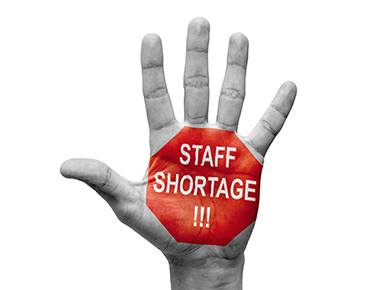
Businesses have been warning about an impending skills shortage for some time now; and the evidence suggests that it’s really starting to bite. According to a new survey of 400 firms by the Open University, many UK employers have had to pay well above market rate to attract employees over the past year. And the university suggests that the annual cost of this to business could be as much as £2bn.
But for all of us at Timewise, this approach shows a startling lack of originality. Of course, potential employees are unlikely to refuse a higher salary; but by the same logic, a further cash incentive could easily persuade them to move on elsewhere. Whereas if you really want to attract a loyal, motivated and productive employee, there’s a much better way – offer them flexibility.
Thanks to advances in technology and flex-friendly government legislation, flexible working is becoming more common – and no longer just a way to entice women back from maternity leave. 92% of Millennials identify flexibility as a top priority when job hunting and, at the other end of the workforce, the Centre for Ageing Better argues that it could be a key factor in helping the growing number of over 50s work for longer.
It’s not just about what employees want either; the business case for flexibility is sound, and well-documented. For example, remote working champions tend to have less people in the building at once, allowing them to reduce their office space and so their business overheads. A survey by BT indicated that the productivity of flexible workers increased by 30%. And in a CIPD survey, 73% of employees said that flexible working improves staff motivation – and, critically, 75% said it has a positive effect on retention[1].
In short, then, flexible working makes sense for employers and appeals to employees. Yet, despite the fact that there are around 8.7 million people in the UK who would like to work flexibly, less than 1 in 10 jobs adverts currently offer this up front. So an employer who offered flexibility as part of the package – and even better, could demonstrate a flexible pathway for career progression – would immediately have the edge over one who doesn’t.
Our aim here at Timewise is for the offer of flexibility to become the norm; to be just another part of every job description, like holiday entitlement. We offer consultancy and training to organisations who share our aim, and we’re working at every level to bring about this change.
But in the meantime, for employers, offering flexibility at the point of hire is something that will make you really stand out. It will certainly increase your chances of catching the best talent – and unlike mere money, it’s likely to help you hold on to them too.
To find out more about our consultancy and training services, call 020 7633 4444 or email info@timewise.co.uk
Published July 2017
[1] CIPD 2012: “Flexible Working Provision and Uptake”

There’s no question that the gender pay gap is high up on the agenda. From 6th April 2017, all businesses and charities with over 250 employees will be legally required to collect data on the gap between the average hourly pay of the men and women who work there. And they’ll also need to report on their figures by 4th April each year, starting in 2018.
Clearly, asking organisations to report on this issue is a positive step – and a much needed one. A 2016 assessment of the gender pay gap from the Institute of Fiscal Studies put it at just over 18%, and Deloitte have predicted that, at the current rate of change, we won’t hit true pay parity until 2069. To be frank, we can’t afford to wait that long.
But hidden behind these gloomy predictions, there’s a devastatingly simple solution, waiting to be found; and it’s this. According to the 2016 Women and Equalities Committee report: “Flexible working for all lies at the heart of addressing the gender pay gap.”
Can it really be as simple as that? The answer, as we at Timewise know well, is a definite yes. The report also states:
“A large part of the gender pay gap is down to women’s concentration in part-time work which doesn’t make use of their skill…. Old-fashioned approaches to flexibility in the workplace and a lack of support for those wishing to re-enter the labour market are stopping employers from making the most of women’s talent and experience.”
It follows, then, that if we can make flexible working work for everyone, we can accelerate the narrowing of the gender pay gap. And that’s going to be more critical than ever once organisations are legally required to publish their figures; your reputation as a fair employer, and your ability to attract and retain the best talent, will depend on it.
At an organisational level, there are some key principles that you need to embed in order to make flexible working work, from creating a supportive culture to thinking about the best way to design flexible jobs. It’s not rocket science, but it certainly won’t happen by accident; our training and consultancy programmes can help.
But at a wider level, it’s actually the job market itself that needs fixing. Our research shows that only 8.7% of quality jobs are advertised as being open to flexibility at the point of hire; so people who need to work flexibly only have 1 in 10 jobs to apply for. It’s no wonder so many of them end up stuck in low-paid roles beneath their skill set; there’s simply nowhere else for them to go.
That’s why, last year, we launched our Hire Me My Way campaign, calling on organisations of all shapes and sizes to promote flexibility at the point of hire. So far, more than 30 major organisations have signed up to our campaign, unlocking thousands of quality jobs to flexible working; we hope you’ll consider joining us, too.
So our call out to employers today is, start as you mean to go on. Be prepared to shout about the fact that you believe in flexible working and that you know how to make it work. Develop a recruitment strategy based on finding the most talented people you possibly can, and be prepared to flex your roles to suit them.
It’s a sure-fire way to improve your gender pay gap figures, and the evidence suggests it will improve your profits and boost your productivity. But, most importantly, it will mean you’re playing your part in a much-needed job market revolution – and that’s great news for all of us.
Published April 2017
 The high prevalence of flexible working amongst Britain’s SMEs seems to have grown, in the first instance, out of necessity. Workload is often volatile and finances precarious, so a permanent staff working 5 days a week just isn’t helpful. It works better to keep staff time closely pegged to output.
Jenny Vadevalloo of Timewise Jobs, reports that her clients from smaller businesses frequently look to hire quality part-time staff: “Let’s face it, when a new business reaches the point where it needs a Marketing Director for the first time, it rarely needs that level of seniority for more than a few days a week. And it certainly can’t afford the full-time salary the role would demand.”
Jenny adds, “SMEs can do very well through part-time and flexible recruitment. They can access top skills for the pro rata salary that’s within their budget.”
Adam Marshall, Executive Director of Policy and External Affairs at the British Chambers of Commerce, agrees. He adds that by hiring people into part-time or flexible roles, a small business can also expect to reach a larger talent pool and attract experienced candidates, including those with a ‘portfolio career’ or family commitments. “You can often get skills and talents that you might not otherwise be able to get in your workforce, and you also have the potential to attract individuals to your business you might not be able to take on for full-time, nine to five work,” he says.
To a large extent, flexible working grew out of small business, as a way for entrepreneurs to balance other commitments during the startup phase. Linda Aitchison, Managing Director at the Marketing Room, resists the ‘mumpreneur’ label, but says it seemed natural to work flexibly when she was juggling bringing up a family with launching the West Midlands-based creative marketing agency 10 years ago.
“All but two of our team are mums of children now aged from seven to 16, so we have worked hard to create opportunities for flexible working,” Aitchison says. “Being widowed means that I have more responsibilities within my family on a practical level than before, so I finish early on certain days to be at home with my children after school, but I make these hours up at the weekend.”
Flexible working can take many forms, including part-time, job-sharing or splitting, home and teleworking, or freelance work. Some people work staggered hours, enabling them to work full-time, but with different start and finish times; others work compressed hours, fitting in the standard contractual hours over fewer days.
“Not everyone will undertake a revolutionary redesign of the way they fill vacancies and the way they approach work, for some it’s as basic as allowing individuals to work at home as and when they need to,” says Marshall. “The majority of small businesses that operate flexible working do so because it makes good sense for their business and enables them to get the best out of their workforce.”
As small businesses grow, it can be easy for them to retain a strong culture of flexible working, as they’ve grown up with it and understand its benefits.
Simon La Fosse’s technology search firm, La Fosse Associates, has a staff of 70 and has been fourth in the Sunday Times Best 100 Companies to Work For for the past two years.
Allowing staff to do things in the way they want to do, that fits around their work schedule and family commitments inevitably reaps results, he argues. “Nobody came to work to do a bad job and you have got to remember that, so it’s easier to just give as an employer, and you find it comes back in spades,” he says. “The person who knows they are being trusted by you to do the right thing, invariably will do the right thing.”
A more flexible approach and even different skills are needed to manage teams who work flexibly, with a focus on employee effectiveness and output rather than simply clocking in and out. But La Fosse believes that this is a vital part of a successful business, anyway. “Any company that hasn’t got systems in place to measure output is a company that’s totally out of control,” he says. “Just making sure everyone turns up at the right time and stays late is lazy, rubbish management, really. It encourages presenteeism, which I think is appalling.”
It’s precisely this kind of culture change that small business owners and their employees are best placed to lead, Marshall insists. “Where we see it being a business and employer-led proposition, flexibility works fantastically,” he says. “Employers and employees are perfectly capable of coming together to develop different ways of working that allow both to get maximum benefit.”
Published June 2014

The business world has come a long way in its journey to embracing flexibility. “There is now buy-in to the benefits at a strategic business level. Ten years ago there wasn’t that acceptance,” says Timewise Co-Founder, Karen Mattison.
Despite this willingness to consider flexibility, businesses struggle to justify it at the operational level. Faced with a tough economic environment, KPIs to meet and demands on their budgets, leaders find it impossible to commit to the major expense and upheaval they believe might be needed.
It doesn’t need to be that way. “The Holy Grail that everyone is searching for is the generic business case for flexible working, but it doesn’t exist,” says Karen. “Rather than being a big change management piece, companies should look at flexibility on a project by project basis. It is a tool they can add into the mix.”
Karen adds that it is far less onerous for businesses to consider flexible working as one of a number of tools available to them, and to ask themselves what they will lose by ignoring it in a particular scenario. “There’s a danger that if you can’t do everything you end up doing nothing,” she cautions.
CBI Director for Employment and Skills Neil Carberry agrees it is important that companies take flexible steps if they are to compete. “As a business, you need to access the widest pool of skills and talent to maintain competitiveness,” he says. “It makes sense to take that wherever you can find it.”
Those who successfully adopt remote working techniques can employ them during transport strikes, snow storms and office moves. Flexibility also feeds into a positive brand for a business and creates an engaged and effective workforce. “Staff who are engaged will go the extra mile.”
Neil identifies strong leadership and line manager understanding of flexibility as being crucial to success. He also sees customer service businesses increasingly matching demand with flexible shifts. “If you’re running a 12 hour customer service operation it makes sense to slot people in at times they want to work.”
David Dunbar, General Manager of BT Flexible Working Services, agrees that cultural strength and staff engagement are extremely valuable for business and flexible working is the way to achieve it. “Flexible workers can respond to changing demands, can get products to market more quickly and adapt to change easily,” he says.
Dunbar points out that when it comes to the business case for flexible working, companies often seize on the most tangible savings of property and infrastructure. An agile approach usually means 30-40% of the desks and space can be lost. “In very simple terms, you can save on space and reduce churn. However the business case is much more complex and much bigger than that.”
The benefits range from recruitment, engagement, productivity and culture, to disaster recovery and a firm’s carbon footprint. “If you have a workforce that is more agile, flexible and clear on their objectives, they can work more productively. It is a difficult thing to build into the business case but is probably the single biggest benefit. If you can get 20% more productivity from your workforce that puts any property savings in the shade.”
For financial services business Northern Trust, the promotion of flexible working is a major differentiator in an industry that is famed for long hours and male dominated environments.
The company last year initiated a remote working pilot programme to enhance employee engagement, one of its top three global priorities. Four business departments took part in the trial and the concept is now being rolled out to other areas.
Pamela Hutchinson is Chief Diversity and Inclusion Officer EMEA & APAC. “At the start of the pilot there was 82% positive engagement for the initiative. By the end it was 92%,” she says. “Even the employees who were not taking part supported it and managers did not see any adverse impact on team performance.”
“Flexibility is something we have always been hugely proud of,” she says. “We want our employees to feel engaged.”
In the last year, the business approved 90% of flexible working requests. A third of those working flexibly are men, and 10% are senior. Hutchinson says a pro-flexible approach increases engagement, loyalty and staff retention. “We also have more women working here,” she adds.
Technology has played its part. “Younger people coming into the company want to work differently. You have to move with the times if you want to recruit talent.”
Published June 2014
Heather Greig-Smith is a journalist writing about flexible working issues.
http://coachfactoryoutlet.cigops.com/ | http://coachfactoryoutlet.nkcaa.com/ | coach factory outlet


