
What change is on the horizon? How can employers adapt?

By Claire Campbell, CEO
In October the government published its Employment Bill including the right to guaranteed hours, ending exploitative zero hours contracts.
Zero tolerance to zero hours?
The focus on zero hours contracts and banning of exploitative work arrangements, in favour of more balanced flexibility – that works, both for employers and staff, has been a consistent element of the government’s plans since before the election.
The use of zero hours contracts in the UK has been growing and we now have over 1 million people on this type of employment contract as their main job. Although this only affects a small proportion of workers overall, some sectors are heavily reliant upon these contractual arrangements – including food and hospitality, health and social care and transport. Certain groups are also disproportionately affected – figures from the Work Foundation suggest that women, young workers (including those aged 16-24 who are not students), and black workers are all more likely than others to be employed on this basis.
A zero hours contract is one where the employer does not guarantee the worker any hours of work and instead offers work as and when it is available. They have been heralded in the past as the solution to flexible work, but this comes at a price – with only a tiny minority of people employed on these contracts having access to regular pay and rights. 3 in 4 workers on zero hour contracts are in severely insecure work.
The government has stated:
“We’re introducing a right to guaranteed hours reflecting the hours qualifying workers have worked during a reference period, anticipated to be 12 weeks. And we’re also enshrining into law the right to reasonable notice of shifts and a right to payment for shifts cancelled or curtailed at short notice”
Zero hours contracts will not be banned completely, but the rules around them will change. Those on both zero and low hours contracts will gain the right to have guaranteed hours if they work regular hours over a reference period, likely to be 12 weeks.
Workers will be able to bring tribunal claims and be awarded compensation. However, they will also be able to remain on zero hours contracts where they prefer.
Workers will also be entitled to reasonable notice of shifts (including details of how many hours are to be worked and when), changes to shifts and cancellation of shifts, and for payment if shifts are cancelled, moved or shortened.
So what can employers be doing now to prepare for this particular upgrade to workers’ rights?
The issue with zero hours contracts for many people is that they can provide a lot of flexibility for the employer and no stability or security for the individual, as they do not guarantee hours or income and make it hard to predict earnings week to week.
Ask yourself:
The government has opened a consultation on whether and how these rights could be extended to agency workers, which you can participate in here.
Further details will be needed including how long the reference period is, how it will be calculated, and how terms such as ‘regular hours’ and ‘low hours’ are defined.
Detailed, practical guidance will be needed to implement the planned changes, including a clear explanation for employers of what is meant by exploitative, and whether all zero hours contracts are in scope. If zero hours contracts are to be permitted in certain cases, the government will need to set out arrangements for monitoring this and ensuring workers’ rights are protected.
Whatever the detail that emerges, there is a clear ambition and opportunity here to improve the predictability and security of working hours and income for workers, which is a welcome direction of travel. At Timewise we look forward to contributing to the detail of the new regulations, and supporting more employers to create good quality jobs.
Published October 2024
Changes in work: flexible working as a default Day One right
Changes in work: the right to switch off

By Amy Butterworth, Consultancy Director
For too long, the UK has relied on the traditional 9-5, five-day-a-week working model, which we know no longer fits with modern lifestyles. While some industries, usually those with desk-based workers, have adopted flexible working with relative ease, spurred on by the pandemic, others with site-based or frontline workers have found it more challenging and risk being left behind. There is now a growing divide in the UK workforce between those who can work flexibly and those who cannot. Additionally, there is an increasing number of people out of work on sick leave, and employee burnout is on the rise too. With retention rates and employee wellbeing topping many leadership teams’ to-do lists, could flexible working be the answer?
Here at Timewise, we’ve long called for trialling different ways of working as we know the traditional 9-5 doesn’t work for everyone. That’s why we’re thrilled to be actively involved in the 4 Day Week campaign’s second pilot, which begins this Autumn. The second pilot has been expanded to give organisations greater opportunity to experiment with different kinds of flexibility, which aligns with the work we do, especially with front-line and site-based workers. Can the newly evolved four-day week trial pave the way for more flex, especially in traditionally hard-to-flex roles?
The first four-day week pilot saw 61 organisations move to a four-day week without a pay loss for workers. Organisations reduced working hours by an average of 6.6 hours to reach a 31.6-hour week and gave their employees one full day off a week, either on a universal or staggered basis.
The results led almost every company (92%) to continue with a four-day week, with many citing its positive effects on employee wellbeing, business performance and improved retention. While the initial pilot reaped encouraging results, it’s important to note that the majority of people involved were desk-based workers. From our experience, time-based flexibility can be challenging to manage and it’s unlikely this ‘one-size fits all’ approach will work for all organisation types and workers.
Which is why we’re thrilled the 4 Day Week campaign is evolving to give organisations the opportunity to try different kinds of flexibility. This could be shorter working weeks, flexible start and finish times, a nine-day fortnight, or compressed hours. As this is our sweet spot, we had to get involved and lend our knowledge and experience to the programme. We believe this new pilot will give organisations with ‘hard-to-flex’ roles the opportunity to innovate in a low-risk way as we know from our pilots in a range of sectors, including construction, nursing, retail and teaching. And we also know that changes to make flexible working more widely available can pay for themselves in just a few years through reduced sickness absences and improved staff retention.
The 4-Day Week campaign is an opportunity for organisations to get creative, especially those that have frontline or site-based workers, who have traditionally hard-to-flex roles. It comes at a time when we’re hearing of more organisations trialling new ways of working, which can only lead to more data and better decision-making as a result.
South Cambridgeshire District Council recently experimented with a shorter week for desk-based workers before expanding its trial to include refuse collection workers. Despite criticism, the Council continued with its plans, which saw changes to routes, collection days and extra staff. This has resulted in fewer sick days, less absenteeism, and better overall retention.
Another example is retailer Wickes, who we worked with to pilot a new approach to flexible working. The pilot made flexible working a reality for store managers, which had a knock-on effect on the company’s ability to attract and keep staff. It’s now being rolled out to more managerial roles.
We firmly believe that pilots are valuable. They allow organisations to test and develop innovative workplace solutions, learning and fine-tuning along the way, before committing to rolling out new ways of working, increasing the likelihood of success and sustainability. We have extensive experience in this area and will be sharing key learnings and watch-outs with pilot organisations.
Organisations of all types are encouraged to sign up for the six-month pilot, which begins in November. Throughout the pilot, organisations will benefit from support and guidance, tailored to their needs. The University of Cambridge, Boston College, and the Autonomy Institute will conduct an impact analysis and the results will be presented to the Government in Summer 2025.
This pilot is an exciting opportunity for organisations to innovate and implement flexible working arrangements that support their employees’ needs. The experiences and results from this pilot can pave the way for others too, especially in industries that are reluctant to flex. Timewise’s CEO Claire Campbell, said: “This is a great opportunity to trial something which will benefit worker health and retention. Whether you work in a warehouse, a care home or behind a desk – we foresee a fairer flexible future for all and the first employers to step forward for this trial, will be a part of that.”
Find out more about the 4 Day Week Campaign pilot.
Published August 2024
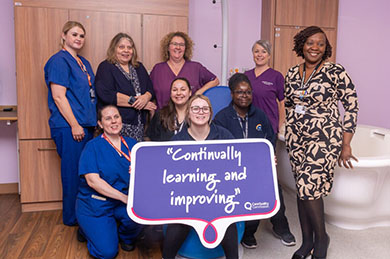
Lewisham and Greenwich NHS Trust are an accredited Timewise Trust – an accolade that is awarded to Trusts that demonstrate commitment to enabling flexible working for their teams Part of this is developing creative and innovative approaches to working patterns and arrangements.
Any Hours is an example of such innovation. The immediate post-pandemic period inspired ‘Any Hours’, the brainchild of Susanne Chatterley, Associate Director of Midwifery & Neonatal services at Lewisham and Greenwich NHS Trust. More than 300 midwives work across the Trust, delivering 5,000 – 7,000 babies a year.
A standard shift in midwifery is 12.5 hours and is set at 8.00am – 8.30pm, or 8.00pm – 8.30am.
A full time job requires working 13 shifts across a month – 3 weeks of 3 x shifts and 1 week of 4 x shifts. There are typically unfilled shifts within any NHS roster. The Nuffield Trust estimates that there around and around 8,000 to 12,000 unfilled nursing vacancies on a given day in England. In many cases, existing staff try to take on extra shifts where they can, or else agency staff are used. Traditionally in the NHS taking on an extra shift requires commitment to the full 12.5 hour day.
Susanne realised she could boost capacity by challenging the ’12.5hrs only’ mindset, when it came to filling vacant shifts.
She says: “In 2022, we had just gone through the second significant bout of Covid. I recognised that we had one group of experienced midwives who routinely picked up one or two extra 12.5 hour shifts a week – and these were the staff who were burning out. There was also a second group, with just as much experience, but who simply couldn’t pick up such lengthy additional shifts. They wanted to help their colleagues – but had young children to pick up from school, or elderly relatives to look after in their day. I thought to myself – how do I unlock this group, and how can I help the staff experiencing burnout? Then I thought – what if staff could choose their extra hours? What if they could stipulate how much extra time they could give – 3, 4, 8 hours, whatever it is – and choose when to work them?”
Susanne had a conversation with the midwifery team and followed with a survey to see if they’d like to work extra paid shifts and what hours they would pick if it was up to them. The results came back showing a strong desire to work more, especially against the background of the cost of living crisis, but that for many midwives, an extra 12.5 hour shift was too long. Susanne says: “All I had to do, was make it work.”
That was two years ago. The scheme has been an outstanding success. Wherever there are shifts that are unfilled, Any Hours allows midwives to choose the number of additional hours they want to work, and when they would like to work them. Lewisham and Greenwich NHS Trust data shows that since the Any Hours Scheme was enacted, it has it has enabled, on average, 300 hours of shifts to be filled each month, equalling two whole time equivalent midwives. This has reduced reliance on agency staff, and increased satisfaction with the team.
This has been achieved without buying in any additional software or making significant changes to the online rostering system staff already use to book shifts via their phones.
Susanne says: “The key difference is that all unfilled shifts are open to ‘Any hours’ – I let them ask for any additional hours they want, whatever the length and whenever they are. We always end up with a much fuller roster than we have had in previous years.”
“I also have a rule which is ‘hard stop’. We let staff finish their shift exactly when expected. If we start keeping people beyond the agreed shifts then the whole system starts to fall apart. It works because people feel they have autonomy, control and balance.”
“We also worked hard on making sure the extra shifts would work. Patient safety is of course our paramount concern. We spent time with senior clinical colleagues to think about how a 3, 4, or 5 hour extra shift would work. In terms of patient care, we wanted to ensure women have the same person with them as much as possible through their journey.”
“When you start thinking about shorter chunks of time, say a 3 or 4 hour shift rather than a 12.5 hour one, you need to think through – what can you usefully do in that period? It isn’t enough time to start a birthing journey with a patient. But you can support the whole ward and the midwives who are doing that. You can do baby checks so others can go home sooner, you can do the drug rounds, you could maybe host 1 clinic, or do postnatal visits. The key was finding jobs that fit the shorter hours.”
“And what I found was – people got really creative! One midwife comes at 11pm and she stays until 5 or 6am. I would never ask anyone to do that kind of shift routinely, but for her, it means she can work while her own children sleep and she is back for the school run. It fits her life.”
“We really saw the benefits over the Christmas period. Staffing is always a headache at that time of year, you usually end up redoing the rota 2 or 3 times and invariably end up short of staff.”
“But last year, I crunched the numbers after Christmas and realised we had equal to 4 whole-time equivalents more than usual– the best fill rate we have ever had. All those shifts would have otherwise been unfilled. People came in, working in 3 or 4 hour bursts to help out, and for the extra money at an expensive time of year. I felt all warm and fluffy on the inside when I saw that! I spoke to colleagues – they said they would never have come in to work a full extra shift because it would have interfered with their plans. What’s brilliant is – we are retaining staff known to us, with experience and skill who knows the service inside out, rather than having to just use agency staff.”
“The scheme has been going for two years now, and is well established. I don’t think I have ever turned anyone down – we are always able to offer what people want. The key has been flexibility and handing over a sense of control. People now have their regular patterns they have fallen into. Patterns that suit their lives.”
“What’s exciting is that Any Hours is completely replicable across the board. It works within the existing system. It can work in other departments, and for other Trusts.”
Any Hours is a part of Susanne’s doctorate, focusing on midwives who take up and use the offer, and colleagues who work with them. Susanne is completing a DBA in Business Administration at Aston University; Business School in Birmingham.
Susanne is already working on her next innovation project: ‘Any Speciality’, aiming to retain midwives who are 5 years + qualified (though those who are less qualified can also take part).
Any Speciality is a programme that encourages all midwives to spend 15 hours a month, or two days, in a different speciality of their choice. This allows colleagues to improve the competencies and skills needed to help their career progression, or even to directly apply for a specialist midwife role at the trust. To date, speciality teams have recruited nine midwives following Any Speciality contact at Lewisham and Greenwich NHS Trust.
Susanne says: “The opportunity is to ‘try before you buy’, when looking at another speciality as a possibility. I took one of the many of vacancies I had and chopped it up into 10 pieces, which leaves you with 15 hours a month (one tenth of a full time job). We offer this to anyone who has an interest in another speciality. The jump between core to speciality midwife is really big nowadays. And often, when someone makes the jump they don’t realise what they are signing up to – and they drop out or move on quickly if the role is not what they expected it to be.”
“Any Speciality is available for 1 year after that time – you may realise you hate it! That’s ok – you have tried it. You aren’t locked in. Or you just might love it. When the right job comes up, you can apply for it as you have the lived experience.”
Published July 2024

UCLH is a large teaching hospital, part of the Shelford Group, which has over 10,000 staff working across 10 London sites. The leadership team is keen to create a work environment in which staff feel valued, encouraged and supported, and as part of this, has sought to explore how to improve work-life balance.
Like many organisations, UCLH implemented remote and hybrid working for office-based staff during and after the pandemic. However, there are unique operational constraints in some patient-facing and clinical areas, mainly wards and teams delivering 24-hour services. Hybrid working was not a viable flexible working option for ward staff and the leadership team felt it was important to find other ways to offer flexibility for these teams. This was reinforced by a survey in 2021, which revealed that 51% of staff felt they had a good balance between work and home life, and just 48% felt that UCLH was committed to helping them balance these two elements.
Following this feedback, UCLH launched a new flexible working policy in 2022, which offered a more proactive approach to flexible working. This included the implementation of a new electronic rostering system, which in turn opened up opportunities to explore innovative approaches for ward-based staff.
However, the team felt they needed to bolster local resources with dedicated external expertise to drive the project forward, including the support of someone with experience in delivery. A member of UCLH worked with Timewise on a previous project at another NHS Trust and approached us to provide support for the self-rostering project.
Our team worked with UCLH to pilot a self-rostering approach, which allows staff to select their preferred shift arrangements and days off. These requests build a draft roster, which is then reviewed and adjusted (if necessary) by the ward manager / senior nurse. On completion the roster is 1st level approved by the ward manager followed by a 2nd level approval by the matron. It gives staff more input and control into the shifts they work, and makes the rostering process easier, and quicker, for the ward managers.
We agreed to pilot this approach with four wards of varying sizes, which were spread across two sites, and represented different clinical divisions and ward size. Approximately 152 staff were involved.
Working closely with the UCLH team, an integrated project team was created. We began with a research phase that looked at existing workforce data, and explored how the staff on the four wards were currently using the system. We then brought representatives from each ward together to work with us to design the pilot, setting out the principles and etiquette that would allow self-rostering to run smoothly.
We also sought to engage directly with the ward managers and matrons from each ward, knowing that they would be responsible for managing the new roster on a day-to-day basis, and for fielding questions about how to use it. And we created a range of resources for the UCLH intranet, which set out the parameters of the project, explained how to use the roster and answered common questions.
Having sought to get everyone on board, we then ran the pilot across the four wards for three months. Feedback was gathered through ward visits and surveys, and fed into a formal evaluation of the pilot, which could be used to steer a potential wider rollout.
We identified potential challenges before we began the pilot, such as the technology limitations, and the ‘first-come-first-served’ nature of the system being potentially contentious. However, the roster team provided the necessary training to ensure the rostering technology could be used effectively. The project team presented and communicated clearly the ‘etiquette’ involved in this new approach to rostering – encouraging staff to consider the impact of the shifts they were selecting on the wider team, by drawing on the Trust values. This helped mitigate these potential problems, none of which turned out to be issues during the pilot itself.
We did encounter some implementation challenges as the pilot developed. For example, although self-rostering should be used to book shifts or days off, some staff began using their allocations as a way to book time off work, instead of going through the annual leave process. Similarly, while each shift needed a senior nurse to select the nurse in charge shift some staff were not booking into these shifts. This impacted the overall shape of the roster and so the issues were addressed, and both of these were quickly overcome through conversations at a local level.
In terms of outcomes, we sought to evaluate how many staff were using the new roster approach to input their preferred shifts, and how many were approved. By the end of the pilot:
Critically, this new way of rostering was used by all staff groups, though slightly less by the unregistered staff. Positively, the ward managers reported they saved time, due to a large proportion of the roster already being populated before they got involved and had fewer swap shift requests after roster publication.
The UCLH team provided a detailed evaluation of the pilot, and approval was obtained to rollout self rostering across the nursing teams within the Trust.
Following the successful pilot, self rostering has been rolled out to the nursing teams in a further 43 wards across two hospital sites. The only exceptions are the emergency and critical care units (three wards) who had recently established their own specialist rostering arrangements including rolling rosters.
In order to enable roll out at this scale, the 43 wards were grouped into six cohorts, who went live with self rostering in a phased pattern across a period of six months. Timewise supported the UCLH project team and steering group to agree the roll out approach, standardise roster rules and get the engagement, training and comms right, building on our learning from the pilot. A valuable addition for the roll out was the appointment of a ward advocate for each ward, whose role was to support the project team and the ward managers by liaising with nursing colleagues, ensuring people understood the new approach, and flagging any issues or concerns early so that the roll out could progress smoothly. The steering group met monthly to monitor progress, measuring take-up and approval rates and ensuring they were in line with the high levels achieved in the pilot.
The nursing roll out is now complete, and some non-nursing teams across the Trust are starting to express interest in this way of working and exploring the benefits it could have for them also – watch this space!
Claire Stranack, HR Business Partner at UCLH, has this advice for anyone considering a similar project:
Inge Cordner, Lead Nurse for Nursing & Midwifery Workforce, has some additional suggestions from the frontline:
Timewise brought a huge amount of experience and resources and supported us at every stage of the process. They acted as a critical friend, supporting and facilitating design and engagement sessions, and driving the project forward at a pace we could not have achieved alone. There is no way we could have delivered this pilot within this timescale without Timewise’s involvement.
Claire Stranack, Human Resources Business Partner at UCLH
Often working in the NHS we have so many competing priorities that you can often be pulled in many directions. Someone outside of that space, supporting with external expertise, as provided by Timewise, meant we were able to hit the ground running whilst being able to build our own organisational knowledge at the same time. The project was well managed and enabled us to use our time efficiently. Thank you, Amy!
Inge Cordner, Lead Nurse for Nursing & Midwifery Workforce, UCLH
Published June 2024, updated May 2025

By Amy Butterworth, Consultancy Director
Employers are facing a mounting list of challenges, from skills and labour shortages to a tightening economy to adapting to changing workforce demographics, where 1 in 3 workers are now over the age of 50. However, not all employers recognise the importance of older workers or understand how to retain them.
Workers in their 50s and 60s are willing to continue working later, albeit flexibly and yet many employers are still reluctant to offer flexible working options. While those who embrace flexible working will maximise the benefits of multi-generational workforces and be the leading employers of the next decade – maximising the knowledge, skills and talents of all ages.
We know first-hand the importance and value of older workers because our organisations came together in 2023 to create inclusive workplaces. Timewise is a proud supporter of The Centre for Ageing Better’s (CFAB) Age-Friendly Employer Pledge, a nationwide programme for employers committed to improving work for people in their 50s and 60s, and is helping to deliver some of the training.
We’ve run three masterclasses for employers who are CFAB pledge signatories, focusing on designing flexible work, making the business case for flexible work for older workers and bringing about changes to organisational practices, behaviours and mindsets.
In the masterclasses, managers focus on their role in influencing the way older workers experience work and how flexible roles can help with organisational challenges. Employers from different sectors and sizes shared similar experiences about older workers, who tend to feel less comfortable asking for flexibility than younger colleagues but provide valuable skills and knowledge that need to be protected. They also discussed the challenges of leading teams in multi-generational workplaces and balancing the needs and demands of a diverse workforce.
Findings from CFAB’s State of Ageing Report 2023-24 showed that employment rates among older workers vastly differ between men and women, disabled and non-disabled people and different ethnic groups. We strongly believe that taking action as an age-friendly employer will confront ageism and contribute to a more equal workplace for all.
Taking small steps to proactively build inclusive workplace cultures, where managers feel empowered to support flexible working for older workers will strengthen organisations and ripple across other groups within the workforce.
Here’s our advice to help you develop an age-inclusive workplace culture…
Analyse workforce data by age to see where the biggest challenges are. Look at the age of new hires, promotions, training participants and exits. Are older applicants less likely to get interviews? Are employees in their 50s and 60s accessing training and development? Look at your employee survey scores. Does satisfaction and engagement differ with age?
Create an environment where managers feel equipped to proactively raise age-related topics in conversations and employees feel comfortable in sharing how they feel. Encouraging open conversations will help challenge stereotypes and dispel negative perceptions that might be associated with age. Stereotypes about employers and certain industries can also exist. Focus on the flexibility and value these sectors offer.
Flexibility attracts and retains workers in their 50s and 60s as it supports those who want to work. Flexible work supports older workers with caring responsibilities and managing their health – but it also can give space to get other things out of life. If a job can done flexibly, it can be done by anyone.Flexible working arrangements can make a huge difference to keeping a person in their 50s and 60s in work. Giving employees the opportunity to discuss and adjust their working patterns will go some way towards them staying in work and improve overall retention.
Line managers have direct contact with employees so it’s important to equip them with actionable support to have conversations about flexible working. Develop helpful resources, like a culture toolkit to support them with how to phrase language to use and where to go for more information. Consider how managers can help older workers feel comfortable asking for flex or aware that it’s even an option. It’s also worth thinking about the dynamics between younger line managers and older employees. In one masterclass, an employer shared that in their organisation, the wider the age gap between manager and employee, the higher likelihood of the employee leaving. Supporting and empowering line managers, who play a vital role in employee experience is vital.
Rethink hiring processes to accommodate older workers’ needs. Our research shows that making job adverts more appealing to older workers does not deter younger workers. Avoid terms like ‘recent graduate’ and add a diversity statement that includes age-inclusivity.If you offer flexible work options, include part-time options in your job descriptions as 69% of job adverts don’t. Older workers probably won’t look at jobs that don’t mention part-time or flexible work.
Don’t put age diversity on hold any longer. It has the potential to bring value to organisations, benefiting not just those in their 50s and 60s but all groups within the workforce positively. We’re seeing some employers taking steps to address this issue, but not enough. Embracing age and a multigenerational workforce can increase productivity, profitability and make employees feel happier and engaged, why wait?
Sign The Centre for Ageing Better’s Age-Friendly Employer Pledge and learn more about Timewise’s workshops and training, which can be tailored to your needs.
Published April 2024

By Emma Stewart, Co-Founder
It’s almost a year since Timewise reported on ways to increase flexible working in the film and TV industry. Our conclusion back then was that the biggest challenge for people who work in this sector is not so much a lack of flexibility, as simply its long hours’ culture.
With 10+ hours hard-wired into daily film schedules, the problem is structural. And with management fears of additional costs to change the approach, coupled with the absence of any detailed analysis of how to make this work, the working model is in a stalemate situation.
So this latest project has assessed the viability of a shorter working day of 8 hours. We looked at working models in other countries, polled over 800 UK crew members, and shadowed two productions to explore the likely impact of a shorter day on the filming process and its budget.
The result is a blueprint for an 8 hour filming day, with guidelines on how to implement it successfully and projections for the likely additional costs (which turned out to be considerably lower than feared).
The next step? We now hope that our findings will encourage the commissioning of a future drama production on a shorter day model, and are talking with a number of commissioners and funders to take this forward. If successful, the idea is to share the results of the pilot across the industry to drive top down change for the benefit of all who work in this creative but stressful sector.
Published February 2024

By Amy Butterworth, Consultancy Director
The year ahead is set to be a big one for working practices. The right to request flexible working from the first day in a new job will come into effect on 6 April – something we’ve long been calling for (and would love to see go further). And there are strong indications that we will see a change of government, to a party whose intentions include extending workers’ rights, closing major employment gaps, and implementing a right to switch off.
Outside of these two big changes, what does 2024 hold? Here are some of the flexible working trends we will be keeping a close eye on this year.
Recent months have seen an intensification of efforts by some employers to increase the amount of time their employees spend in the office. From a top City law firm tracking when employees enter and leave their headquarters, to Nationwide scrapping its ‘work anywhere’ policy, the direction of travel is towards a more structured approach of set days on which employees are expected to be in the building.
However, despite a slew of articles blaming the WFH culture for everything from delaying HS2 to shrinking the car market, few organisations have mandated that their employees must come back full-time. And according to a British Chambers of Commerce and Cisco survey, only one in four companies expect their staff to be in the office full-time in the coming years.
Understandably, employees are keen to retain the home-work balance that they gained following the pandemic; the cost of living crisis has also made people extra keen to limit their commuting costs. And as the protests from Amazon employees over a return-to-office mandate have shown, they are unlikely to give WFH up without a fight.
We are firm advocates for the value of in-person time, believing that cohesion and collaboration are improved when team members spend some of their working time together. But we also believe employers need to take steps to ensure they deliver that value, and create a culture in which employees are supported to make both their in-office and remote time count. And that setting an arbitrary number of days that people need to come in, without thinking about what they are coming in for, isn’t the right way to go about it.
The evidence suggests that a degree of WFH is here to stay, and it’s in employers’ interests to accept it; as Clare McCartney from the CIPD has noted, “It’s likely that organisations are going to struggle to attract and keep talent if they want people in the office full-time, five days a week.”
Early 2024 will see new measures introduced which aim to reduce net migration – but will also reduce the pool of people coming from abroad to work.
The policy change means that people coming to the UK on health and care visas will not be able to bring dependents with them (the NHS is not affected). It also increases the minimum salary threshold for employees coming to the UK on a skilled worker visa from £26,200 to £38,700, which will hit sectors including hospitality and manufacturing.
The immigration minister Robert Jenrick has accepted that we “will see a reduction in the number of people coming to work in social care from overseas” and that “we hope and expect [vacancies] will be filled by British workers”. But there are already a large number of economically inactive adults in the UK; last year’s ONS figures put it at around 9 million people, of which 1.7 million said they want a job. So employers in these sectors will need to be more creative if they want to encourage homegrown talent to fill these roles.
Flexible working is a powerful talent attraction tool, and the lack of it can make people leave; the CIPD found last year that 4 million people had changed careers due to a lack of flex. And while some of the affected sectors are location-based (and so less compatible with remote working), there are a range of other options.
So, employers who are serious about attracting UK residents back into work would be wise to think outside the box and explore the viability of arrangements such as part-time and compressed hours. We’ve made flex work on construction sites, and have been exploring a range of options with Wickes; creative thinking can make the seemingly impossible possible.
January saw the news that Asda is trialling a four-day working week, as part of a drive to hold on to in-store managers. Asda is one of the biggest organisations to run this kind of trial so far, and is doing so as part of a ‘case for change’ which will also explore shorter shifts and other flexible arrangements.
Interest in the four-day week has grown at pace since the results of a six-month pilot involving 61 companies were published last year. And it’s certainly popular with employees; Gartner research noted that 63% of candidates surveyed ranked it as their top offering, and online bank Atom Bank saw a 500% increase in job applications immediately after announcing it was introducing a four-day week for its 430 staff.
However, there has also been a government backlash towards public-sector organisations who have carried out trials, with South Cambridgeshire District Council (SCDC) ordered to end theirs by the local government minister, and being issued with a ‘best value notice’ when they refused to do so.
We’re fully behind the drive to experiment with different flexible working models, and believe pilots are an excellent, lower-risk way to do so. And while we don’t agree with the Gartner analysis that 2024 is the year that the four-day week goes from radical to routine, we hope and expect to see more examples of four-day week trials in the year ahead. We’ll be keeping a close eye on the SCDC pilots (due to finish in March this year), and on whether other public sector organisations take the plunge despite the censure that SCDC received.
These are just three examples of how 2024 is likely to be a year of meaningful change in working practices; and our work to drive that change will continue. We’ve got some exciting projects to share with you, including a listening project supported by Phoenix which will explore part-time experiences.
We’re also increasing our focus on ways of working to support inclusion. One such project involves us working in partnership with Runnymede to research the relationship between flexible working and ethnicity (supported by Impact on Urban Health).
And of course, we’ll be working with more employers and sector groups to design, test and implement sustainable flexible working, both for office-based and frontline employees. How will the flexible working market look by the end of 2024? We can’t wait to see.
Published January 2024

Michelmores, an all-services law firm with 450 staff and offices in Exeter, Bristol, London and Cheltenham offers agile working (a combination of working in office and at home) to all staff, where possible in the role. Prior to the pandemic, Michelmores had many individual flexible arrangements and sought to accommodate staff requests when possible.
During the pandemic, during which almost all of Michelmores’ staff worked from home, HR and the senior partners foresaw that they would need to re-imagine the workplace once the return-to-office started. It was difficult to know what the range of options should be and to anticipate their implications. They wanted support in developing new ways of working and to engage staff in the process.
Michelmores came to Timewise looking for an expert view, the wider context of what was happening in the greater labour market and thoughts on how to plan ahead. Colette Stevens, HR Director at Michelmores, says: “Timewise have a real depth of understanding of all the different flexible working options, what the implications would be of pursuing them and a strong commitment to understanding Michelmores’ needs, context and ambitions. Timewise gave us a framework and process within which to explore ideas, challenge thinking and think about different options.”
Timewise convened a working group, made up of Michelmores’ Managing Partner Tim Richards, HR Director Colette Stevens and other senior partners. This team developed the firm’s Agile Working framework with Timewise’s input and guidance. Fairness sits as a core principle within this framework: the goal is to provide all employees with the opportunity to balance working from home and in the office, as agreed within their teams. The framework provides a practical structure, as to the ‘how’. By way of guiding values, the group wanted to ensure that:
Team leaders were tasked with helping to identify any underlying issues and collaboratively working through the implications of agile working in detail with their teams. The agreed framework was rolled out for a year-long trial, with regular feedback from staff at all levels.
Recognising the critical role of managers, Timewise ran bespoke training sessions to help them feel capable and confident in implementing the agile working framework for their teams. Timewise then worked closely with the project team to facilitate follow up review sessions a few months into the trial, for managers to share good practice, seek support and ask questions.
The agile working approach adopted by Michelmores has been a great success, with over 80% of staff expressing satisfaction with how they can work, giving them greater choice and freedom. Set this against the wider context of the pandemic’s impact upon the legal profession. A 2021 study by Gartner of 202 corporate lawyers found 68% were ready to start looking for a new job.
Michelmores prides itself upon enhanced talent attraction. It now offers a more flexible approach than many other law firms, and this is having an impact on its reputation as a great employer. As one recent joiner comments: “The flexibility offered was a huge factor in my decision to join Michelmores. My previous firm wanted fixed three days in the office, and my commute is long.”
It has also created the opportunity to attract candidates from a wider geographical area than before. Another new joiner says: “…being sure agile worked in practice was my first question. It meant I could join and not have to relocate.”
Michelmores continues to monitor and evolve its agile working approach, including understanding the impact on new joiners such as these and developing induction and onboarding processes to suit new ways of working. Valuing the different office sites and bringing people together in person continue to be important for the organisation as it grows. Working in an agile way encourages teams to use office time more intentionally and the Michelmores agile working approach, with the flexibility that it brings, is now firmly part of the organisational culture.
Colette Stevens, HR Director of Michelmores, summarises: “Timewise really listened to what we were grappling with and what was important for us. They helped us co-curate our approach to agile working and differentiate what we can offer the market.”
Published January 2024

By Amy Butterworth, Head of Consultancy, Timewise
It’s no secret that retail is a tough nut to crack when it comes to flexible working. The industry is the UK’s largest private sector employer, with around 5 million people in its workforce. But while some roles, such as sales assistants and head office staff, tend to allow for some part-time and flexible working, there’s a real lack of these opportunities within retail management. And that, in turn, is having a knock-on effect on companies’ ability to attract and keep staff.
So it’s pretty big news that Wickes, the home improvement retailer, is committing to making all roles open to flexible working, from the point of hire. What’s driving this decision? And how can they be so sure that it’s the right one? The answer – because they are passionate about creating a workplace culture where all colleagues can feel at home and thrive and because they’ve worked with us to explore the art of the possible and test it out.
While Wickes have had real success in making entry-level in-store roles more flexible, they had become aware that access to flexible management roles was very limited, and that their managers were finding it challenging to fit their responsibilities into their allocated hours. So before approaching us for support, they did some digging to try and find out why.
The process saw them interrogate the responsibilities of three management roles: store managers, operations managers and duty managers. This revealed occasional confusion about who should be doing what, which in turn was limiting the managers’ efficiency and effectiveness. It also highlighted that some managers felt a responsibility to be in-store that didn’t necessarily match service needs.
Mark Reynolds is Store Manager of Wickes in Tottenham. He says:
“Before the trial I was probably doing five long days in store. I remember having my review. I’d just won Store Manger of the Year. But my home life wasn’t great. My daughter was 3.5 and my other was newborn.”
“I’m a self-confessed workaholic, and put in all the hours I can. But I had started to realise that a change was needed. I wasn’t getting any time at home with my wife. She was getting no support from me. And I had started to drift from my friends, who always get together at weekends (when I used always to be working).”
Tanya Tozer works in the Worksop store. She has 3 children – all girls, aged 5, 9 and 12. Her middle daughter, Ava-May, has a rare genetic condition called De Grouchy syndrome which requires a lot of support at home. She says: “I didn’t think I needed to change my working pattern, but on reflection, I needed the respite more than I let on, more probably than even I realised I needed it. I had been struggling with my mental health.”
So, building on our many years of experience, we worked with the Wickes team to design, trial and evaluate a six-month pilot across 14 Wickes stores. This saw us supporting the managers to redesign their working patterns, with some opting to work four longer days in-store, and others flexing their hours across the week in a way that suited their lives.
They also kept a reflective diary to track their working hours, and identify why they might be working more than they should. And they were supported by us, and each other, with monthly feedback and learning calls.
As always with our pilots, we put in place a robust system of tracking and evaluation so we could really understand what worked and why. From this, we gained some valuable learnings, including:
The pilot also busted the long-held myth that managers need to be on-site at all hours, and highlighted the fact that when managers step back, they create space for their junior colleagues to step up.
There was no negative impact on store performance or KPIs, and the feedback we received from the pilot participants speaks for itself; 96.5% of store managers were either ‘satisfied’ or ‘very satisfied’ with their work-life balance at the end of the pilot (up from 66.5% pre-pilot).
But perhaps the best way to demonstrate the impact of the pilot is to hear from the people involved.
Tanya says the change to her working pattern, has changed her life: “Now, I can go to the gym, I can do some crafting. I have always had Tuesdays off, as these tend to be hospital days. But having Fridays off is really making a difference in my life. The girls are in school. It is my day for me.”
And it has also helped her team: “I think it’s had a really positive impact on the team. It has helped everyone feel more accountable. I’ve had to strengthen some of my weaker areas; build in more planning and more structure. I’ve also had to delegate more and it has been great to see the team step up to the challenge and grow.”
And here’s Mark again, on how this different way of working has affected him personally:
“At first, I felt a lot of guilt and responsibility. But gradually I realised – it was just about setting a new norm. Getting the processes in place was not easy, but once you get there – it’s a different way to live and work. A better one. I’ve developed a new phrase: happy home life, happy work life. I am a happier me.”
He’s also clear about the effect he believes it will have on the future of Wickes, and the retail industry as a whole:
“We have a WhatsApp group called Trailblazers – we all believe we are part of shaping the next generation. We feel part of something special. At the moment I am looking at ways to retain colleagues who are mothers, and possibly help them onto the management track. Make one small change and a thousand more will follow… people will stay and build their careers as their lives change. I don’t see any negatives whatsoever.”
Unsurprisingly, given the pilot’s success, Wickes are now rolling it out across all stores to more roles, those of duty manager and operations manager. They’re doing so as part of our wider Flexible Working for All action research programme, supported by Impact on Urban Health, with Guys’ and St Thomas’ NHS Foundation Trust and Sir Robert McAlpine also taking part, which aims to show the impact of embedding good quality flexible working for all on both employees and organisations.
And as Louise Tait, Wickes’ Head of HR, OD and Talent noted when she appeared as a panellist at a Timewise webinar, there’s a hope within Wickes that the retail industry will have a mindset shift and start asking “What’s the right thing to do” when it comes to offering flexible working. With this kind of evidence of the power of flex to change companies’ cultures and people’s lives, why wouldn’t they?
Published January 2024

By Sarah Dauncey, Head of Partnerships and Practice
Is part-time the forgotten flex? It certainly appears so. While hybrid and home working have been at the forefront during and since the pandemic, there’s been little, if any, focus on part-time. This is despite the fact that almost a quarter of the workforce (8 million people) work reduced hours, and that many people, particularly parents, carers and those with health issues, can only work if they can find a part-time role.
Here at Timewise, we’ve been championing part-time for almost 20 years, including by proving that part-time doesn’t mean part-committed through our much-respected Power List. But our concern that the need for, and value of, part-time work were being ignored spurred us to find out what part-time work really looks like today – and what it ought to look like in the future.
Backed by the Phoenix Group, Lloyds Banking Group and Diageo, we’ve carried out a large-scale study, A Question of Time. This saw us survey 4,001 workers, and run four focus groups, so we could understand how part-time work is perceived and experienced across the labour market, and how those experiences and attitudes vary by gender, age, class, ethnicity and other demographic factors. We also included some analysis of the Labour Force Survey, the UK’s largest study on employment services.
What we learned from our new evidence is that the picture is highly complex, with big disparities between how different age groups, gender groups, ethnic groups, and income groups experience and perceive part-time. We’ve always argued that there is no one-size-fits-all solution for flexible working, and this study certainly confirms that approach. Here are some of our key findings – and why they point to ‘fluid flexibility’ as the best way forward for employers and employees alike.
These are just some of the issues highlighted in our research; you can find more data and insights in our report. But, of course, the next question has to be, what should be done about it? If we believe that part-time is a valid working arrangement (which we, and forward-looking employers and policymakers certainly do) then how can we ensure it’s more widely available and doesn’t hinder career progression?
The short answer is: we need a more fluid approach to flexibility. One that better supports employees to manage their work / life balance, while acknowledging that one-size-fits-all doesn’t even apply to one person throughout their career, let alone to a workplace as a whole.
After all, just because someone wants to work part-time when they have a young family, it doesn’t mean that they won’t be able to increase their capacity at a later date. And just because someone has worked full-time throughout their career, it doesn’t mean they might not prefer to work part-time to ease into their retirement. So, as one of our older research participants put it:
“There needs to be a flexible approach to flexibility – a rethinking of it so that working arrangements can be adjusted more easily. (…) Jobs need to be designed more flexibly and fluidly to respond to people’s needs and changing life circumstances.”
Employers who understand this will be better able to attract staff, and from a diverse range of backgrounds, retain them, and enable them to thrive. And they can make this possible by:
There are many more recommendations in our report, including some for policymakers, which we don’t have room to include here. But they all point to one thing: if we want to get part-time and flexible working right, the answer is fluid flexibility, which gives people more choice and control throughout their working lives.
Published December 2023


