The short answer? Yes, they can. The long answer? It’s a bit trickier, but yes, they can. Read on to understand what the barriers are and how to overcome them.
By Melissa Jamieson, CEO, Timewise

Back when flexible working was less widespread, one of the most common objections was that it wasn’t compatible with client facing roles. There was a sense that anyone who had direct dealings with a client had to be ready and available at all times to respond to their every wish. Part-time, in particular, was seen as a no-no; how on earth could you tell a client that they had to wait a day?
And while I’d like to think that things, and minds, have changed (not least as a result of the shift in attitudes towards flex as a result of the pandemic), there is a lingering sense that making client-facing roles work on a part-time basis is more trouble than it’s worth.
It’s only fair to recognise that part-time can appear more challenging to implement than other forms of flexible working across all sectors. And having spent a number of years in advertising, I’m only too aware of the balancing act service companies have to play between clients’ and employees’ needs. But as we come out of the pandemic into an economic recovery, and we start developing and refining hybrid ways of working, it’s vital that part-time doesn’t get forgotten.
As I’ve explained elsewhere, offering part-time roles can support a range of business imperatives, from diversity and the gender pay gap to talent attraction and retention. It can boost your employer brand and show you are in tune with the growing number of people who are re-evaluating their priorities and seeking to work less. There’s a societal angle too, as it widens access for key groups who are unable to work full-time.
And, specifically for client-facing companies, where your product is a service, your people are your business. So looking after them, and giving them what they need to succeed, is nothing short of critical, not to mention a pivotal part of your ESG strategy.
I’d like to help reset the narrative on part-time for client-facing companies. So let’s explore some of the specific challenges – and some insights into how to overcome them.
The barriers to part-time which are particularly relevant to client-facing companies include:
But the good news is, none of these issues are insurmountable. Leaders of client-facing companies who want to open up access to part-time can do so. Here’s how.
Clearly, making a client-facing company part-time friendly won’t happen overnight; but for all the reasons noted above, it’s well worth the investment of your time. If you need any support, we’d be happy to provide it, whether through workshops and training or a more bespoke solution. To find out more or discuss your needs, please contact info@timewise.co.uk.
Published May 2021

Nicky Freeling is Head of iWork for Islington Council’s employment service and Dionne Gay is the iWork service development manager. Together, Nicky and Dionne look after Islington’s front-line employment coaches and job brokers.
Life before lockdown
Islington Council has always been a forward-thinking employer offering a range of working arrangements. The council’s culture is very proactive in encouraging open conversations around flexible working. However, flexibility is limited by role. Those working in front-line jobs have more rigid working patterns to meet Islington’s needs.
Before lockdown, the iWork service often met with employers and candidates to offer their employment services; understanding client needs, screening candidates and attending panel interviews. Flexible working hours were also limited by iWork’s call centre operating from 9-5pm. Someone was always needed to answer calls.
Reacting to the crisis
When lockdown was introduced, iWork started to work remotely. After understanding employee needs, Islington quickly distributed technical equipment to help create a proper home working environment.
As job brokers the team could still operate from home, conducting online client and candidate consultations. But as the line between home and work was blurred, Nicky and Dionne found their team were under increased pressure. Spending hours on calls and Zoom was not beneficial for employee well-being. They encouraged the team to have at least one hour a day without any ‘Zoom time’. This meant restructuring their working pattern and cleverly booking meetings.
Additionally, Nicky instructed her team to book a lunch hour in their diary to ensure they were taking adequate breaks. It also helped with team efficiency as employees could see when their colleagues were not available.
During lockdown, working hours also became more flexible. The focus shifted from working hours to output. With individuals with caring responsibilities and others juggling home-schooling, Dionne understood that everyone had different needs to work flexibly. The team were encouraged and supported to work the hours they could.
Supporting employees to keep working
On a company-wide level, Islington Council introduced measures to try and encourage work-life balance. There was clear and frequent messaging prioritising well-being and promoting “walking and talking”. The council stated that all meetings must start at five past the hour and end at five to the hour to avoid back to back meetings.
Within her team, Nicky set out clear expectations; the focus would be on output and well-being as opposed to hours and patterns. Nicky introduced a weekly team walk on Thursday mornings, encouraging her team to get some fresh air and take a photo of their view to share in their WhatsApp group. Nicky also managed an individual suffering from long Covid. Exhausted by normal hours, she suggested taking a break from 2-4pm to help the individual continue working effectively.
As lockdown began to ease, Nicky cycled to meet everyone in her team face to face. Abiding to government guidance they would sit outdoors and discuss work. These conversations helped employee engagement and encouraged open and honest conversation about how they were coping.
Learning from the experience
Dionne and Nicky have used lockdown as an opportunity to try new patterns of working in their teams. Recognising that simply lifting office behaviours into the home environment isn’t beneficial for employee well-being, they have encouraged their teams to capitalise on the benefits of remote working. For example, taking time to do a yoga class and making up the extra time when it suited them. The teams started to achieve a greater work-life balance and find new lockdown hobbies.
Moving forward, the council will continue to rethink where and when work can be done most effectively: employees will not have to return to a five-day week in the office, meetings that require a lot of travel will continue to be done remotely and hours will remain flexible to individual needs. This process is part of Islington’s pursuit to continue finding and developing smarter ways of working that enable their employers to work better.

Lisa Smith* is one of Islington Council’s employment coaches. Working in the health and social care sector, Lisa works collaboratively with both employers and candidates. As the pandemic staggered the job market, Lisa’s work has become increasingly important in helping those made redundant find new work.
Life before lockdown
Before Covid-19, Lisa worked in the office four days a week. With a progressive employer, Lisa could work flexible hours but it was often tailored to meet client needs. As part of her role, Lisa met face to face with both employers and candidates, to understand employment needs and candidate’s skillset and experience.
This working pattern did allow Lisa to achieve a good work-life balance. Lisa’s working hours allowed her to balance her home commitments, and left time for socialising with friends and exercising frequently.
Working through the crisis
When lockdown was introduced, Islington Council were quick to act with the introduction of home-working. At a serious and scary time, line-managers offered clarity and were clear that employee well-being was a priority.
There was an adjustment period in adapting to home-working. Lisa found she could work productively, delivering over 55 job outcomes at the height of lockdown. However, the biggest challenge was the feeling of isolation and detachment from the rest of the team. Over time and with the help of team catch ups, Lisa learned to enjoy the benefits of home working: making sure to watch her favourite cooking show and do daily exercise.
Lisa continued working similar hours as she enjoyed the routine and structure. However, Lisa knew that if she needed to take time out to reset, she was trusted to make up the hours when it suited her.
Support from employers
On a company-wide level, Lisa found Islington council’s messaging clear and transparent, navigating employees through uncertain times. It was clear employee well-being was the priority. Lisa could also request working from home equipment such as a bigger screen or desk chair. These small physical changes improved Lisa’s working environment.
At a managerial level, Lisa felt trusted and supported to work in a way that suited her best. Weekly ‘walk and talk’ meetings were helpful in boosting team morale and motivation levels, giving Lisa valuable time away from her desk. Lisa was also supported through weekly one to one meetings with a line manager. Honest and open conversations about well-being and workload meant Lisa could raise any issues. This frequent contact also helped reduce the loneliness of remote working.
Learning from the experience
Moving forward, Lisa would like to adopt a blended working pattern of home and office working. This experience has made Lisa realise how efficient and effective remote-working can be, reducing commute time and allowing for a better work-life balance.
Despite the pandemic, Lisa continues to enjoy her role and the diversity and challenges it brings. Islington’s culture of trust and the ability to work flexibly has enabled Lisa to continue working and delivering.
This case study is part of a series supported by The National Lottery Community Fund, as part of their Emerging Futures Fund
Click on the links below to read the other case studies in the series:
Rowlinson Knitwear is an employee-owned supplier of high quality schoolwear and corporatewear, employing 58 people. Despite the barriers to flexible working in the manufacturing industry, Rowlinson offer a variety of flexible arrangements to suit employees’ different needs, and aims to be an employer of choice.
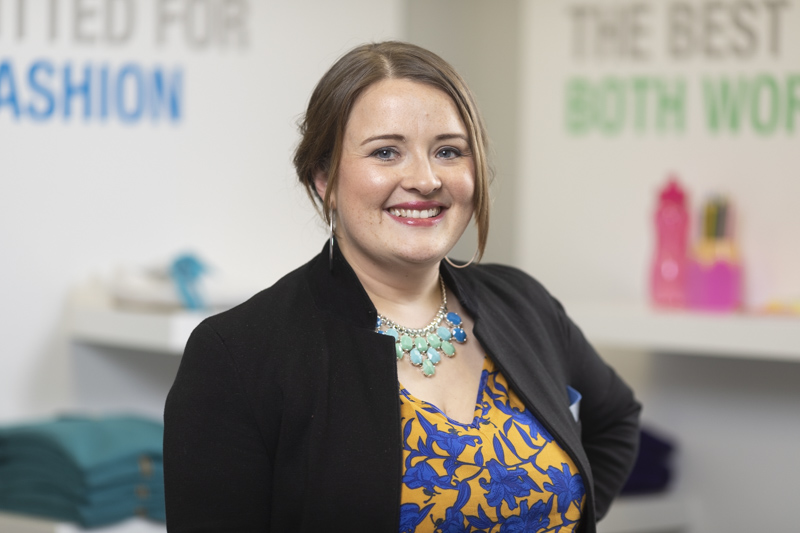
Nicola Ryan is Rowlinson Knitwear’s Colleague Support Director. She is responsible for ensuring the wellbeing of colleagues and removing any barriers to enable them to work better.
Life before lockdown
Three years before the pandemic, Rowlinson relocated to new and larger premises, using the move as an opportunity to review working practices. One key issue which the review revealed was the lack of communication between the day and night shift production teams. In response, the decision was made to alter work patterns and create an early shift and a late shift. This meant no one had to work through the night and created a fluid, more inclusive handover between the teams. They also offered a two-day mental health training course, in which 40 members of staff took part.
An additional decision was taken to reduce the working week by two and a half hours across the whole company, with no reduction in pay. This increased employee wellbeing, without reducing service output.
Reacting to the crisis
With good flexible working practices already in place, Nicola acted quickly, by shifting vulnerable colleagues to full-time home working with flexible hours. Those that needed to shield and were unable to work in the warehouses were put on furlough; at the height of lockdown, 80% of the workforce were furloughed.
During this time, the team’s biggest concern was loneliness and mental health; they supported this by ensuring that every colleague received a weekly phone call to check in. The leadership team also volunteered to reduce their pay by between 10 to 50% to support lower paid colleagues. This meant furlough pay was topped up to 90% of normal earnings.
For those that couldn’t work from home, the priority was to make the building COVID-19-compliant. Nicola helped ensure all hygiene regulations were met and created video tours of the building to share the changes. Following individual and team conversations, a skeleton rota was created for those in the production team who could work, along with new shift times to reduce cross over.
The warehouse team managers also reviewed their working arrangements, and realised parts of the job, such as processing customer orders, could be done remotely. The resulting hybrid working pattern gave them greater flexibility in where they worked.
Supporting colleagues to keep working
With regular catch ups, resources for guidance and open communications, Nicola and the wellbeing team supported their colleagues in a number of ways.
Firstly, they were more flexible about where and when roles were delivered, shifting their focus from hours to output. This involved trusting managers to work and communicate more closely with their teams, so that the arrangements met individual needs.
Secondly, the team invested time and resources to equip staff with the knowledge and skills needed to work in different departments. This highlighted the importance of multi-skilling colleagues, enabling redeployment rather than furloughed; a real benefit for a seasonal business.
Lastly, the wellbeing team’s priority was to diminish worries and anxieties around work as much as possible. They frequently checked-in on an organisational and individual level, encouraging open conversations.
Learning from the experience
Lockdown has taught Nicola and the team that roles that they previously thought couldn’t be done from home, often can be. A concrete example of this is Rowlinson Knitwear’s core customer care team. Before the pandemic, they were all office based. But during the crisis, they’ve learnt that only one member of the team needs to be present at a time. This learning has given them greater flexibility by rotating which colleague goes into the office.
Another key learning has been the importance of communication. Having honest conversations at team and individual levels allowed colleagues to contribute to finding appropriate flexible solutions, rather than having company-wide decisions imposed on them. This openness has also helped overcome some of the loneliness caused by remote working, and contributed to a well-being focused culture.
Moving forward, when recruiting for new vacancies, all roles will be advertised with flexible working. The team have already seen the benefits, reaching a new talent pool of candidates.

Shane Banham is one of two warehouse team leaders at Rowlinson Knitwear and is responsible for ordering, receiving and processing all the goods.
Life before lockdown
When Rowlinson reviewed working practices three years ago, production workers were given the choice between early or late shifts; 6am-2pm and 2pm-11pm. Shane chose to work the early shift from 6am-2pm. This allowed Shane to balance his work with caring for his three young children; collecting them from school and spending time with them in the evening. But the shift had its drawbacks, with early mornings in the winter taking a toll on Shane’s mental health.
Working through the crisis
Working in production and overseeing the warehouse team meant that Shane couldn’t work remotely during lockdown. The introduction of a skeleton shift at the end of March involved a review of which team members would be furloughed; Shane considered vulnerability, location and skillset, and choose a team of four to continue working.
While the warehouse team could have continued with the pre-COVID-19 6am-2pm shift, it didn’t meet client needs. Instead, Shane consulted his team and initially decided on a 7am-3pm shift. Additionally, following the realisation that parts of the role could be done remotely, he introduced the option of working from home for part of the week. This meant Shane could focus solely on the physical tasks while on site, and allowed him to spend more time with his family at home.
Ironically, improved team communication meant that those who were still working became frustrated by the extra time their furloughed colleagues were getting with their families. This was raised with the wellbeing team and led to the introduction of flexi-furlough, allowing staff to rotate on and off furlough. This freedom allowed Shane to go on furlough in May so he could take a much-needed break and his partner could return to work.
Support from employers
Shane noted a high level of support during this time, with frequent phone calls and occasional visits to the site from the wellbeing team. Weekly updates and clear communication helped to ensure he and his team felt cared for. Shane felt trusted by leaders to find a solution that worked for him on an individual and team basis.
Learning from the experience
Shane has been able to find opportunities within the crisis, with a positive impact on his personal development and responsibility over his team. The process highlighted the importance of listening to individual needs and being open minded to different ways of working.
Moving forward, the warehouse team leaders have decided to work at least one day a week from home, with the freedom to choose which day. In the longer term, Shane would be keen to explore greater flexibility in shift patterns, but given the logistical restrictions of production, appreciates the family time the current pattern allows him.
This case study is part of a series supported by The National Lottery Community Fund, as part of their Emerging Futures Fund
Click on the links below to read the other case studies in the series:
By Melissa Jamieson, CEO, Timewise

The pandemic-driven focus on flexible and hybrid working is undoubtedly a good thing. Perceived barriers to the concept of flexibility have come crashing down in many organisations; evidence from the CIPD suggests that productivity and wellbeing have improved in many cases. And while we mustn’t ignore the huge challenges created by lockdown, particularly for those juggling family life and work, the overall sense is that many workplaces are undergoing serious transformation.
Indeed, there is no shortage of examples of organisations announcing big changes, from law firm A&O’s news that 40% of their work will be done remotely post-pandemic, to PwC’s ‘Deal’, which includes the freedom for employees to adapt their start and finish times or other parts of their working pattern. Nationwide, BP, Aviva, Vodafone… the list goes on.
But so far, within all the news about post-pandemic changes, there has been little, if anything, about part-time. So while organisations are widening their employees’ ability to work where and when they choose, they are not offering the same opportunities regarding the third pillar of flexible working: how much people work.
The immediate question, of course, is does this matter? If hybrid working is popular with employees, and employers are gearing up to deliver it, do we need to worry about part-time?
In fact, it’s a real issue, with a range of consequences:
Left unchecked, then, this lack of focus on part-time roles will have an impact on workplace issues such as diversity and the gender pay gap, as well as societal ones including in-work poverty and social inequality.
But we’re not suggesting that hybrid working should be put on the back burner; we’re all for it, and are helping many organisations get it right. We’re simply saying that part-time is an equally valid arrangement, which should be included in any re-evaluation of the workplace. In the wake of the pandemic, in which the groups that traditionally need part-time the most have been the hardest hit, considering the future of work at a strategic level within your business is more important than ever.
So, for companies who recognise the importance of including or increasing part-time opportunities alongside full-time flex, what are the next steps? Here are some starting points for leaders and HR teams:
We’re facing a fantastic opportunity here to rework the way we recruit and employ people, for the better. But let’s make sure that this transformation is future-proof and inclusive, by putting part-time front and centre.
Published April 2021

If there is one topic that is occupying the headspace of business leaders and their HR teams more than any other right now, it’s hybrid working. Most companies are grappling with how they will transition out of the pandemic, seeking to build on what has worked well and overcome the issues they have encountered.
And while there seems to be a general agreement that hybrid working IS the way forward for most corporate companies, and that it will create a huge number of opportunities for companies and their employees, implementation feels complex. As one of our clients has noted, in some ways having everyone working from home is easier to manage; it’s developing the next step, and making it stick, which will be a real challenge.
With this in mind, I recently co-hosted a roundtable for Timewise Partners, in which we explored the topic, supported by two of our longstanding corporate partners, who shared their hybrid working advice and insights with us. Here, in Part 1 of the highlights, we look at their approach to creating the principles on which to build a successful model.
Our speakers began by noting that while the change we are going through is unprecedented in modern times, many haven’t grasped just how fundamentally it is altering workplace norms. They also spoke of the need for organisations to agree principles for development before looking into implementation.
All agreed on the importance of allowing all members of the organisation to have input into any changes, asking what they have missed during lockdown, and what they want to build into any new ways of working. One cited a survey of 23,000 UK staff which has pointed towards a model of 2-3 days in the main office per week, with the remainder spread across client sites, at home or remotely.
Among the principles discussed were:
Our speakers then explored the best way to develop a model which is in line what teams need to succeed on a day-to-day basis.
One of our partners explained their pre-pandemic approach, which was based on employees having autonomy around how, where and when they worked. Their view was that hybrid working is an extension of this autonomy, but that teams need support and leadership to help them develop an inclusive environment in which they can continue to collaborate.
The speakers then discussed whether it is better to have a company-wide vision for hybrid working, which teams are expected to work to, or to empower individual teams to find their best way forward. Their insights included:
Take a look at Part 2 of the highlights from this session, which will focus on how to equip your employees to succeed within a hybrid model, and to ensure that it is fair and inclusive.
In the meantime, if you need more hybrid working advice, take a look at our hybrid working workshops, or get in touch to find out more about our bespoke consultancy services.
Published April 2021
As 2020 crawls to a close, one thing is certain; the workplace will never be the same again. It’s pretty clear that a degree of remote working is here to stay; a survey by the IOD suggested that 74% of firms are planning to maintain the increase in home working. And at the time of writing, the Prime Minister has told all workers in England to work from home if possible until April 2021.
Clearly, there are many upsides to remote working; from the time gained by skipping the commute and the related positive impact to mental health, to a general perception that it makes it easier to balance work and life. And the growing acceptability of hybrid working set-ups, where you work in the best place for the job in hand and the needs of your team, is a real step forward.
But it’s also important to recognise that the remote working we’re seeing right now isn’t normal; it’s universal, and enforced, without reference to whether it’s the best way to tackle that day’s or week’s workload. So it’s not surprising that, in our conversations with businesses, we’re hearing lots of examples of how it isn’t working as it should.
This doesn’t mean that home and hybrid working arrangements should be phased out once the pandemic is over. Employees want to keep them, and they can be a useful part of any organisation’s flexible toolkit. But simply replicating office-based practices isn’t enough. As with any flexible role, these arrangements need to be designed properly, and managers need to be skilled up to support the people who are using them.

The concept of Zoom fatigue – the exhaustion felt by people as a result of online meeting overload – was much discussed at the beginning of the pandemic. Some employees, particularly younger ones and those living alone, have wrestled with a lack of proper workspace, with some even reporting feeling judged by their home environments. The blurring of boundaries is also a recognised problem. And smart decision-making and creativity have both been noted as being negatively affected when whole teams work permanently from home.
Additionally, there is a growing sense that, without careful oversight, the move to a hybrid set-up, with some in the office and others at home, may lead to women and ethnic minorities being excluded from key decisions and limiting the diversity of opinions which are heard. Or that the extroverts in a team will choose to go in, and the introverts to stay at home, affecting their visibility and progression path, and encouraging groupthink.
These are tough issues to work around – but if we just roll over and accept them as the price we pay for more flex, we risk rowing back on all the progress that’s been made. Instead, we need to tackle them – and the best way to do so is by making sure line managers and other leaders are properly skilled up.
Well-trained, properly skilled managers know that they need to trust their remote employees, rather than force them to stay logged in to Zoom all day so they can keep an eye on them. They understand that having an 8.30 meeting every day to check that everyone is working can be counterproductive. They appreciate that, when physical interaction isn’t possible, other ways of connecting teams have to be found. And they realise that, in an era of job uncertainty, employees need to be encouraged to switch off, not left to put in ever longer hours for fear of being let go.
To succeed, managers need to know how to design flexible roles – whether part-time, remote, or a combination of the two. They need to understand how to manage flexible employees, and how to ensure that hybrid-working teams are still able to work productively together. But these aren’t skills that people can just pick up. They need to be taught; and that’s where we come in.
Training managers to build and develop successful flexible teams has long been a core part of our work here at Timewise. And now, from our work with clients and other organisations during the pandemic, we have gained a unique set of insights that are specifically relevant to building these skills in the current circumstances.
We can support employers in a range of ways; from workshops and training sessions to participation in our new Flex Positive Programme. So if you, like us, believe that this is a critical time for developing the leadership skills that will make a success of flexible and hybrid working, feel free to get in touch to see how we can help.
Published December 2020

If you were asked to guess the biggest cause of death in the construction industry, what would you say? Most people would assume that the answer is something to do with on-site accidents. But they’d be wrong: in fact, it’s suicide, with male construction workers three times more likely to take their own lives than the average male.
It’s a shocking statistic, and one which is largely due to the long-hours culture that dominates the industry. With 20 hour days commonplace, and only 10 % of roles advertised with any kind of flexibility, it’s no surprise that construction workers suffer from mental health problems, struggle to balance work with their families, and end up burnt out.
Equally unsurprisingly, women don’t want to work in the industry; female participation currently stands at 15%, mainly in office-based roles. And although efforts have been made to try and attract more women, little has been done to address the workload and work-life barriers that are keeping them away.
With such deep-rooted problems to overcome, a deep-dive approach is required; and that’s what we’ve been doing. In 2019, we began a Timewise Innovation Unit project with four construction companies; BAM Nuttall, BAM Construct, Skanska and Willmott Dixon, supported by Build UK and the Construction and Industry Training Board. The project aims to explore the options for making construction more flexible; to identify key barriers, design and pilot solutions, and share what we’ve learned across the industry.
So, what have we learned so far? Well, our initial diagnostic phase put meat on the bones of what we had suspected; that the structure and culture within construction are not just unsupportive of flexible working, but bordering on incompatible:
Having identified and fleshed out these core issues, we then planned to run a series of pilots, starting in Spring 2020. These set out to assess the potential of allowing teams to have some input into their shifts and working patterns, and pilot the best way to deliver it. The work included:
The project was put on hold during the first lockdown – but on the flip side, once companies were allowed back on site, it helped accelerate some of the plans. The need for social distancing, for example, meant that site managers were forced to explore staggered start times and virtual team briefings, with positive results.
For now, the work continues. We’re supporting sites who have fast-tracked their plans, skilling up managers to implement the changes and make sure they’re fair, inclusive and sustainable. For those who were unable to do so, we’ve now started work. And of course, we’re capturing insights from this pilot phase to support a consistent approach to scaling up at a later date.
It’s worth noting that, with inflexibility as entrenched as it is within this industry, it can feel like an impossible challenge. Indeed, it’s no exaggeration to say that, when we started, the response from some was that nothing could or would change. There was a widespread belief that the issues were too deep and that current working practices would always stand in the way of culture change.
We don’t doubt that changing this industry is a complex job – but we also firmly believe that it’s a critical one. People are leaving and there’s little incentive for others to replace them; the rest of the world is becoming more flexible, and construction mustn’t get left behind. Additionally, given the pivotal role that construction plays in our country’s infrastructure, there’s a real opportunity to reskill and redeploy workers who have been adversely hit by Covid-19 as we build back up.
The pandemic has opened the door a crack and our project aims to wedge it open; we’ll keep you posted.
Published November 2020
By Emma Stewart, Co-Founder, Timewise

It’s no secret that the teaching profession, is struggling to recruit and retain the teachers it needs. Pre-Covid-19 data indicated that targets for the required number of secondary school trainees had been missed for the last seven years, and that 33% of state school NQTs leave within five years. And although the pandemic appears to have triggered a spike in graduate teacher training applications, it’s not yet clear whether this will last – or be enough to bridge the gap.
While it isn’t the only factor behind the teaching brain drain, the lack of flexible teaching roles compared to other sectors is likely to play a part. Indeed, there is evidence to suggest that some teachers leave the profession because they can’t access flexible working; and that many secondary school teachers who do leave reduce their hours when they do so.
In fairness, it’s true that teaching roles are not easy to make flexible; there are a range of barriers, such as timetabling, budget constraints and the student-facing nature of the role, which are all complex to overcome. However, we believe that no sector is un-flexable; we specifically set up our Innovation Unit to tackle these hard-to-fix sectors, and show what can be done.
So, on that basis, and following on from our 2019 report on building flexibility into schools, we are launching a new action research project for the teaching sector. Working in partnership with three large multi-academy Trusts (MATs) and supported by education specialists Talent Architects, we’ll start by exploring the barriers in more depth, as well as building on the insights that these schools gained during Covid-19, and seeing what positive experiences can be taken forward. We’ll then use our learnings to design flexible roles that work around or overcome these barriers, and pilot them within schools.
The project, which is being supported by Barclays Life Skills and Browne Jacobson LLP, will last a year; we’ll post updates about what we’re learning along the way, as well as a full final report. In the meantime, if you’d like some initial inspiration, take a look at our case study of a school with a hugely successful track record in this area, Huntington School in York, where more than half of teachers work part-time.
Right now, though, schools like Huntington are in the minority, and they are having to work it out for themselves. It’s our hope that this project will deliver a clear roadmap for schools for designing and delivering flexible teaching roles, so that wherever they are, whatever their size, they can attract and keep teachers by offering the flexibility they need and want.
Published September 2020

The statistics around teaching staff shortages are well known, but they bear repeating. Data from the NFER has indicated that targets for the required number of secondary school trainees have been missed for seven years in a row, and 33% of state school NQTs leave within five years. And while the Covid-19 crisis appears to have triggered a spike in graduate teacher training applications, it’s too early to say whether this will deliver sustainable growth.
Yet it is possible to buck these trends. There are a number of schools who are managing to hold on to their experienced staff at far higher rates than others. Step forward Huntington School, a community secondary in York, which has a miniscule staff turnover rate of 7%. Around half of teachers work part-time – including members of SLT – on contracts ranging from 0.2 to 0.8 FTE, and there are several job shares.
So, what’s the secret? According to Headteacher John Tomsett, it’s all about the culture. John’s philosophy is that good schools don’t just pop up overnight; they grow over time out of a supportive culture, led by the leadership, that guides the school’s vision in the right direction.
In practice, at Huntington School, this means busting the myth that part-time teachers have a negative impact on students, and that the timetable can only accommodate a few part-time jobs. It means understanding that happy teachers stay, and that supporting the other aspects of their lives allows a school to get the best out of them. And it means taking a positive, proactive approach to flexible working, with a process built on the presumption that “We will make it work.”

The current crisis has been described as ‘full-time work meeting full-time life’; a remote working experiment that we’re all having to work through. So how are employers supporting their employees during Covid-19 – and what should they do next?
We recently co-hosted a session for Timewise Partners, in which we explored how different companies are managing the status quo, and provided a mixture of short-term practical guidance and long-term issues to consider. Here are the highlights.
Among the insights we shared with our partners were these snapshots of workplace life during Covid-19:
Our attendees shared a number of examples of good practice from their organisations. These included:
Leadership and management
Changes to processes
Information and resources
Mental health and wellbeing
Planning ahead
We also shared four core principles to help employers take the right next steps to support their employees:
(1) Think about WHAT people are doing
Assess what work needs doing, right now. Set priorities, new objectives and expectations for what needs to be done, before working out how to do it differently. Recognise the backdrop to people’s current working lives and consider the balance between the business’ needs and individuals’ needs.
(2) Think about WHERE people are working and how to support them
Consider providing enhanced broadband or a proper office chair. Create space for collaboration and engagement such as virtual team meetings and remote cafes, and check in on anyone who goes under the radar. Note what’s working and what isn’t to ensure you take the best examples with you into the long term.
(3) Think about WHEN work needs to be done and how that matches with people’s needs
Some people may be splitting childcare with a partner and so may need to have blocks of time off. Others may need to get ahead at the weekend to allow more breaks in the week. Build a framework that looks at your organisation’s needs and each individual’s needs to identify working patterns that will suit both parties.
(4) Think about HOW MUCH work needs doing and can be managed at the current time
Some employers need staff to reduce their hours to save costs; some employees need to work less to juggle their other commitments. In order to make this work, leaders need to either reduce the workload or find alternative resource. Expecting people to do the same work in less time isn’t a sustainable option.
We also shared our thoughts on the opportunities and risks coming out of Covid-19 and what employers need to do to mitigate the negatives and make the most of the positives.
As the situation continues, we’re keen to gather and share more stories about what’s working and what’s not, so more businesses are able to come out of Covid-19 into a more flexible future. If you have any insights to share, or need support from the Timewise team, do please get in touch.
Published April 2020


